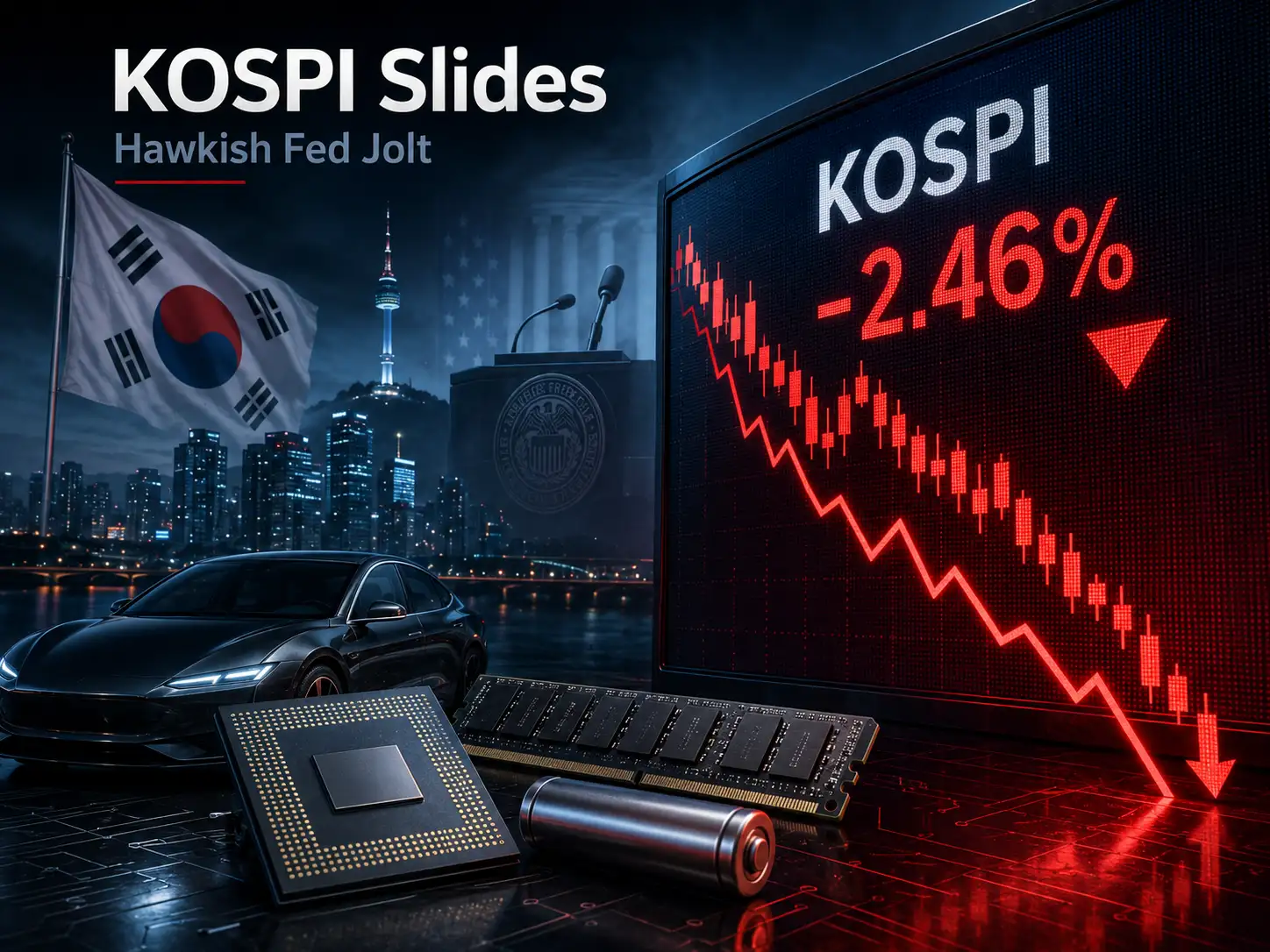
South Korean shares fell sharply on Monday, tracking declines across regional markets after hawkish comments from Federal Reserve Chair Kevin Warsh strengthened expectations that U.S. interest rates could rise as early as next month.
The benchmark KOSPI fell 167.29 points, or 2.46%, to 6,621.59 by 0104 GMT. Foreign investors were net sellers of shares worth 347.2 billion won ($252 million), adding to pressure on the market.
Largecap technology stocks led the decline. Samsung Electronics fell 2.72%, while SK Hynix dropped 3.27%. LG Energy Solution declined 0.54%.
Among other major stocks, Hyundai Motor slipped 0.50%, while Kia gained 0.31%. POSCO Holdings fell 0.74% and Samsung BioLogics declined 0.81%.
Reuters reported that Warsh's comments on Friday signalled growing concern among U.S. policymakers about persistent inflation. He indicated that the Federal Reserve could need to consider higher interest rates if it lacked sufficient confidence that inflation was moving toward its 2% target.
The comments prompted investors to reassess expectations for the Fed's monetary policy, weighing on risk assets across Asian markets.
Of the 908 stocks traded on the South Korean exchange, 133 advanced and 746 declined.
The Korean won strengthened 0.16% to 1,377.3 per dollar on the onshore settlement platform, compared with 1,379.5 at the previous close. In offshore trading, the won was quoted at 1,376.6 per dollar, while its one-month non-deliverable forward contract stood at 1,376.1.
Despite Monday's decline, the KOSPI remains up 57.13% so far this year. The won has strengthened 4.5% against the dollar over the same period.
South Korean government bond yields also moved higher. The most liquid three-year Treasury bond yield rose 3.7 basis points to 3.835%, while the benchmark 10-year yield climbed 2 basis points to 4.294%. September futures on three-year Treasury bonds fell 0.09 point to 103.25.
(Disclaimer: Recommendations, suggestions, views, and opinions given by experts are their own. These do not represent the views of The Economic Times.)