
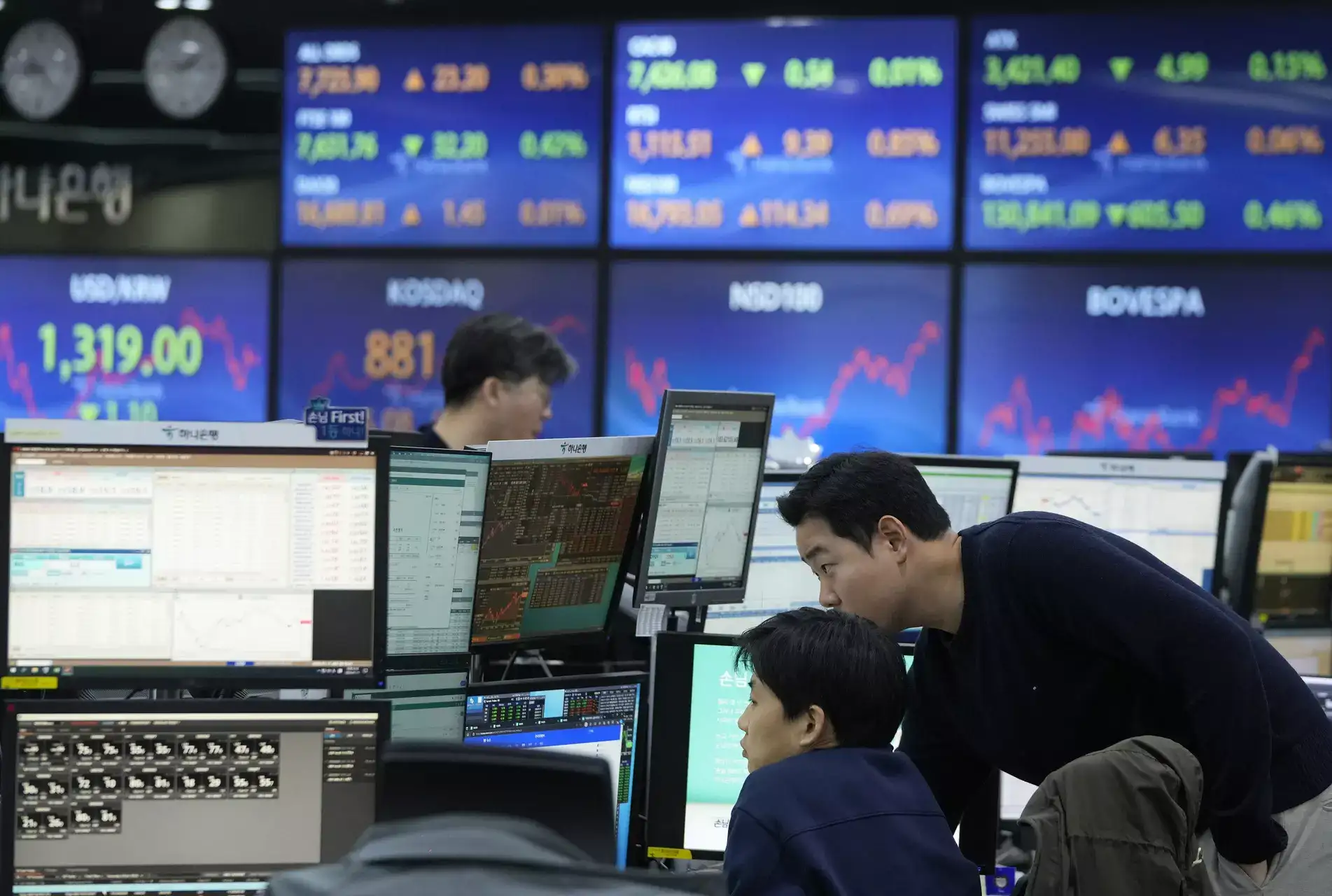
Asian shares climbed for the first time in three days, following a rally in chipmakers. Oil extended its gains after the US said it struck Iran for a second straight day.
The MSCI Asia Pacific Index climbed 0.5%, with South Korean shares — a bellwether for semiconductors and artificial intelligence investments — climbing 3%. Japanese shares also rose.
The chip sector remained in focus after SK Hynix Inc.’s US listing was more than seven times oversubscribed, according to people familiar with the matter. Also, Bain Capital sold its entire stake in flash memory chipmaker Kioxia Holdings Corp.,
Brent extended its gains to a third day, climbing to about $78.80 a barrel, as the latest strikes stoked fears the conflict could disrupt shipping through the Strait of Hormuz.
Earlier, the two-year Treasury yield, which is sensitive to expectations for Federal Reserve policy, rose as much as five basis points during the US session to 4.23%, within a basis point of last month’s high. The 10-year yield climbed as much as four basis points to 4.59%, its highest since late May. Gold steadied after a three-day decline.
The flare-up in tensions and surge in oil prices have reignited inflation concerns, prompting money markets on Wednesday to bring forward bets on the next Fed interest-rate increase to October from December. That has added to pressure on markets already grappling with elevated stock valuations after this year’s rally in artificial intelligence shares.
The additional strikes were launched “to further degrade their ability to threaten freedom of navigation in the Strait of Hormuz,” the US Central Command said in a social media post.
“Markets weren’t initially taking the re-escalation in US-Iran tensions too seriously earlier this week,” said Fawad Razaqzada at Forex.com. “But today, that seems to have changed.”
Veteran strategist Ed Yardeni said the rupture in the ceasefire between the US and Iran risks sparking a fresh acceleration in price growth, which in turn could compel the Fed to raise interest rates.
A few Fed officials in their most recent policy meeting said there was a case for raising rates, though they ultimately supported the decision to leave rates on hold. More generally, minutes of their June gathering reflected growing concern over inflation just as worries over the labor market slightly receded.
“One thing is certain: future policy is heavily contingent on the political situation in the Middle East,” said Jeffrey Roach at LPL Financial. “If we can tease out any forward guidance from the minutes, it would be the committee is working through a wide range of scenarios and will not commit to a specific scenario until the incoming data provides necessary clarity.”