US equity-index futures fell after mixed earnings from megacap companies cast doubt on the durability of this week’s rebound in the artificial intelligence trade. Crude oil climbed as tensions flared in the Middle East.
Contracts for the Nasdaq 100 Index slipped 0.6% and those for the S&P 500 dropped 0.4% in early Asian trading following a split set of results from Tesla Inc. and Meta Platforms Inc. The automaker’s shares fell 3.1% in post-market trading after cutting its capital-spending forecast. Meta Platforms, however, rose 2% after hours as the company boosted its bet on AI with spending outlook.
Read more:Market sell-off deepens as midcaps enter correction zone
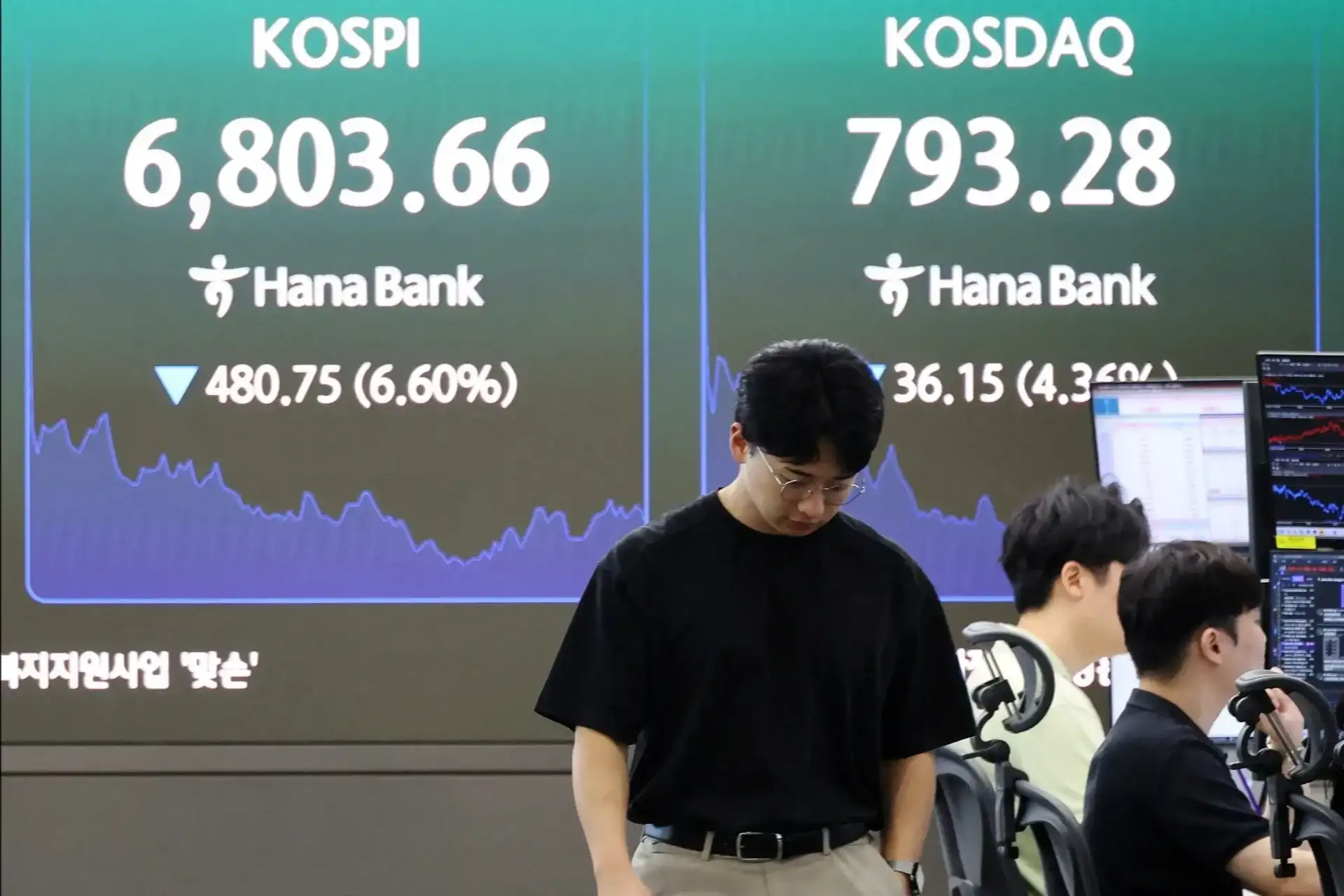
Asian benchmarks were mixed in early Thursday trading, with South Korean shares falling 0.2% while Japanese stocks edged higher.
“It’s all about earnings,” said Matt Orton, chief market strategist at Raymond James Investment Management. “There’s definitely a tension in the market between the growth path of the AI names and the ability to finance the industry.”
Elsewhere, West Texas Intermediate crude climbed toward $98 a barrel after swinging in a $4 range Wednesday. Brent jumped 1% to trade above $110. Treasuries fell in the New York session.
The latest corporate results will test whether earnings can keep the AI trade on track as investors weigh strong growth against the mounting cost of funding the industry’s expansion. Concerns have grown in recent weeks that heavy spending on data centers and computing capacity may take longer to generate returns.
Tesla’s capital expenditures will be around $20 billion this year, the company said Wednesday after reporting earnings results. That marked a reversal from earlier this year, when Tesla raised the target to more than $25 billion.
Meta, by contrast, boosted its capital spending outlook, escalating its already-stratospheric bet on artificial intelligence. Capital expenditures will be $135 billion to $145 billion in 2026, the social-media giant said during its quarterly earnings report Wednesday, raising the bottom end of the range from $130 billion.
The scale of that investment is putting greater attention on whether infrastructure can keep pace. BlackRock Inc. Chief Executive Officer Larry Fink warned that delays in building data centers could push up computing costs and threaten economic growth.
“If we don’t build out these data centers, it is actually more inflationary because the cost of compute is so high right now,” Fink said in an interview on Bloomberg Television Wednesday on the sidelines of the Berlin Global Dialogue event. “And the faster we can build out more data centers, the more compute we have, the faster we can bring down the cost.”
Attention is also on the rising tensions in the Middle East and the oil market.
Oil rose following a deadly attack on a Saudi oil field, raising concerns that escalating hostilities in the Middle East could hit supply even as exports through the Strait of Hormuz have accelerated in recent months.
The US State Department issued an ordered departure for non-emergency personnel and their families from Saudi Arabia because of the growing threat from Houthi militants in neighboring Yemen.
US and Israeli military have developed specific plans for renewed strikes against Iran after the American midterm elections, the New York Times reported, citing US officials and other people briefed on the deliberations.
“Continued kinetic activity and the risk of renewed escalation following the midterms are keeping a floor under prices,” said Rebecca Babin, a senior energy trader at CIBC Private Wealth Group. “The result is a market struggling to sustain rallies, but with limited conviction behind the selloffs as well.”