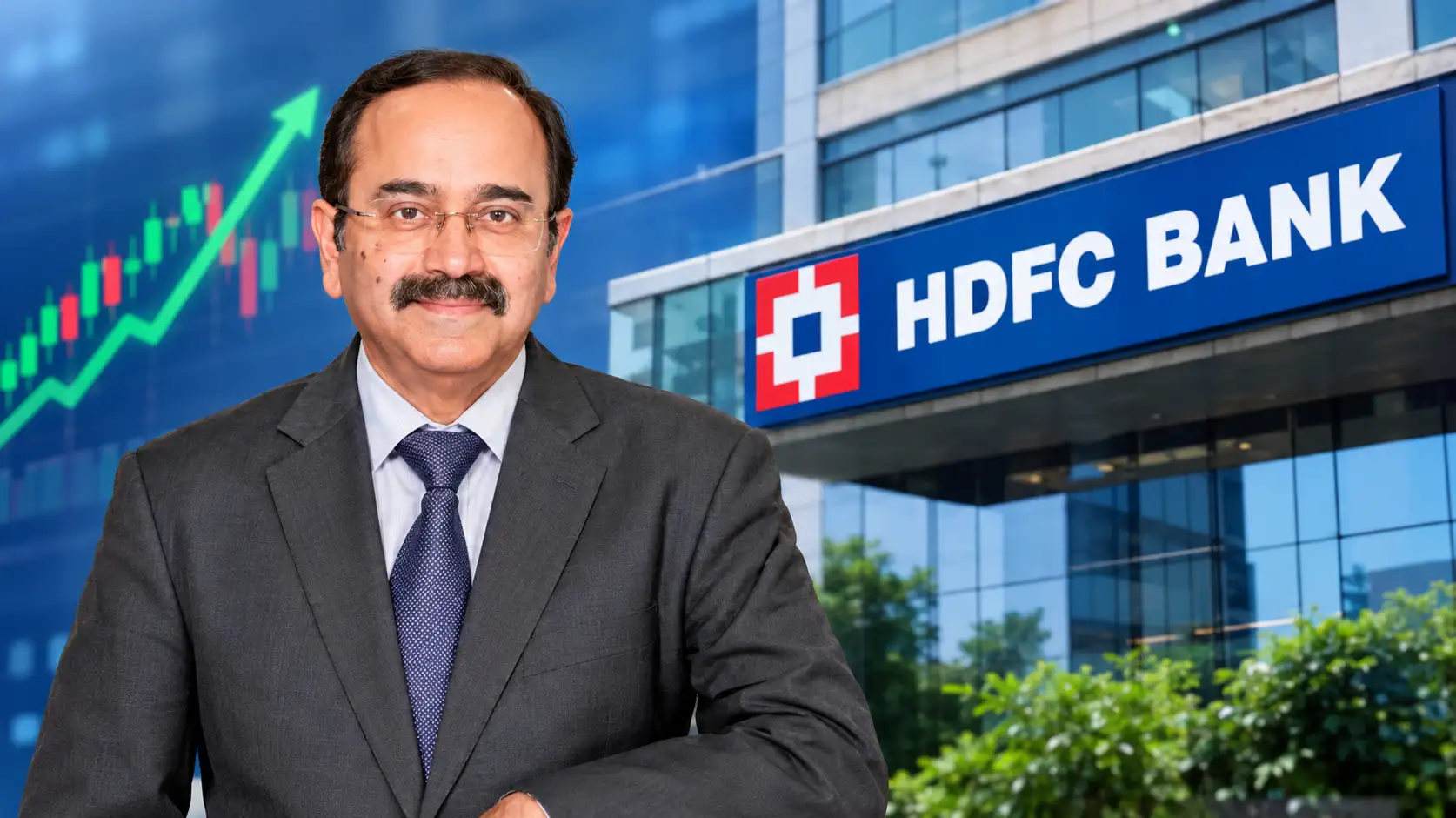
HDFC Bank shares remained volatile on Monday, swinging between gains and losses after the private lender appointed ICICI veteran Anup Bagchi as its new CEO. Analysts cautioned that the medium-term trend remains weak, with the stock sustaining below key technical levels.
The stock rose 2% to Rs 734.20 apiece on the NSE in early trade before erasing all gains and falling nearly 3% from the day’s high to Rs 714 as of 10:20 am. The decline came even as the broader market rebounded after an eight-week losing streak.
Also read | Should you buy, sell or hold HDFC Bank shares after lender appoints new CEO?
HDFC Bank last week appointed ICICI Bank veteran Anup Bagchi as its Managing Director and CEO, with RBI approving his appointment for a three-year term from October 27 onwards. This clears up a key leadership hurdle that has been spooking investors since March this year after former part-time Chairman Atanu Chakraborty resigned, saying some practices within the bank did not align with his personal values and ethics.
Anup Bagchi will transition from the role of managing director and CEO of ICICI Prudential Life Insurance, a position he has been holding for the past three years. Before becoming the CEO at the insurer in 2023, he was an executive director at ICICI Bank from 2017, heading the wholesale banking, transaction banking, markets group and the proprietary trading group.
Nomura earlier had said that a credible external candidate could offer a longer runway and a cleaner slate. “In our view, this could be more significant for the stock over the medium term, as a new leader would have greater scope to reassess strategy, challenge existing practices and drive a strategic reset. With the stock having materially underperformed, a credible external appointment with a strong operating track record could therefore emerge as a catalyst for a re-rating, particularly if accompanied by a clear roadmap on growth, deposits, margins and returns,” it explained.
Also read | Why is market rising today? 7 key factors explained
Key technical levels to watch out for
The overall medium-term trend for HDFC Bank still remains weak as the stock is sustaining below its 100- and 200-day SMAs, said Vaishnavi Jagtap, Senior Research Analyst of Technical at Axis Direct. The analyst noted that the stock has traded within a sideways consolidation band of Rs 680–760 over the past two months.
On short-term charts, price action has comfortably settled above the 20-day and 50-day SMAs, reconfirming positive momentum, she said. Further strengthening the technical setup, both daily and weekly Relative Strength Index (RSI) indicators have crossed into positive territory after rebounding from oversold zones, signalling buying interest at lower levels. “Market indicators suggest the current relief rally could extend toward the Rs 760–785 target zone, with immediate downside support established at Rs 700–705,” according to Jagtap.
Despite the minor pullback from recent lows, the overall price structure has not changed significantly, said Sudeep Shah - Head of Technical and Derivatives Research at SBI Securities. He sees the stock finding immediate resistance in the Rs 755–760 zone, which coincides with the 20-week EMA. A decisive and sustained move above this zone could extend the pullback in the near term. On the downside, Rs 685–680 is likely to act as the next key support zone, according to the analyst.
HDFC Bank shares have fallen around 1% in a week and 28% in 2026 so far, underperforming the benchmark Nifty 50 index which has fallen 14% this year. In the longer term, the shares of the private lender have delivered negative returns of 26% in a year, 7% in three years and more than 10% in five years.
The company currently has a market capitalisation of more than Rs 11 lakh crore.
Disclaimer: This article has been written by Debaroti Adhikary, who is not a SEBI-registered Research Analyst or an Investment Adviser. Debaroti Adhikary and his/her ‘relative(s)’ (as defined under Section 2(77) of the Companies Act, 2013) do not hold any financial interest in the companies mentioned in this article as of the date of publication. The views/recommendations mentioned in this article, wherever applicable, are those of the respective SEBI-registered Research Analyst/brokerage and have been reproduced/reported with due attribution. They should not be construed as the views or recommendations of The Economic Times Digital or the journalist. Readers are advised to consider the original research report and make their investment decisions based on their own assessment. Brokerage disclaimers here.