

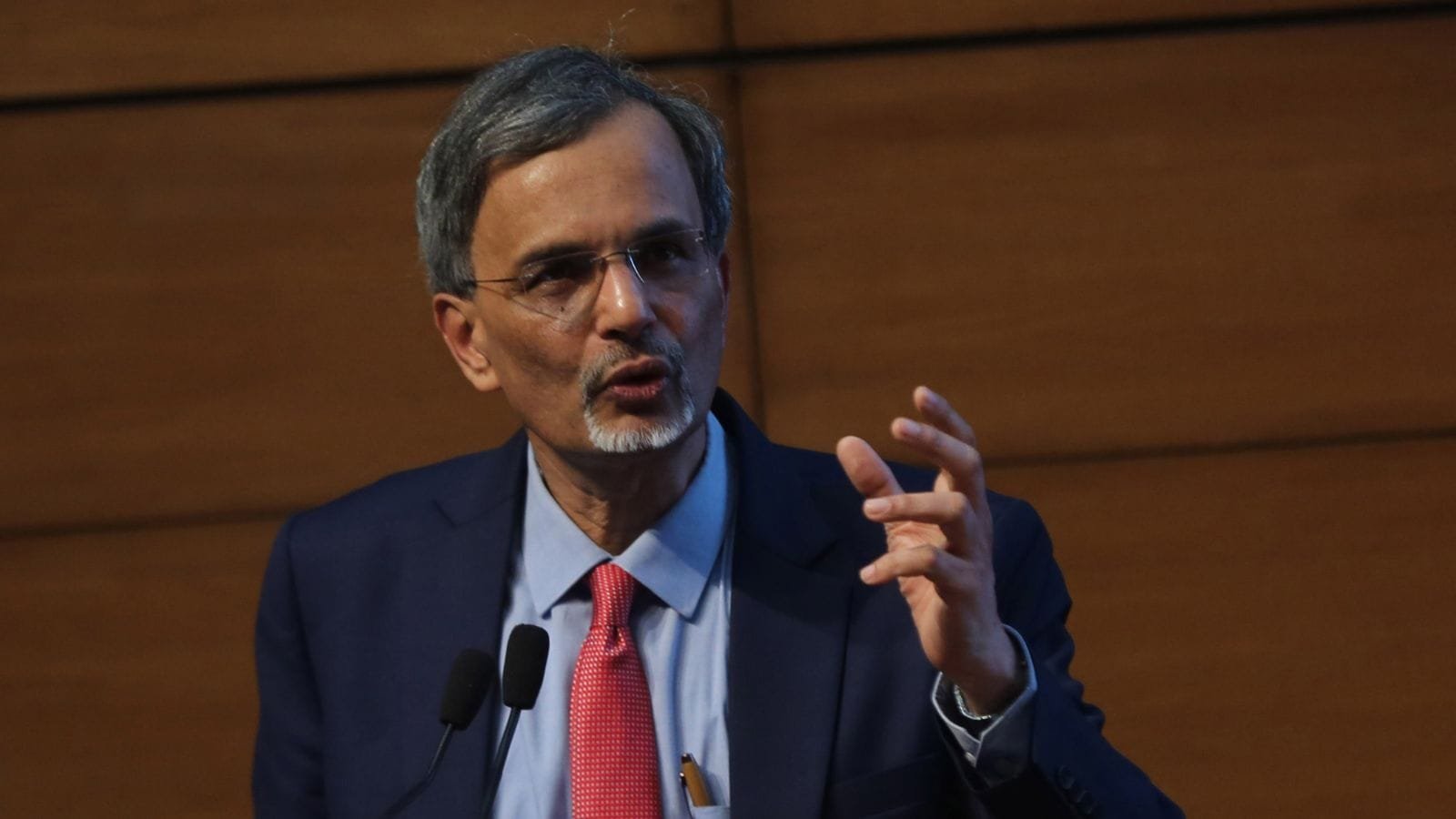
India needs its own “answer” to Chinese and American laws that secure their supply chains and inward investments, Chief Economic Advisor (CEA) V Anantha Nageswaran said on Saturday, warning that companies are going to find it “more and more difficult” to leave the world’s second-largest economy and India will have to “accept and be willing to work alongside” a more restrictive external environment.
Speaking on the second day of Ashoka University’s Second Annual Isaac Centre for Public Policy Growth Conference, the government’s top economist also criticised the Indian private sector, saying it must reflect on why it has been reluctant to invest and that it may have contributed to its own demand uncertainty.
“In Hotel California, you said you can check out but not leave. But China is saying you can neither check out nor leave,” Nageswaran said on Saturday, referring to two directives issued in April: Regulations on the Security of Industrial and Supply Chains (Decree No. 834) and Regulations on Countering Foreign Improper Extraterritorial Jurisdiction (Decree No. 835). The two decrees allow foreign companies and executives to be penalised for trying to relocate their supply chains away from China in compliance with directives and measures. Further, the decrees also try to counter what it called “improper extraterritorial jurisdiction measures” by a foreign country that endangers China’s national sovereignty, security, and development interests and harms the legitimate rights and interests of Chinese citizens and organisations.
According to the CEA, the decrees look to thwart “any country from trying to facilitate diversification away from China”. “In fact, surprisingly the day this came out, there was a g7+ meeting, I was there. It was about discussing global imbalances and this (Decrees 834 and 835) was not discussed at all,” Nageswaran said on Saturday.
Given the increasingly restrictive external environment, Nageswaran said India has to come up with its own institutional or counteracting mechanisms as it didn’t have a “blocking statute” of its own.
“And then we have to have a supply chain security framework which should be our answer to Order 834 and we have to have the equivalent of the American CFIUS. And we have to use our market access as an important lever to attract companies,” Nageswaran said.
CFIUS, or the Committee on Foreign Investment in the United States, can review foreign investment transactions and block them if it determines that these deals can compromise US national security. According to analysts, China’s decision earlier this week ordering the unwinding of Facebook parent Meta’s purchase of AI firm Manus for $2 billion is a “mirror image” of CFIUS.
Story continues below this ad
Nageswaran also criticised Indian corporates, saying they must reflect on their “disappointing” capital formation rates despite profits rising 30.8% every year post-Covid and the regulatory environment improving, even if on the margin, at the Central and state levels. “…corporates and the second or third generation entrepreneurs chose to accumulate those cash profits and probably set up family offices elsewhere rather than investing in real assets on the ground,” Nageswaran said.
“…much of the nation building in developed countries happened not because of public policy alone, but also because the industry acted in national interest and found a fusion between their private interest and national interest. So, it’s always easier to point a finger at the government but sometimes the gaze also has to be reversed on the part of the industry,” he added.
The current juncture, according to the CEA, presented the private sector “a good reason to invest”, with the gap between the Indian rupee and Chinese yuan’s real effective exchange rates (REER) closing. This should make it relatively expensive to import from China and relatively inexpensive to export, everything else being equal, allowing the diversification of supply sources away from China.
The Indian rupee hit a new all-time low of 95.34-per-dollar on Thursday after fresh concerns about the war in West Asia propelled global crude oil prices to a four-year high. The rupee is now down more than 4% since the US and Israel attacked Iran on February 28.
Story continues below this ad
According to Nageswaran, the Free Trade Agreements (FTAs) signed by India also give Indian companies access to foreign markets while also exposing them to more competition. However, it is important Indian companies make use of these FTAs. “One of the problems is the free trade agreement utilisation by India is very poor compared to other countries. So, the industry association and bodies have to do a much better job of talking about them,” Nageswaran said.
Commenting more broadly on the manufacturing sector, the CEA argued it has been able to maintain its share in the country’s Gross Value Added at 17-18% in real terms “in the face of unprecedented competition from China”. “So, it is not therefore a story of failure. It’s probably a story of stability or stagnation, depending on the eye of the beholder.”
