

India’s informal sector is becoming less indebted, with the interest they paid as well as the amount of loans they need to repay falling sharply, according to the Ministry of Statistics and Programme Implementation’s (MoSPI) full report on its Annual Survey of Unincorporated Sector Enterprises (ASUSE) conducted in 2025.
An analysis of the MoSPI report data released earlier this week showed annual interest payable per unincorporated establishment — or an informal business unit — reduced by 16% on average compared to the previous annual survey, conducted between October 2023 and September 2024.
Similarly, outstanding loans per establishment fell 20% in the 2025 survey period compared to 2023-24 (October-September) to Rs 42,776, indicating new loans were outstripped by repayments.
The reduction in outstanding loans coincided with a fall in investments, with each establishment’s net addition to fixed assets declining 14% in the 2025 survey from 2023-24.
In 2023-24, the annual interest payable and outstanding loans per establishment had risen by 7%, while net addition to fixed assets was just over 3% higher than in the 2022-23 survey.
India’s unincorporated, non-agricultural enterprises —covered by the ASUSE survey — make up a sizable portion of the economy and include the likes of small manufacturers, service providers, and trading units. In fact, the 2025 survey estimates the total gross value added (GVA) of the unincorporated sector at Rs 20 lakh crore — or 6.4% of the entire country’s GVA in 2025-26.
Signs of weakness
However, the 2025 ASUSE survey revealed signs of some weakness in the unorganised sector. As reported by The Indian Express on March 24, when the ‘factsheet’ of the survey was released, pay in the informal sector rose by just 3.9% – a third of the 13% increase reported in the 2023-24 survey. Further, the number of establishments increased by 58.5 lakh as against 83.5 lakh in 2023-24, resulting in the creation of fewer jobs: 74.5 lakh in 2025 compared to 1.1 crore in the 12 months ended September 2024.
Story continues below this ad
All but 12 of the estimated 7.92 crore unincorporated enterprises in the 2025 survey were Micro, Small, and Medium Enterprises, with micro enterprises making up 99.94% of the estimated number.
The total number of establishments actually surveyed in 2025 was 6.7 lakh — 2.94 lakh in rural areas and 3.76 lakh in urban areas. Interestingly, outstanding loans of informal enterprises reduced sharply even though bank credit to micro and small enterprises has been rising rapidly.
As per latest Reserve Bank of India (RBI) data, loans to ‘micro and small’ industry were up 33% year-on-year as on March 31. This suggests that most bank loans are going to ‘small’ enterprises.
According to ASUSE 2025, 81% of unincorporated establishments’ outstanding loans were owed to institutional sources such as banks and government schemes.
Story continues below this ad
Investment concerns
The smaller net addition to fixed assets, as per the latest ASUSE report, is part of a broader trend that has policymakers worried. Earlier this month, Chief Economic Advisor V Anantha Nageswaran criticised the Indian private sector for being reluctant to invest, saying that even though profits of India’s top 500 companies had grown 31% every year since Covid, their capital formation rate had been “disappointing”.
While the informal sector saw a decline in net addition to fixed assets at an all-India level, there were large differences between states. For instance, among large states, establishments in Punjab more than doubled their investments, with their outstanding loans rising nearly four-fold.
On the other hand, per establishment investment fell in Telangana (down 63%), Gujarat (down 48%), and Maharashtra (down 35%), although they also reported large reductions in outstanding loans.
At the same time, Uttar Pradesh-based informal establishments invested 30% less as per the 2025 survey even though their outstanding loans were only 3% lower from the 2023-24 survey. Meanwhile, outstanding loans per establishment in Bihar doubled to Rs 8,568, but investments were 3% lower. The opposite occurred in Goa and Chhattisgarh: a big reduction in indebtedness, but investments rising sharply.
Story continues below this ad
The state whose unincorporated establishments were most indebted was Kerala, with outstanding loans per establishment at Rs 1.51 lakh. If Union Territories are included, Puducherry was comfortably at the top, with a 14-fold rise in loans to Rs 3.75 lakh. But as a percentage of the annual GVA per worker, the annual interest payable of establishments in Andhra Pradesh was the highest, at 5.9%.
In terms of the broad activity category of the informal sector, the biggest decline in investments – 20% – was for ‘other services’, with activities such as ‘support activities for transportation, postal and courier activities’ seeing a fall of 86% per establishment.
Establishments engaged in manufacturing spent 3% less on fixed assets, with the largest decline in investment seen in the manufacture of coke and refined petroleum products (down 95%) and tobacco products (down 89%).
A big jump was seen in the manufacture of computer, electronic and optical products, with investments surging from Rs 3,924 per establishment in the 2023-24 survey to Rs 76,912 in 2025. Sharply higher investments were also seen in the manufacture of paper and paper products (up 117% at Rs 34,284) and rubber and plastics products (up 142% at Rs 1.24 lakh).
Story continues below this ad
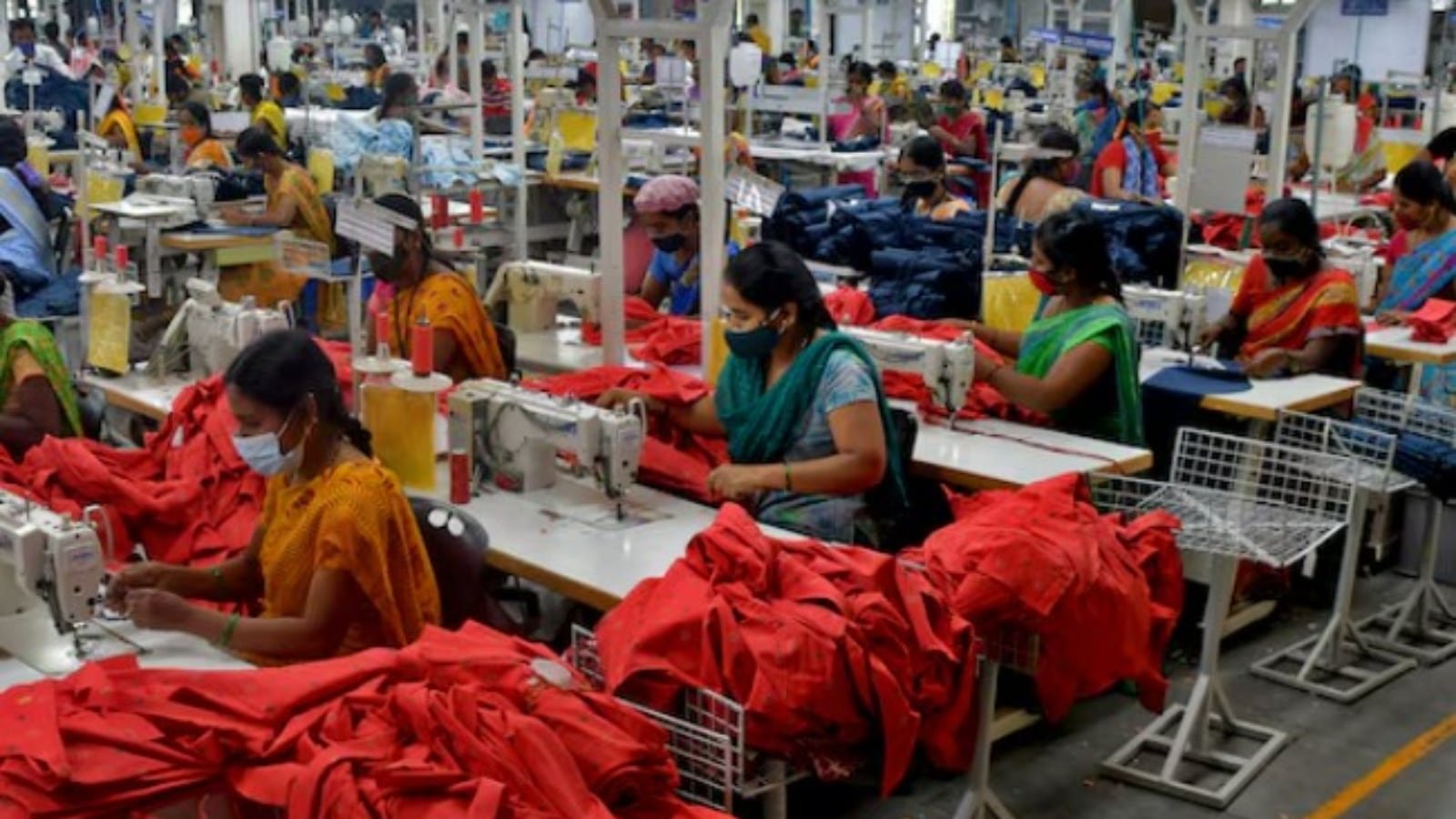
Apparel manufacturers, who accounted for 43% of all manufacturing establishments and 12% of all establishments in 2025, saw a 10% decline in net fixed assets addition, with outstanding loans falling 29%.
