Iran is deliberately targeting U.S. naval drones in the Strait of Hormuz to gather intelligence on American surveillance capabilities and learn how to evade U.S. defenses, drone experts warned Tuesday.
Tehran’s strategy is coordinated, they said, and involves exposing critical insights into U.S. Navy theater operations in the world’s most vulnerable maritime choke point even when classified data is uncompromised.
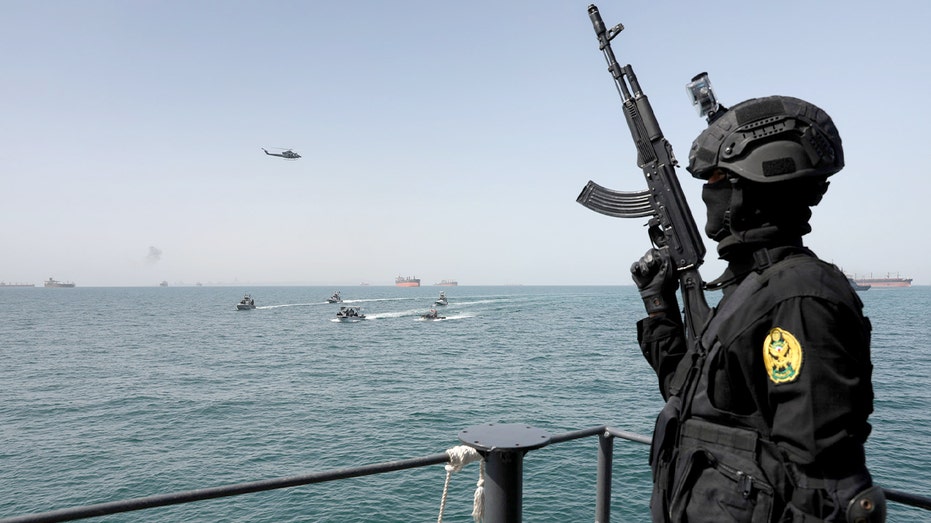
The warning came as tensions escalated in the Gulf region Sept. 14 after the U.S. military destroyed two Iranian small boats amid an attempted seizure by the Islamic Revolutionary Guard Corps (IRGC) of an American unmanned surface vessel (USV) patrolling the area, according to reports.
US MILITARY ATTACKS IRAN IN 'SELF-DEFENSE STRIKES' OVER WEEKEND
Iranian state media initially said the incident was a U.S. strike on civilian fishing vessels while its officials reported search-and-rescue operations off the coast of Kargan and near Larak Island, claiming local fishermen were missing.
U.S. Central Command (CENTCOM) spokesperson Capt. Tim Hawkins confirmed the attempted seizure on Tuesday.
"Iranian small boats recently attempted to take possession of a U.S. unmanned surface vessel, but they were unsuccessful after CENTCOM forcefully responded," Hawkins said.
"The surface drone remains under U.S. operational control."
"What’s going on with drones generally in the Strait right now—when we see all these types of intel capture missions that Iran is launching—we need to make no mistake that these are very coordinated, absolutely deliberate drone capture missions," Cameron Chell, CEO of U.S. drone manufacturer Draganfly, told Fox News Digital.
PENTAGON JUMPS FROM $225M TO $55B ON DRONES AS CHEAP ATTACKS OVERWHELM US DEFENSES
Chell warned that even a brief examination of a captured drone provides Tehran with a quick win by revealing how the U.S. conducts surveillance and how to counter those systems.
"If Iran captures a drone, it could give them an immediate tactical advantage," Chell said.
"It may not yield specific classified data, but it gives insight into the theater of operations, which at any given moment offers an advantage. I wouldn’t doubt it for a heartbeat that it is escalating."
"Just getting little tidbits of intel starts to paint a picture, giving them different attack plans, battle plans, and thoughts on what the U.S. might be doing. I would be very surprised if this wasn’t an ongoing effort."
WHO CONTROLS THE STRAIT OF HORMUZ RIGHT NOW? HERE'S WHAT THE SHIP TRAFFIC ACTUALLY SHOWS
Iran's attempts to capture drones underscore growing security volatility in the Strait of Hormuz, the vital international shipping lane where commercial transit has fallen below historic levels since the war broke out in February.
Chell emphasized that any access to captured hardware over the last six months would allow Iranian forces to evaluate sensitive onboard sensors.
"It really speaks to the bigger picture of how the whole intelligence infrastructure works of, say, the Navy, for example," Chell said.
"The other important thing is that when they get their hands on these drones—even if they’re only able to spend some time glimpsing at them before they have to evacuate or abort a mission—is they get a real understanding of the types of sensors on them."
"That gives them a complete picture of how they can launch attacks and evade the type of sensing equipment out there," Chell continued.
"They can understand how to counter or measure the intelligence being gathered, and potentially use that design offensively in their own equipment."
The latest escalation also follows a Sept. 8 incident involving Iran’s capture of a Dive-LD autonomous underwater drone manufactured by defense contractor Anduril.
While Anduril CEO Palmer Luckey said the drone was designed to operate in "environments too dangerous for humans where capture is an expected possibility."
"I can't get into the details, but it provided significant value for months before capture," Luckey dded.
IRAN’S DRONE SWARMS CHALLENGE US AIR DEFENSES AS TROOPS IN MIDDLE EAST FACE RISING THREATS
"Unboxing ceremony by our reverse engineers, tomorrow morning!" Iran’s embassy in Hyderabad also wrote on X.
U.S. Navy representatives however, said the recovered drone was an older model that had malfunctioned and gone dead in the water.
"The U.S. being alert to the fact that these are high-value targets dictates where and how they use and protect them," Chell noted.
"I don’t doubt that the captured underwater drone had sensitive information on it, but that’s not the point. Again, the point is, they want to see the type of equipment and information being gathered, or view logs to see where it has been. This all just puts the U.S. on higher alert."
Tehran has previously leveraged captured U.S. assets—including an RQ-170 Sentinel stealth drone seized in 2011—to bolster domestic technology and regional propaganda.
Then-President Barack Obama publicly asked Tehran to return the aircraft. Iran later claimed it reverse-engineered the platform to build domestic lookalikes.
In 2022, a U.S. Navy patrol ship and an MH-60S Seahawk helicopter intercepted an Iranian naval vessel attempting to tow a Saildrone surface vessel in the Gulf.
RUSSIA PREPARING HYBRID ATTACKS ON NATO'S EASTERN FLANK, INTELLIGENCE WARNS
"Iran actually has a history of attempting this in the past, and at times has been successful," Chell said, noting Washington takes the threat "very, very seriously."
"In other instances where they’ve gotten sail ship drones, for example, and tried to bring them into Iranian territory—" Chell said, pointing back to the RQ-170 seizure: "a number of Iranian drones look suspiciously like the RQ line."
"Still, when the U.S. knows a drone has been captured, they adjust their tactics and operational overview accordingly," Chell, whose firm has been awarded a five-year contract by the Government of Canada to provide low-cost tactical intelligence, surveillance and reconnaissance uncrewed aircraft systems to the Canadian Armed Forces, concluded.
"There is no question that autonomy and unmanned systems are the new standard in warfare," Chell said.