

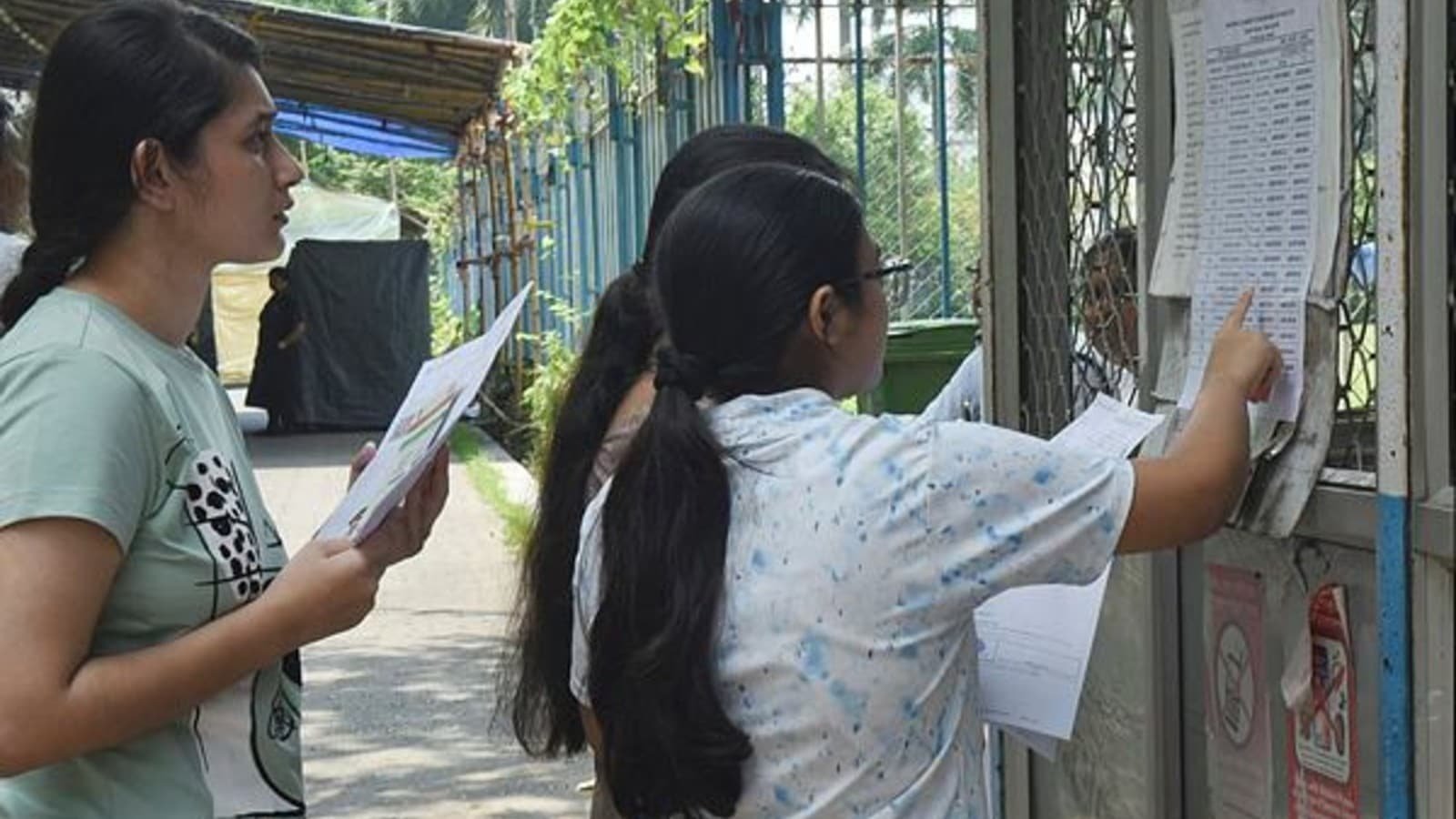
With the JEE Advanced 2026 exam just two days away, the focus has now shifted from qualifying for the test to performance strategy. However, a slight rise in the qualifying cut-off percentile in JEE Main this year has also drawn attention among aspirants.
This year, over 15.3 lakh students took JEE Main, compared to around 14 lakh last year. Since only about 2.5 lakh candidates across categories qualify for JEE Advanced, the percentile required to be in that pool rises as participation increases. The general category cut-off has inched up to around 93.4 percentile from about 93.1 last year.
What this means for JEE Advanced aspirants
According to Amit Aahuja, head of the JEE counselling division at Allen Career Institute, Kota, suggests that aspirants should work with a clear attempt plan rather than trying to maximise attempts. “Students should focus on questions they can solve accurately, avoid negative marking, and build a strategy based on their strengths,” he said. Based on past trends, he noted that scoring around 100–120 marks in JEE Main has typically been sufficient for general category candidates to qualify, but JEE Advanced requires a much higher level of preparation.
Students should now prioritise mock tests aligned with the JEE Advanced pattern, analyse mistakes carefully, and strengthen revision. The exam demands strong conceptual understanding and the ability to handle high-difficulty questions under time pressure.
An IITian now, who appeared for JEE Advanced earlier, said the key was controlled attempts. “I realised that attempting fewer questions with high accuracy worked better than trying too many,” he said.
Another former aspirant, now in an NIT, highlighted the importance of practice. “Mock tests helped me understand the unpredictability of JEE Advanced and manage time better,” she said.
Another candidate from IIT now, who improved his performance in a later attempt, added that learning from mistakes was crucial. “Understanding where I went wrong in JEE Main helped me prepare better for JEE Advanced,” he said.
Story continues below this ad
As competition intensifies with rising participation, experts say aspirants should focus less on cut-offs and more on maximising their own performance in JEE Advanced.
According to Ahuja, the relationship is straightforward. “The cut-off is directly proportional to the number of students appearing. As the number increases, the percentile required to be among the top candidates also increases,” he explained, adding that the system is designed to filter a fixed number of candidates for JEE Advanced.
He further clarified that the cut-off is determined by percentile, not marks. With JEE Main conducted in multiple shifts, a normalisation process ensures fairness across varying difficulty levels. “The cut-off is not based on how easy or difficult the paper is. It is based on percentile after normalisation,” he said.
Dr Saurabh Kumar, founder and CEO of Shiksha Nation, also noted that the rise reflects broader trends in preparation. Increased access to quality study material and coaching — both offline and online — has enabled more students to score highly. Repeated attempts and familiarity with the exam pattern have further helped candidates refine strategies and improve performance, especially at the top end.
Story continues below this ad
Experts emphasise that while perceptions around paper difficulty may influence scores in a given session, the dominant factor behind the rising cut-off remains the expanding candidate pool competing for a fixed number of qualifying spots.
