

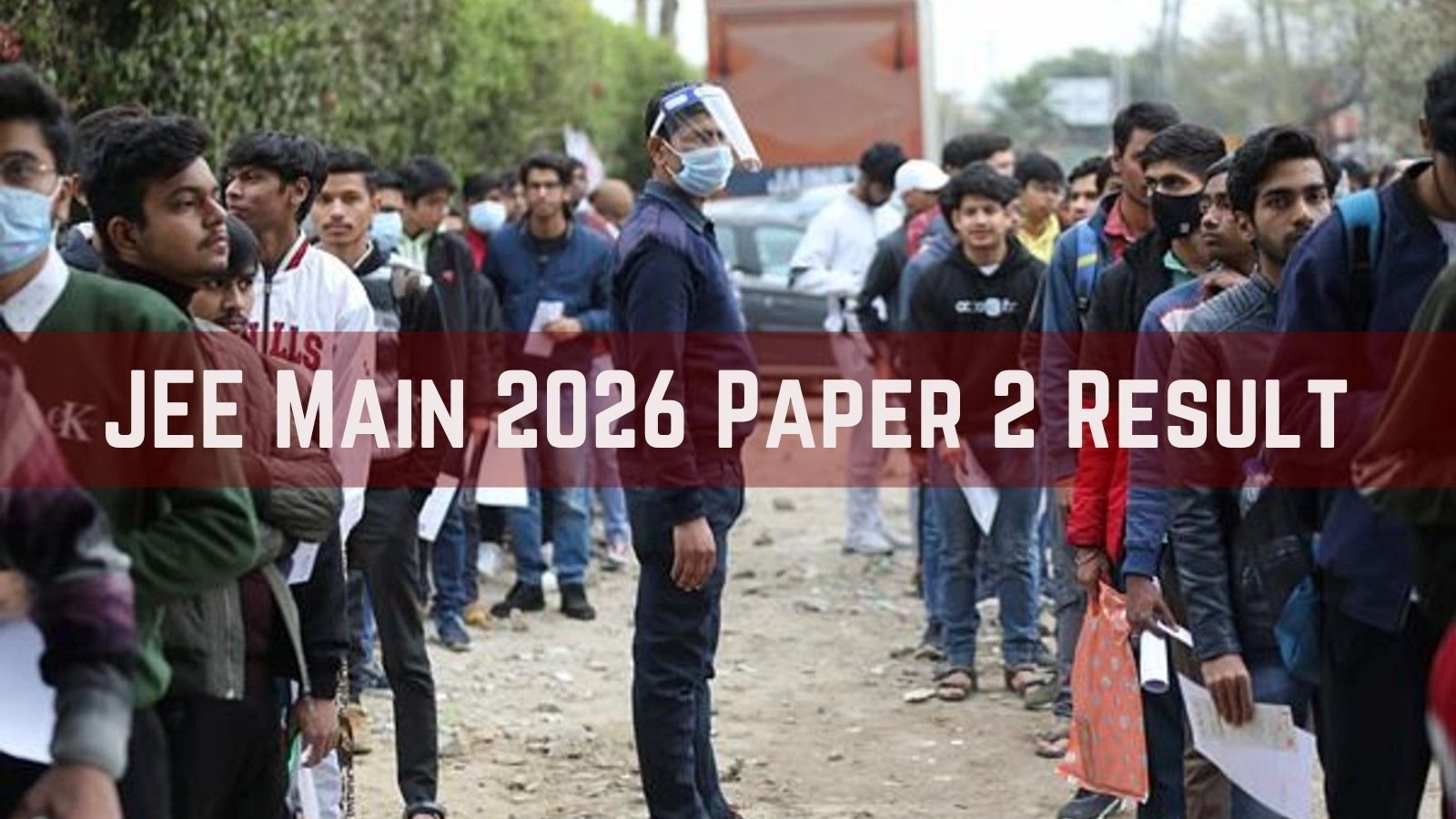
The JEE Main paper 2 was held for paper 2A or the BArch paper, paper 2B or the BPlanning paper and papers 2A and 2B, both. The Agency on April 7 held the paper 2 (Express Photo by Tashi Tobgyal/ representative)
The National Testing Agency (NTA) will be announcing the Joint Entrance Examination (JEE) Main 2026 paper 2 result anytime soon. The JEE Main paper 2 was held for paper 2A or the BArch paper, paper 2B or the BPlanning paper and papers 2A and 2B, both. The Agency on April 7 held the paper 2 and released the JEE Main final answer keys on May 4. Candidates can check the JEE Main paper 2 result at jeemain.nta.nic.in, when released.
No question has been dropped from the JEE Main 2026 paper 2 final answer key. For more information on JEE Main, check IE Education.
JEE Main 2026 BArch (Paper 2A): Exam pattern and marking
The BArch paper was divided into three parts
– Part I – Mathematics: 20 MCQs (Section A) + 5 numerical questions (Section B) — 100 marks
– Part II – Aptitude Test: 50 MCQs — 200 marks
– Part III – Drawing Test: 2 questions (pen-and-paper mode) — 100 marks
– Total: 77 questions, 400 marks
Marking scheme
Correct answer: +4 marks
– Incorrect answer: -1 mark (no negative marking in Drawing Test)
– Unanswered: 0 marks
For numerical questions, answers must be entered as integers rounded to the nearest value.
JEE Main 2026 BPlanning (Paper 2B): Exam pattern and marking
The BPlanning paper is conducted fully in CBT mode and includes
– Part I – Mathematics: 20 MCQs + 5 numerical questions — 100 marks
– Part II – Aptitude Test: 50 MCQs — 200 marks
– Part III – Planning-based questions: 25 questions — 100 marks
– Total: 100 questions, 400 marks
Marking scheme
– Correct answer: +4 marks
– Incorrect answer: -1 mark
– Unanswered: 0 marks
For both BArch and BPlanning papers, raw scores are converted into NTA scores, and the final merit list is prepared by combining scores from all shifts and sessions.
Story continues below this ad
In case of a tie, ranks are determined based on:
1. Higher NTA score in Mathematics
2. Followed by Aptitude Test score
3. Then Drawing Test (BArch) or Planning section (BPlanning)
4. Fewer incorrect responses relative to correct attempts
5. Section-wise accuracy comparisons
If the tie persists even after all criteria, candidates are assigned the same rank.
Special marking conditions
If a question has multiple correct answers, full marks are awarded to those selecting any correct option. If all options are correct, all candidates attempting the question receive full marks. If a question is dropped, full marks are awarded to all candidates in that shift.
