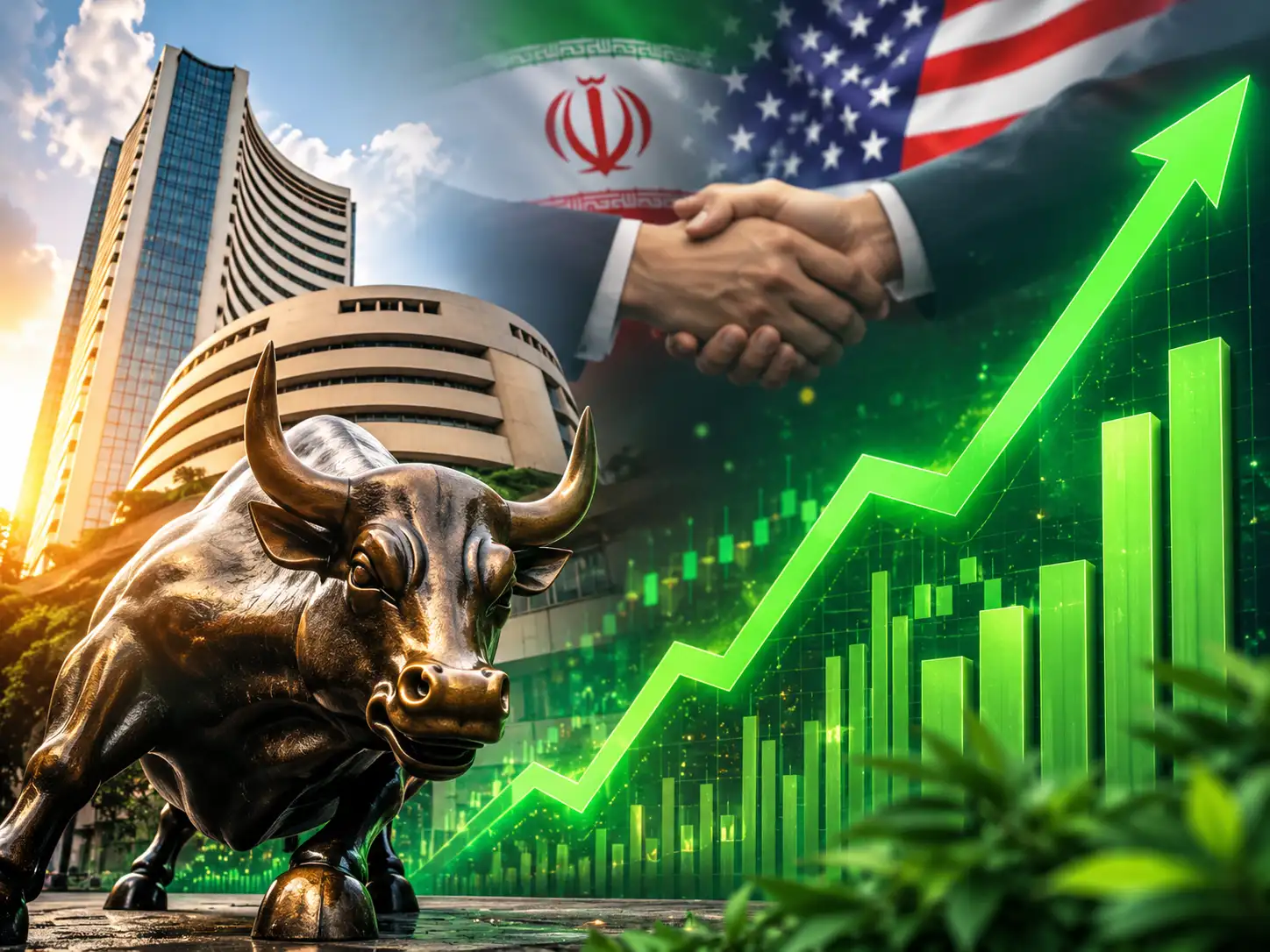
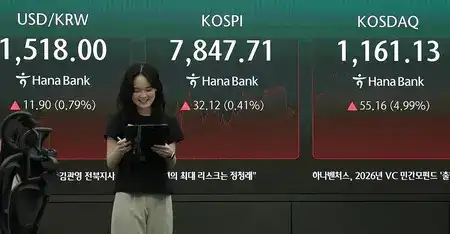
South Korean stocks surged another 6% on Monday, rising 480 points to 8,603 after the US and Iran agreed to end their nearly four-month war, with both sides announcing an immediate and permanent halt to military operations. US President Donald Trump and Iran’s deputy foreign minister said an initial agreement had been reached to end the conflict and restore shipping through the Strait of Hormuz.
The official signing ceremony is scheduled for Friday, June 19, in Switzerland.
With today’s surge, the index is up more than 100% in 2026. The rally has been largely driven by semiconductor heavyweights Samsung and SK Hynix, which together account for more than half of the KOSPI. Their shares have gained 163% and 240%, respectively, this year. On Monday alone, Samsung rose 5%, while SK Hynix advanced 7%.
Read more: F&O Talk: Bullish Nifty charts; Sudeep Shah picks 7 stocks, outlines HDFC Bank, Sterlite Tech strategy
What’s fuelling the Kospi rally?
"The Deal with the Islamic Republic of Iran is now complete," Trump wrote on Truth Social. "Ships of the world, start your engines. Let the oil flow," he added. Trump also said vessels would be able to pass through the Strait of Hormuz "toll free" and that a U.S. naval blockade of Iranian ports would be lifted.
Iran's semi-official Mehr news agency reported that the draft agreement includes a plan to reopen the Strait of Hormuz within 30 days under arrangements overseen by Iran. Deputy Foreign Minister Kazem Gharibabadi said negotiations on a broader settlement would continue during the proposed 60-day ceasefire period.
Tech rout over?
The rally marks a dramatic turnaround from just a few days ago, when South Korean equities were caught in a global technology selloff. AI and semiconductor stocks, among the best-performing sectors in 2025 and 2026, came under pressure as investors questioned whether valuations had run too far ahead of fundamentals.
Also read: Crude Oil Price Today (June 15): Oil hits March lows, down 4% as US-Iran sign peace deal. What are experts saying?
South Korea, given its deep exposure to the global AI supply chain, was hit particularly hard. The KOSPI tumbled as much as 8% in a single session last week.
Despite that setback, enthusiasm around artificial intelligence remains strong. Technology companies worldwide continue to invest heavily in advanced AI models and computing infrastructure, driving demand for high-bandwidth memory chips. That trend has boosted investor interest in South Korean chipmakers, which play a crucial role in the global AI ecosystem.
What’s next?
Attention is now turning to the US Federal Reserve’s Federal Open Market Committee meeting on June 16–17. According to CME Group’s FedWatch tool, markets largely expect policymakers to leave interest rates unchanged. The meeting will also mark the first policy announcement under newly appointed Fed Chair Kevin Warsh.
Inflation, however, remains a key concern. The Fed’s preferred inflation gauge, the Personal Consumption Expenditures (PCE) Index, rose 3.8% in April, partly reflecting higher crude oil prices linked to tensions in West Asia.
“The US Federal Reserve’s policy decision will be the most significant event. Market participants will closely assess the Fed’s commentary on inflation, growth, and the future trajectory of interest rates,” said Ajit Mishra, SVP, Research, Religare Broking.