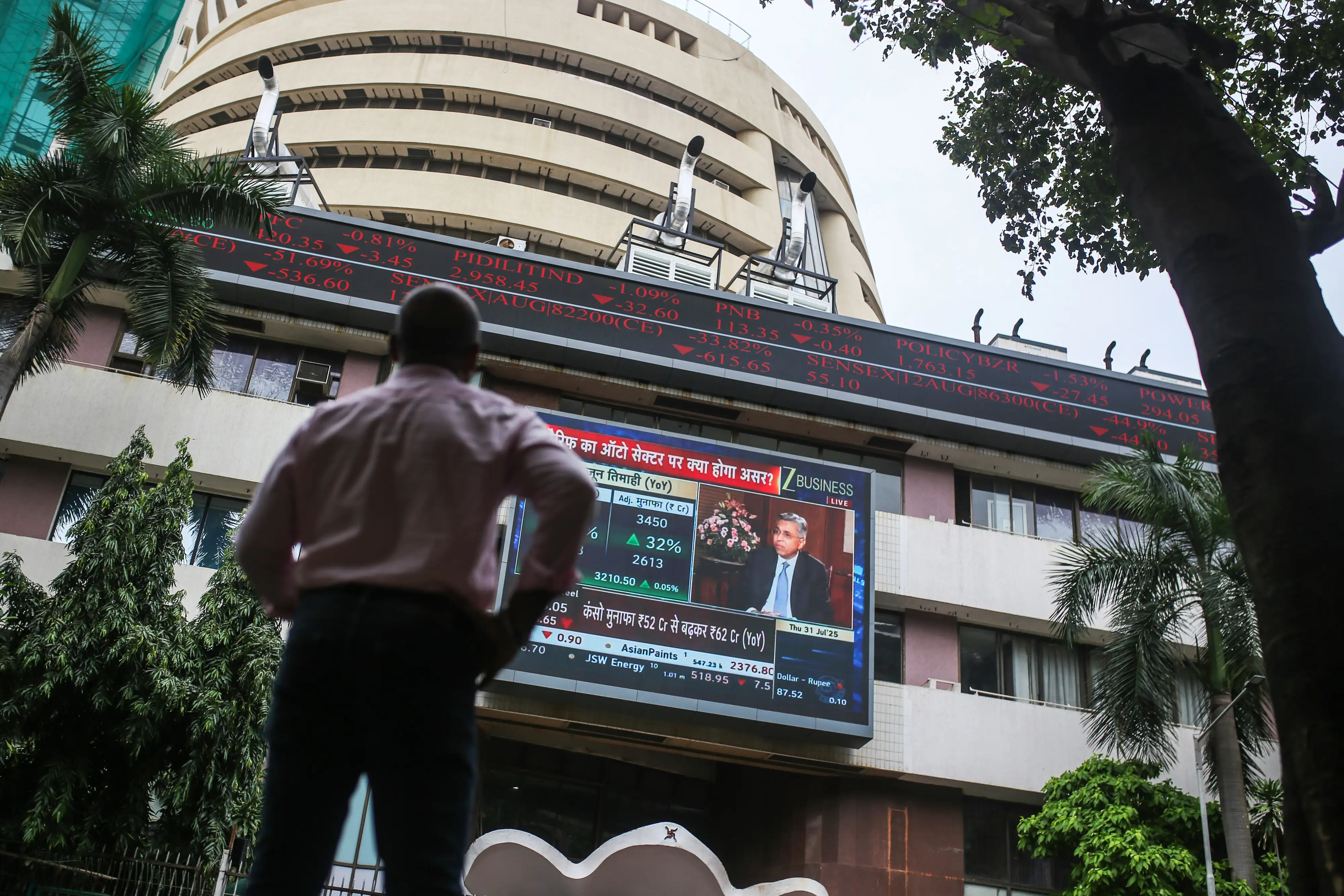


After two years of muted index returns and a record Rs 2.85 lakh crore FII selloff in 2026, investors are questioning where the market goes next. Axis AMC’s Head of Equity, Shreyash Devalkar, says the real story lies beneath the headlines. In this interview, he explains the AI-driven FII exodus, the large-cap versus mid-cap debate, sector opportunities and why SIPs remain his preferred strategy.
Edited excerpts from a chat:
Given the fact that the equity market has underperformed in the last 2 years, where investors have hardly made any return at an index level, what is your outlook now?
The headline market and market internals are telling different stories. The headline is reacting to macro factors — FII flows, rupee concerns, crude oil prices — all ultimately tied to the ongoing war. The segments underperforming the most are banks and NBFCs, precisely because these macro issues hit them hardest. The government and RBI have responded quickly, which is genuinely welcome. These measures could be meaningful. But resolving the root cause — the balance of payments pressure, the rupee, and what flows from that — matters more than any one-off flow measure.
FIIs have already pulled out around Rs 2.85 lakh crore from the market in 2026 alone. How much of it is due to macros, AI trade and how much due to valuations?
It’s because of the AI trade. Global investors are seeing growth opportunities in AI-linked markets, against our nominal GDP growth in high single digits. That pull isn't something we can control. What we can control is domestic policy response, and on that front the government has done what it can to bring stability.
The underlying economy, importantly, has held up well. Q4 earnings growth came in at 14–15%, cash flows were healthy, there's no visible NPA stress, and company commentary hasn't flagged any serious ground-level deterioration yet. The impact of the war may show up more clearly by the end of Q2, but as of now the economy has been resilient. These macro headwinds, the sooner they resolve, the better — but they're masking what is otherwise a decent underlying picture.
Which sectors do you think offer reasonable growth at reasonable valuations?
Large caps are reasonably priced, but that comes with a caveat — their growth is largely anchored to nominal GDP, and that limits how much they can outperform. Banks can't sustainably outgrow GDP. Large FMCG companies face the same ceiling. The same logic applies to large-cap IT, autos, insurance, telecom, OMCs, and even larger consumer discretionary and retail names — they're big enough now that GDP is essentially their growth rate. That's why they look cheap. You get valuation comfort in this space, but you carry growth risk and timing risk. You can't predict when the macro overhang lifts — whether it's three months, six months, or a year. So entering large caps today means accepting that uncertainty in exchange for reasonable valuations.
On the other side, mid and small caps have growth. Power, especially renewable power, data centres, EV transition, hospitals, and capital-markets-linked businesses are all doing well. These are themes with genuine structural tailwinds, and they're represented more in the smaller end of the market. The challenge is that this is now well-known and well-owned. Valuations in this space have run up, and in some cases significantly. Every quarter, the market waits for a trigger in large caps; when it doesn't come, the money rotates right back into mid and small caps. That cycle has been playing out since 2024 into 2026.
So how are you positioned in your funds?
In the large-cap fund, the portfolio is kept almost entirely in large caps — that's the mandate, and the team has chosen to honour it strictly. In multicap and balanced advantage funds, the approach is more balanced — exposure on both sides, growth and value, without being skewed entirely in either direction. That's reflected in category outcomes: mid-cap funds are outperforming multicap, multicap is outperforming flexicap, and flexicap is outperforming Large & Midcap funds. That's the natural order given where the growth is sitting right now.
On risk management within the portfolio, active steps are being taken wherever valuations look stretched. In the multicap fund, mid-and-small-cap allocation is running closer to 25% rather than the 30–35% the category permits. In the Large & Midcap fund, the mid-cap allocation is closer to 65% rather than pushing toward 75%. These are deliberate calibrations — trimming exposure where the upside looks limited, without exiting entirely, because anchoring purely on valuation can leave you waiting indefinitely for a macro catalyst that may not come on schedule.
It's also worth noting that expensive valuations aren't confined to mid and small caps. Within large caps, the Nifty Next 50, particularly the bottom 25 names in that index, are also trading at full valuations, not cheap levels.
If someone has fresh money to invest in this stage of the market, would you recommend SIP or lumpsum investments?
SIP is the preferred approach. A lump sum makes sense when valuations are clearly cheap, or when there's a specific identifiable event where you can assign a reasonable probability of a positive outcome and position ahead of it. Neither condition is clearly met right now. The longer uncertainty persists, the less conviction the market has about a near-term resolution. For investors who have been running SIPs for the last two years, the right move is to continue. Someone with very strong conviction on crude resolution could consider a lump sum but that conviction needs to be robust and keep strengthening over time.
What's your broader view on the IT space?
IT is not a buy-and-hold at current levels. The structural issues predate AI — growth in US corporate IT services spending had already slowed, and that's not a transitory phenomenon. AI has added further pressure by giving clients another reason to hold back budgets. So you have two compounding headwinds: clients not wanting to increase spend given macro uncertainty, and AI creating substitution risk.
If growth lands at 5–6%, that's not sufficient justification for equity risk — a fixed-income product delivers comparable returns with far less uncertainty. The ex-growth valuation for this kind of business is closer to 10–12 times earnings. We're not at that level yet, though rupee depreciation is providing some support, which is why stocks aren't in freefall. If you add it up — 3–5% earnings growth, plus ~4% combined dividend yield and buybacks, plus rupee tailwind — the total return isn't catastrophically bad. That's why the sector is more likely to see periodic pullback trades around specific news flow — an AI narrative shift, a better-than-expected quarter — rather than a sustained re-rating. It's a trade you may or may not be able to capture, not a long-term compounding story.