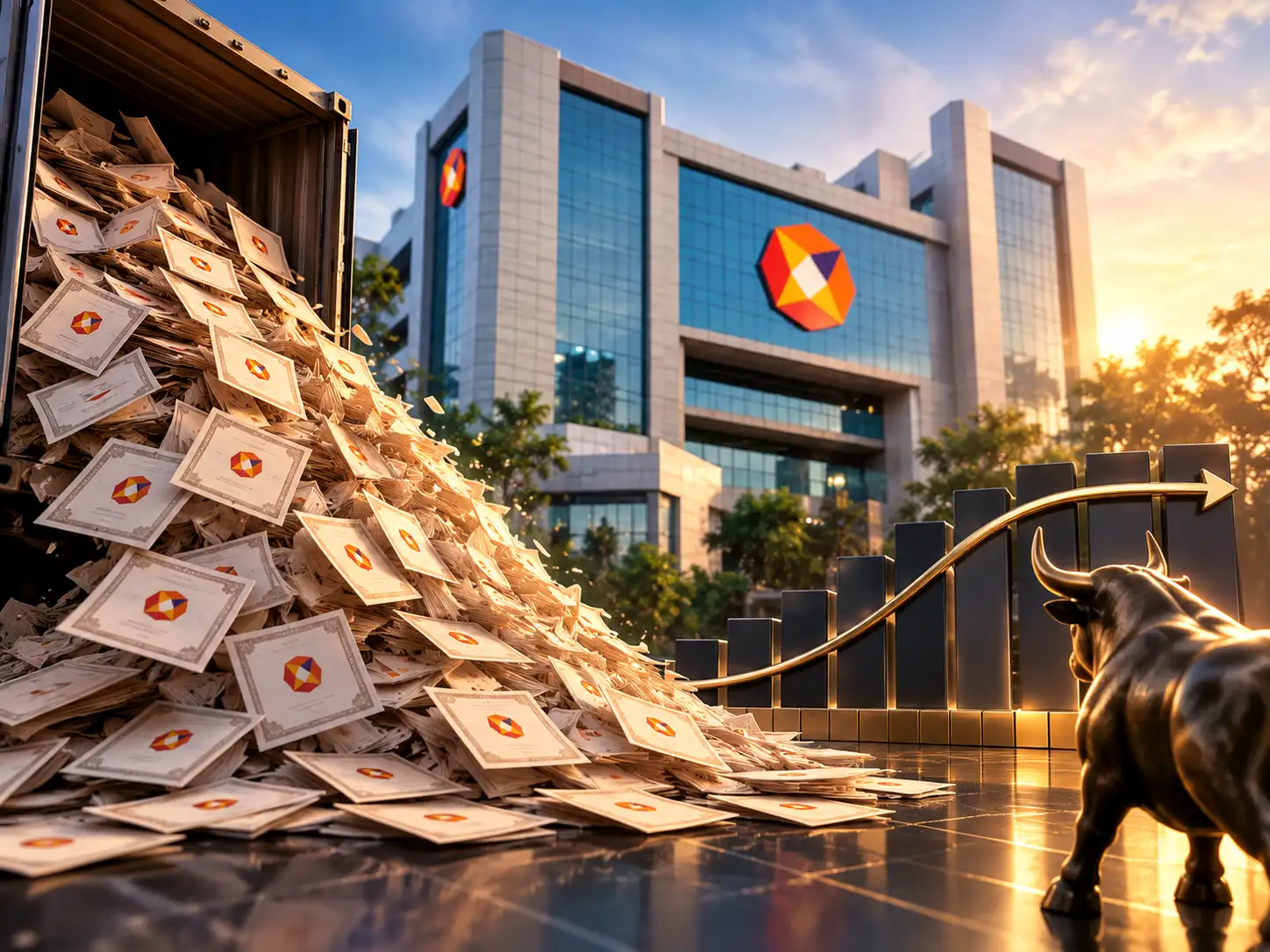
The NSE's Rs 22,569 crore IPO has opened for subscription, but the absence of a fresh issue and a cooling grey market premium have raised some doubts over how much room the stock may have for listing-day gains. The IPO is entirely an offer for sale, with existing shareholders selling up to 12.64 crore shares at an upper price band of Rs 1,785 apiece.
NSE will not receive any proceeds from the issue. The offer opened on September 17 and received about 40% subscription. It will remain open for investors till September 21 with the shares expected to list on the BSE on September 24. State Bank of India, Bank of Baroda, Canada Pension Plan Investment Board and other existing investors are among the selling shareholders.
For detailed NSE IPO action, click here
The grey market, however, has turned less enthusiastic as the issue moved closer to opening. NSE's GMP has fallen from around Rs 192 when the price band was announced to about Rs 148 currently. At the upper price of Rs 1,785, the current GMP implies a listing price of roughly Rs 1,933, or an upside of just over 8%.
The decline has put the spotlight on whether NSE's all-OFS structure could limit listing gains, particularly as more than Rs 22,000 crore worth of existing shares come into the public market at once.
Also Read: Why can’t NSE trade on its own platform after the IPO, and is it a big deal?
Analysts, however, are divided on how much weight investors should give to the OFS tag. Anish Maheshwari, CEO and MD of VSure Investment Affairs, said the structure by itself should not be seen as an overhang because NSE is already a mature and highly cash-generative company.
"I also wouldn’t see the 100% OFS as an overhang by itself. NSE is already a mature, cash-generating business, so fresh capital is not the central investment thesis here," Maheshwari said.
For a mature exchange such as NSE, the argument for raising fresh capital is also less compelling than for a young company that needs money to build factories, repay debt or fund expansion. Listing performance, Maheshwari said, will ultimately depend more on the entry valuation, earnings visibility and demand for the shares.
Shruti Jain, Chief Strategy Officer at Arihant Capital Markets, also said the distinction between a fresh issue and an OFS is unlikely to determine NSE’s listing performance.
"Historically also, several OFS, including BSE itself which is the closest competitor, listed with strong gains despite being an OFS," Jain said, adding that pricing, valuation, demand and prevailing market conditions would matter more.
There is, however, a supply argument against expecting a very large listing pop. Prathamesh Kadival, Research Analyst at Bonanza, said existing investors selling shares without any capital going into NSE could act as a restraint on near-term gains.
"The catch lies in the structure, because the entire issue is an Offer for Sale," Kadival said. With shareholders such as SBI and Bank of Baroda trimming their stakes, the large supply of shares may cap the gains on listing, he added.
The size of the IPO could also make it harder to reproduce the sharp listing gains sometimes seen in smaller issues where relatively limited share supply chases heavy demand. Avinash Gorakshakar, Founder and Head of Research at Avinash Mentor Research Services, expects the listing to remain positive but said expectations should be tempered.
"The grey market and structural hype indicate a positive listing outlook. However, manage expectations due to the massive size and lack of a fresh-issue growth engine," Gorakshakar said. He expects the immediate upside to be more measured than in smaller, high-growth IPOs.
Brokerages positive on the IPO
At Rs 1,785, LKP Securities values NSE at around 42.9 times FY26 earnings and has recommended subscribing to the IPO. YES Securities has also given a subscribe call, saying NSE is available at about a 21% discount to BSE on a P/E basis, with BSE trading at roughly 54.3 times FY26 diluted earnings.
Angel One has also recommended subscribing, arguing that NSE’s market leadership, profitability and long-term exposure to the growth of Indian capital markets support the valuation despite regulatory risks around derivatives volumes.
Disclosure: This article has been written by Podishetti Akash, who is not a SEBI-registered Research Analyst or an Investment Adviser. Podishetti Akash and her ‘relative(s)’ (as defined under Section 2(77) of the Companies Act, 2013) do not hold any financial interest in the companies mentioned in this article as of the date of publication. The views/recommendations mentioned in this article, wherever applicable, are those of the respective SEBI-registered Research Analyst/brokerage and have been reproduced/reported with due attribution. They should not be construed as the views or recommendations of The Economic Times Digital or the journalist. Readers are advised to consider the original research report and make their investment decisions based on their own assessment. Brokerage disclourses here.