

Post Content
OpenAI on Wednesday, April 22, introduced workspace agents in ChatGPT. The latest offering from the Sam Altman-led AI startup is a big leap in AI, especially from a passive assistant to an active agent that can collaborate on complex tasks and multi-step work across teams and departments in an organisational setup.
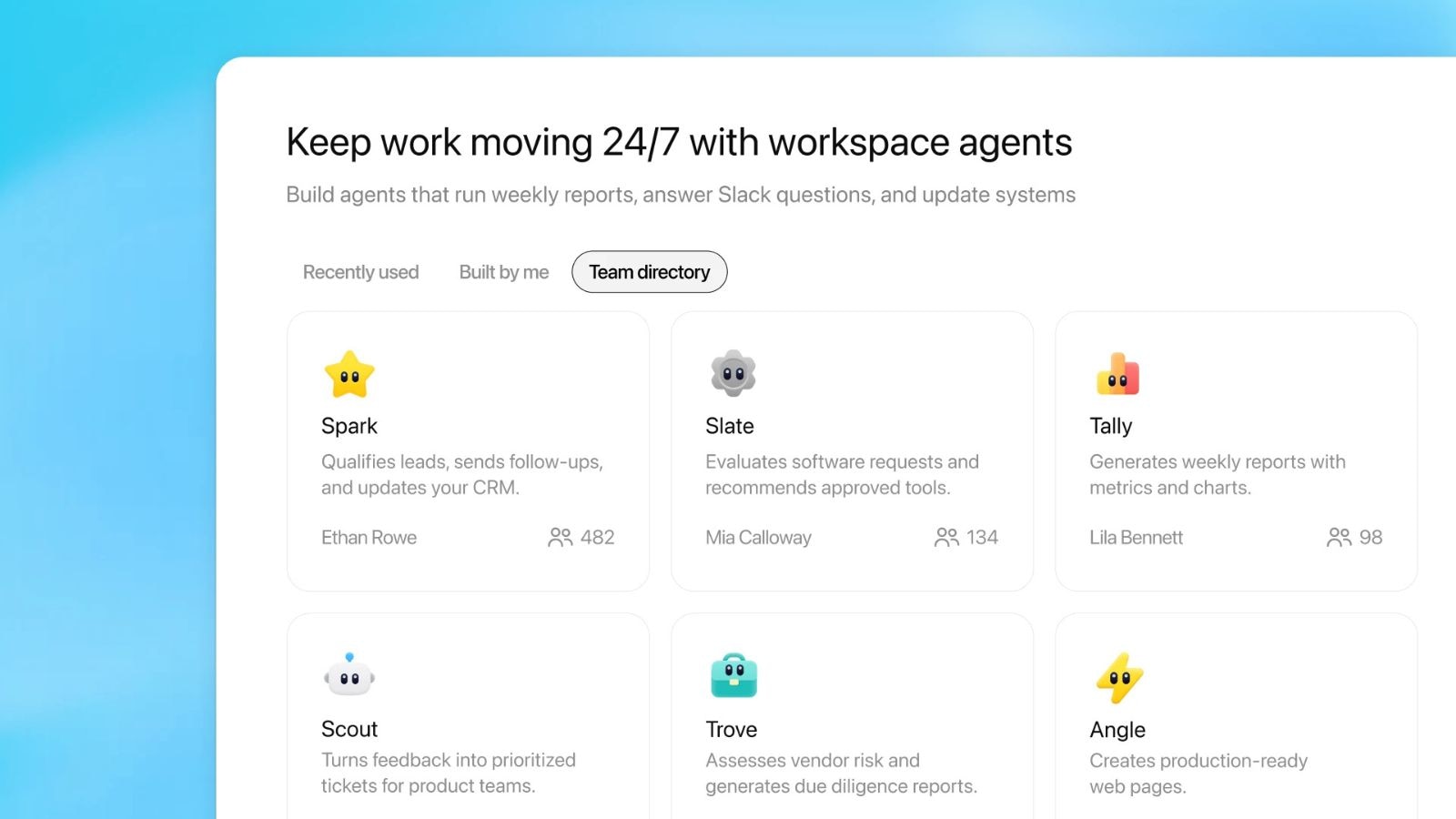
In simple words, workspace agents are AI systems that teams in a company can build, share, and depute within ChatGPT to automate routine or repetitive tasks. Unlike the regular AI-powered chatbots that respond to prompts, these AI agents have been designed to perform tasks autonomously. OpenAI’s workspace agents are powered by its Codex AI coding assistant. These agents can tackle a wide range of activities such as writing code, summarising documents, preparing reports, or even responding to messages, and all these within the workflow of an organisation, the company said.
Also Read | ChatGPT Images 2.0 brings reasoning to AI visuals, can now create full comics
Note, instead of responding to everyday user queries, workspace agents are developed for ‘repeatable, structured workflows’ that usually involve multiple tools, steps, and collaborators.
How do workspace agents work?
These AI agents operate in the cloud, meaning they don’t need constant user input. This means once they are assigned a task, they continue to work in the background, even when the user is offline. They can also be integrated with workplace tools such as Slack, email systems, and internal databases. This lets them understand context, perform tasks, and move the same forward across platforms. For example, a sales agent could pull insights from call notes, analyse customer data, draft follow-up emails, and share updates with the team.
All of this can happen automatically, as the agent follows predefined workflows and rules. Moreover, users can create these agents simply by describing workflows in natural language; ChatGPT later guides them through building the agent step-by-step. The new workspace agents are being pitched as the next phase in the evolution of OpenAI’s ‘Custom GPTs’ that allow users to create tailored chatbots. While Custom GPTs came in handy for specialised use cases, they were essentially just chatbots largely limited to responding to prompts. On the contrary, workspace agents are proactive and action-orientated; they can plan, execute, and iterate on tasks, OpenAI said.
What are its key capabilities?
Workspace agents can handle complex workflows involving multiple steps, tools, and decisions much beyond casual question-answering. They also feature shared team context, which means that unlike individual AI assistants, workspace agents are designed to be used by teams as they can access shared data, follow organisational processes, and maintain continuity across tasks.
Most importantly, they come with persistent operation. This is because they run in the cloud; they can continue to work in the background, execute scheduled tasks, and respond to triggers automatically. Another highlight is tool integration as workspace agents can connect to external apps and systems. This allows them to act directly – sending emails, updating records, or generating documents. Besides, they are capable of learning from these interactions, improving over time as teams refine instructions and workflows.
Story continues below this ad
Considering that the agents perform autonomously, another key concern would be control, safety, and governance. In this regard, OpenAI has emphasised that organisations remain in control when deploying workspace agents. This means admission can define what data an agent can access, which tools it can use, and what actions may require approval by humans.
Also Read | OpenAI sees executive departures amid enterprise pivot, pullback from ‘side quests’
In case of sensitive tasks, agents can be required to seek permission before they proceed. The company said that there are also enterprise-grade safeguards in place such as monitoring tools, usage analytics, and protections against threats like prompt-injection attacks. OpenAI claims that a compliance API allows companies to track how agents are configured and used, and this offers visibility into their operations once deployed.
What are the use cases of workspace agents?
Some of its early examples suggest that these agents can reduce manual efforts across industries considerably. Sales teams can use these agents to compile research, vet leads, and even draft communications. Product teams can use workspace agents to summarise user feedback and respond to internal queries. Meanwhile, finance teams can automate processes like reconciliations and reporting. According to OpenAI, in some instances, tasks that once took several hours each week could now be run automatically in the background.
In essence, workspace agents signal a broader shift in AI – from tools that assist individuals to systems that can perform tasks on behalf of teams. This also changes how AI is used by organisations, as it can now manage entire workflows, act independently, and reduce the constant need for oversight in repetitive tasks. OpenAI’s latest launch places it in a rapidly evolving category known as agentic AI or systems that actively perform tasks. The company’s closest competitor, Anthropic, has introduced a similar tool called Claude Cowork and Managed Agents in recent times. However, considering the pace of innovation, it seems the next phase of AI would be more about capable digital assistants than better chatbots.
