

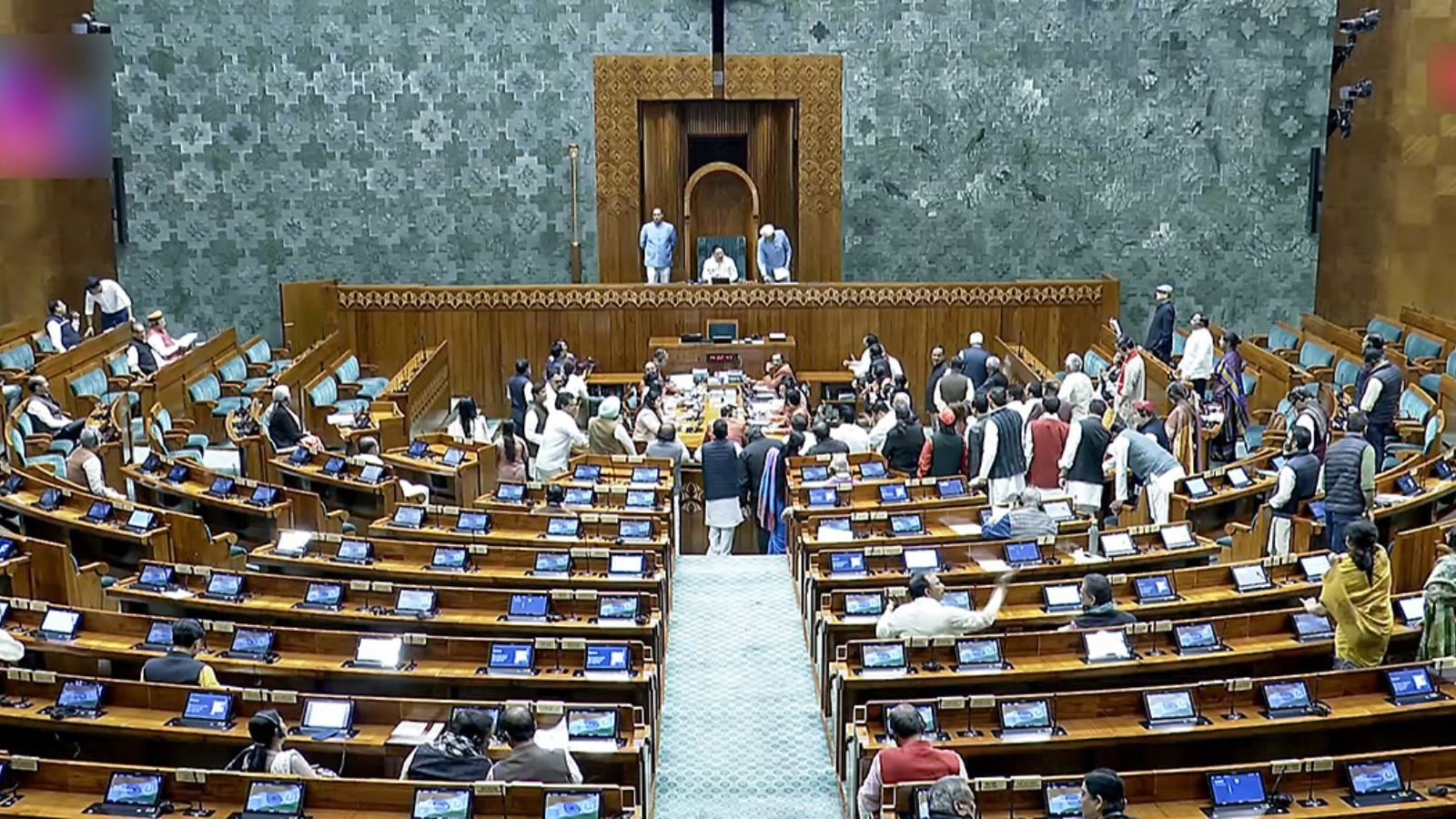
Senior Congress MP KC Venugopal raised a point of order regarding the timing of the government’s gazette notification. (File Photo)
Hours after a notification was issued stating that the Women’s Reservation Act, 2023, will “come into force” on April 16, a row erupted in Lok Sabha on Friday as the Opposition demanded answers from the government and Union Law Minister Arjun Ram Meghwal about how amendments to the legislation could be moved without the Act being notified.
Senior Congress MP KC Venugopal said, “Yesterday morning, the Law Minister introduced the Constitutional Amendment Bill, 2023. Last night, an extraordinary gazette notification came. The notification is very clear: ‘S.O. 1922(E) – In exercise of the powers conferred by sub-section (2) of section 1 of the Constitution (One Hundred and Sixth Amendment) Act, 2023, the Central Government hereby appoints the 16th day of April, 2026, as the date on which the provisions of the said Act shall come into force.”
“Our question: Without notifying, how can the minister move an amendment?” Venugopal asked.
Other Opposition members joined the chorus, seeking answers from Meghwal, who refused to speak on the issue. Speaker Om Birla told the House he will give a ruling on the issue.
Also Read | 2023 women’s quota law comes into force as NDA lacks numbers: What are the options before govt?
DMK MP Kanimozhi Karunanidhi, who was the first MP to speak in the discussion, also echoed Venugopal’s question and demanded answers from the government.
“The latest available census is 2011. The Home Minister told us yesterday that Tamil Nadu will have 59 seats after delimitation… Your government thinks what it needs is what the nation needs and deserves,” she said.
“The delimitation commission will be chaired by a Supreme Court judge who will be appointed by the government, without any consultations with the CJI, without any confirmation from Parliament… The HM said that a 50 per cent increase in seats will occur… What happens if the delimitation commission doesn’t listen to the home minister… Where will we go for justice? Where is our guarantee?” She asked.
Story continues below this ad
“You can’t wait for two weeks, and you want us to believe that you care for women’s rights. This is an electoral escape for the government.”
Also Read | As Parliament discusses women’s quota, Opposition women MPs weigh in
“Tying women’s reservation to delimitation is a trap… The BJP is using women as a human shield. The women of Tamil Nadu who have the highest literacy rate… They will not allow their rights to be hijacked.”
“I want to ask the home minister why can’t you give reservations to the existing 543 members… The women of this country have been starved for political power.”
Also Read | How proposed women’s reservation Bill could affect delimitation process
“This is not federalism but only convenient politics… The states under our Constitution do not depend on the Centre for its legislation… This government doesn’t recognise the rights of the states. It simply thinks we are here to serve our masters in Delhi as per the diktats,” said Kanimozhi.
Story continues below this ad
All Members of Parliament from the Dravida Munnetra Kazhagam are wearing black in protest against the notification of the bill on women’s reservation.
Hours after the 2023 Act was notified, there was no official word on why the enforcement of the 2023 law’s provisions was notified in the midst of the Lok Sabha debate on the amended 2026 Bill. The Opposition called it a “desperate attempt” to save the 2023 law if the 2026 Bill with amendments failed to clear the House.
The notification issued by the Ministry of Law and Justice in the Gazette of India Thursday evening stated: “In exercise of the powers conferred by sub section (2) of section 1 of the Constitution (One Hundred and Sixth Amendment) Act, 2023, the Central Government hereby appoints the 16th day of April, 2026 as the date on which the provisions of the said Act shall come into force.”
The Constitution amendment Bills will need to be cleared by both Houses with a special majority, which means two-thirds of those present and voting, which should not be less than one-half of the total strength of the House. If all MPs are present, the first hurdle will be to garner the two-thirds support.
