

Post Content
ASUS is banking on premium laptops to expand its reach in India, aiming to make high-end devices more accessible to a growing middle class, according to its India Vice President Arnold Su.
“If you want to own a new premium Asus ZenBook or an ROG gaming notebook, you need to spend more. But today, if you visit Asus Select, Asus’s authorised refurbished laptop programme, you can get a device with a one-year warranty that is as good as new, at a 20 to even 40 per cent discount. This means you can still own a premium laptop with the latest CPU and specifications,” said Su.
This strategy, Su added, is different from that of some competitors, who continue to sell five- to six-year-old laptop models under the premium label, but is similar to how many automotive brands attract customers who want a premium car but are not ready to pay the full price.
His comments highlight one reason why Asus has ambitious plans to expand its operations in India: the country’s vast population, with a growing middle class willing to spend more on high-end notebooks.
“Before COVID-19, the average selling price in the Indian market was between Rs 35,000 and Rs 45,000 for PCs in terms of end-user sale price. But today, over the past three years, the average selling price has risen to between Rs 58,000 and Rs 65,000,” said Su.
Looking at India
Su added that while India has always been perceived as a price-sensitive market, a shift is already underway, with more customers moving from the entry-level segment to the premium segment. He said while the average income may not have gone up, there has been a shift in perception, with Indian consumers increasingly wanting better products. This, he noted, is where the adoption of no-cost EMI is driving more premium laptop sales.
Arnold Su, Vice President, Consumer & Gaming Business, ASUS India
“Before the pandemic, only about 5 to 10 per cent of our customers opted for no-cost EMI. But today, in the quarter that has just ended, when I look at the data, 30 per cent of our laptops sold in India are through the no-cost EMI scheme. This shows that when customers are looking at the premium segment, they are also seeking affordability,” he said.
Story continues below this ad
Su said gaming laptops remain Asus’s strong foothold in India’s booming premium notebook segment. However, demand for the ZenBook lineup is steadily rising. While ZenBook accounted for less than 1 per cent of total sales in 2023–24, it has now grown to around 2-3 per cent, indicating increased interest from premium buyers.
Also Read | Asus ProArt GoPro Edition, ROG Flow Z13-KJP and TUF A14 2026 launched: Check price and specs
He also highlighted the growing importance of the VivoBook S series, which sits between mainstream and premium. It offers good build quality at a more affordable price than the ZenBook and appeals especially to younger consumers with multiple colour options.
Mapping competition
However, competitors are taking note, especially Apple, which is pushing harder than ever to make a dent in India’s premium consumer tech market, not only with iPhones but also with Macs. Take the case of the newly launched MacBook Neo, which isn’t a “cheaper Mac” but is aimed at becoming the latest success in Apple’s playbook and could help boost sales in markets like India.
The latest Zenbook Duo is based on Intel Panther Lake processors up to a Core Ultra X9 to power the twin 3K, 144Hz OLED displays. (Image credit : Anuj Bhatia/ The Indian Express)
Brands like Asus, HP, Dell, and others were among the top PC vendors in India last year, according to the International Data Corporation (IDC). However, Apple’s Mac computers hold a smaller share of India’s personal computer market, at under 7 per cent.
Story continues below this ad
Su did not share what impact the MacBook Neo may have on the market, but he did say that with India’s PC market penetration still hovering around 11 to 12 per cent, any brand that enters the affordable segment will help improve PC penetration in India.
Future of premium laptop market
But Asus and other brands are betting on India’s premium laptop segment, even as the ongoing global memory crisis could dampen consumer confidence amid rising notebook prices, potentially slowing the market growth companies like Asus had been anticipating.
Research from Omdia indicates that global shipments of desktops, notebooks, and workstations could decline sharply, by around 11 to 12 per cent in 2026.
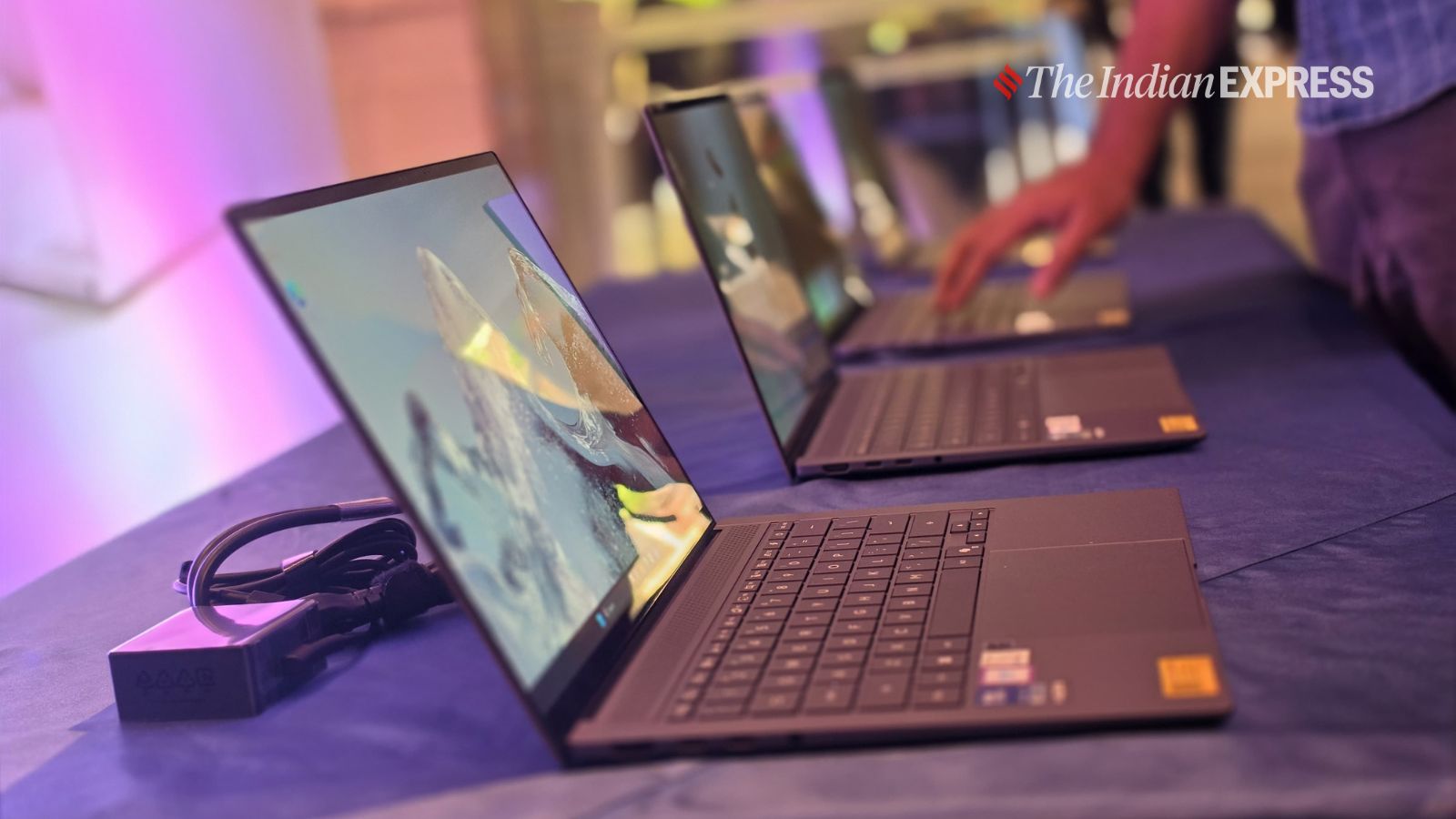
Asus’ new premium laptop range costs more, likely due to the ongoing memory shortage. This is in line with how other brands have also increased laptop prices. (Image credit: Anuj Bhatia/ The Indian Express)
Su agrees that the ongoing price hikes in the PC market will be a key challenge in 2026. While the overall market still grew around 10 per cent in Q1 2026 compared to Q1 2025, laptop prices rose about 10 per cent in Q1 and could increase further in Q2.
Story continues below this ad
Su says that customers are increasingly expecting further price increases, which may lead some to purchase earlier than planned. However, the long-term impact on the overall market remains uncertain and is being closely monitored.
Also Read | I spent days with the new Asus ZenBook S16. Here’s what I think about the premium notebook
Despite this, Su believes India’s PC opportunity is still driven by low penetration. Even if prices rise, consumers still need to buy laptops and will adjust specifications (for example, choosing a Core 5 instead of a Core 7 at the same price).
The biggest potential impact, according to Su, is on replacement cycles, with existing users potentially delaying upgrading. However, first-time buyers, such as students, buying their first PC, will continue to purchase regardless of price increases.
