

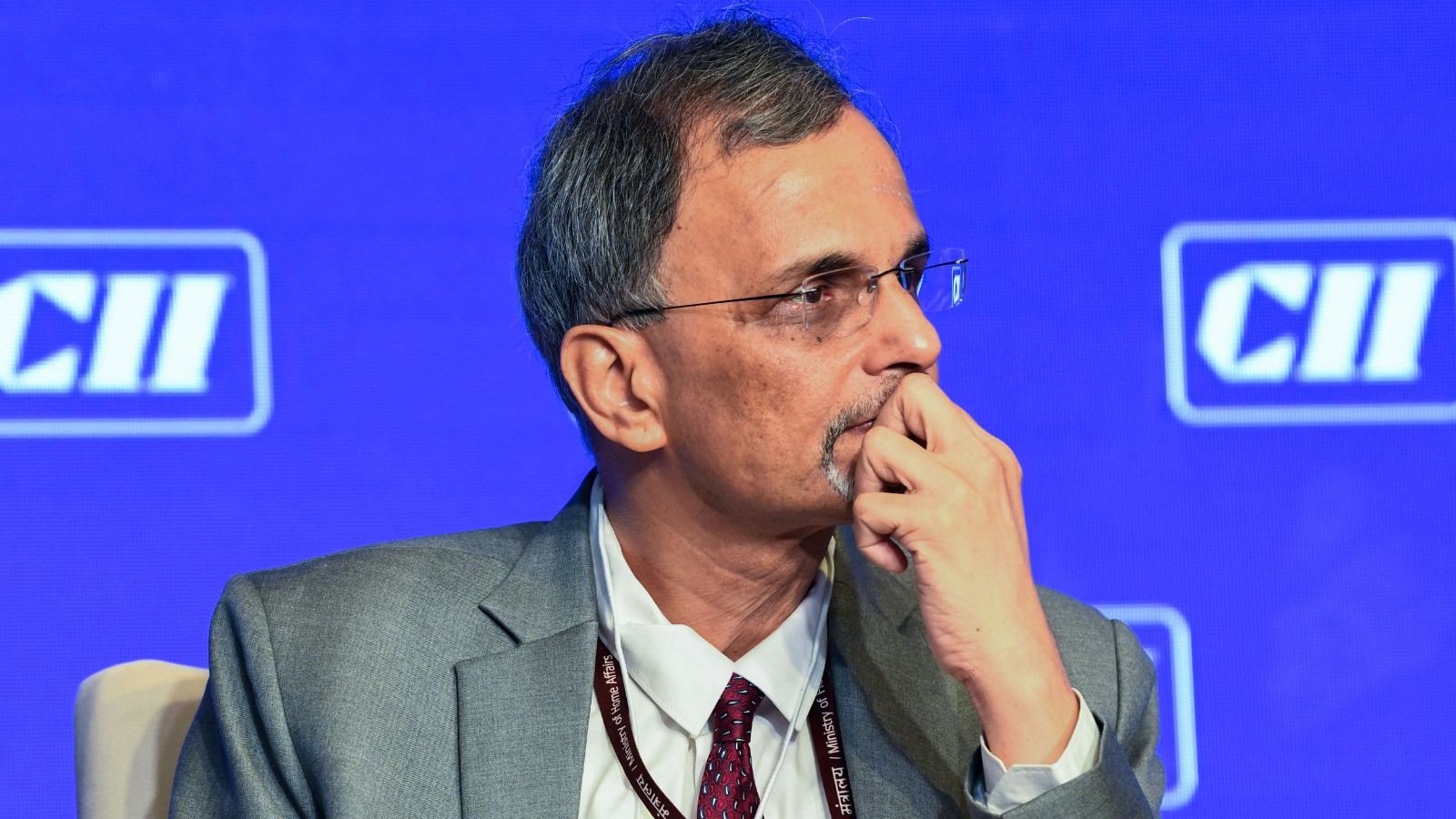
Warning that the ongoing structural shifts in the global economic order were not going to reverse, Chief Economic Advisor (CEA) V Anantha Nageswaran said on Tuesday that stopping the rupee from falling further is one of the “central macroeconomic imperatives” of the current fiscal.
“Managing the current account credibly, financing it, and preventing further currency depreciation are the central macroeconomic imperatives of FY27,” Nageswaran said while speaking at the Confederation of Indian Industry’s (CII) annual business summit, adding that India’s exposure to West Asia crisis is “structural” and presented a “live Balance of Payments stress test, with direct consequences for inflation, the current account, and the exchange rate.”
The comments by the government’s top economist come the same day the Indian rupee hit another all-time low, falling to as much as 95.75 per dollar during the day before closing at 95.63 – the lowest it has ever ended a session. Since the war in West Asia began, the rupee has slumped by almost 5% against the US dollar and has been Asia’s worst performing currency so far in 2026 – a period in which it has fallen by 6%.
The war has sent shockwaves through energy importing nations, especially those in Asia, with currencies weakening as foreign investors pull out money – although some countries have benefited due to sectors, particularly those related to Artificial Intelligence, performing well. India, which is widely considered to have low exposure to AI, has seen Foreign Portfolio Investors (FPIs) exit domestic financial markets to the tune of $23 billion since the start of the war, putting pressure on the Balance of Payments.
Also Read | How India diversified its LNG import basket after crunch in supplies from Qatar, UAE
The Balance of Payments is the difference between the money Indians send abroad to pay for various things such as imports and investments and the money India receives from overseas for exports and in the form of remittances and capital flows. With the import bill widening due to sharply higher crude oil and gold prices, exports affected by weak global demand, Foreign Direct Investment inflows muted, and remittances from West Asia under threat, economists are warning India’s Balance of Payments could be in the negative zone for a third straight year in FY27.
“India’s current account deficit appears set to exceed ~2% of GDP – which the RBI has historically identified as the threshold level that India can finance sustainably over the long term. However, in recent years, even a 1% of GDP has been difficult to finance due to a confluence of factors in the capital and financial account leading to persistent weakness in the exchange rate,” BofA Securities economists Rahul Bajoria and Smriti Mehra said in a report on Tuesday.
Pointing out that since the start of the US and Israel’s attack on Iran, Brent crude futures prices were up 51%, urea and ammonia prices 65%, and butane 51%, Nageswaran said on Tuesday that these numbers were not of a “temporary shock that will self-correct when the situation stabilises” and that it would be a “strategic error” for emerging economies to make plans for the future on the assumption that the pre-2020 global economic architecture will re-assert itself.
Story continues below this ad
Nageswaran’s warnings come after Prime Minister Narendra Modi, on Sunday and again on Monday, called on the Indian public to change their consumption behaviour by reviving Covid-era measures such as work-from-home and virtual meetings, avoiding non-essential foreign travel and gold purchases for a year, and prioritising local goods, among others. These actions would help save the country’s foreign exchange reserves as most of these activities and purchases require import.
Also Read | War in West Asia: Why it has drawn comparisons with the 1973 oil price crisis
The request for austerity has rattled markets, with analysts cautioning that Modi’s appeal is a sign of “potential policy shift ahead”.
“PM Modi’s comments signal that the pressure on the government fiscal finances is reaching a tipping point, that there is less appetite for further rupee depreciation, and that the burden of adjustment may be incrementally shared with consumers,” Nomura economists Sonal Varma and Aurodeep Nandi said on Monday.
While global energy prices have surged over the last two-and-a-half months, the Indian government has not increased the pump price of petrol and diesel in an effort to shield consumers. However, public sector oil marketing companies (OMCs) have been bearing the losses by selling fuel below the market price, with their losses for April-June seen at Rs 1 lakh crore.
Story continues below this ad
Nageswaran identified four structural shifts in the global economy – geoeconomic fragmentation in the form of trade wars and strategic decoupling, technology bifurcation, the energy transition premium, and geopolitical risk repricing – and said they are “not going to reverse”.
While India’s macroeconomic foundations – fiscal consolidation, infrastructure investment, and reform record – provide a base from which the current global environment can be effectively navigated, Nageswaran said that while foundations are necessary, they are “not sufficient”. “What is also required is the strategic clarity to recognise that the window for repositioning in trade relationships, technology partnerships, supply-chain architecture, and the coalition building that will shape the next international economic order is real, but not permanent.”
