

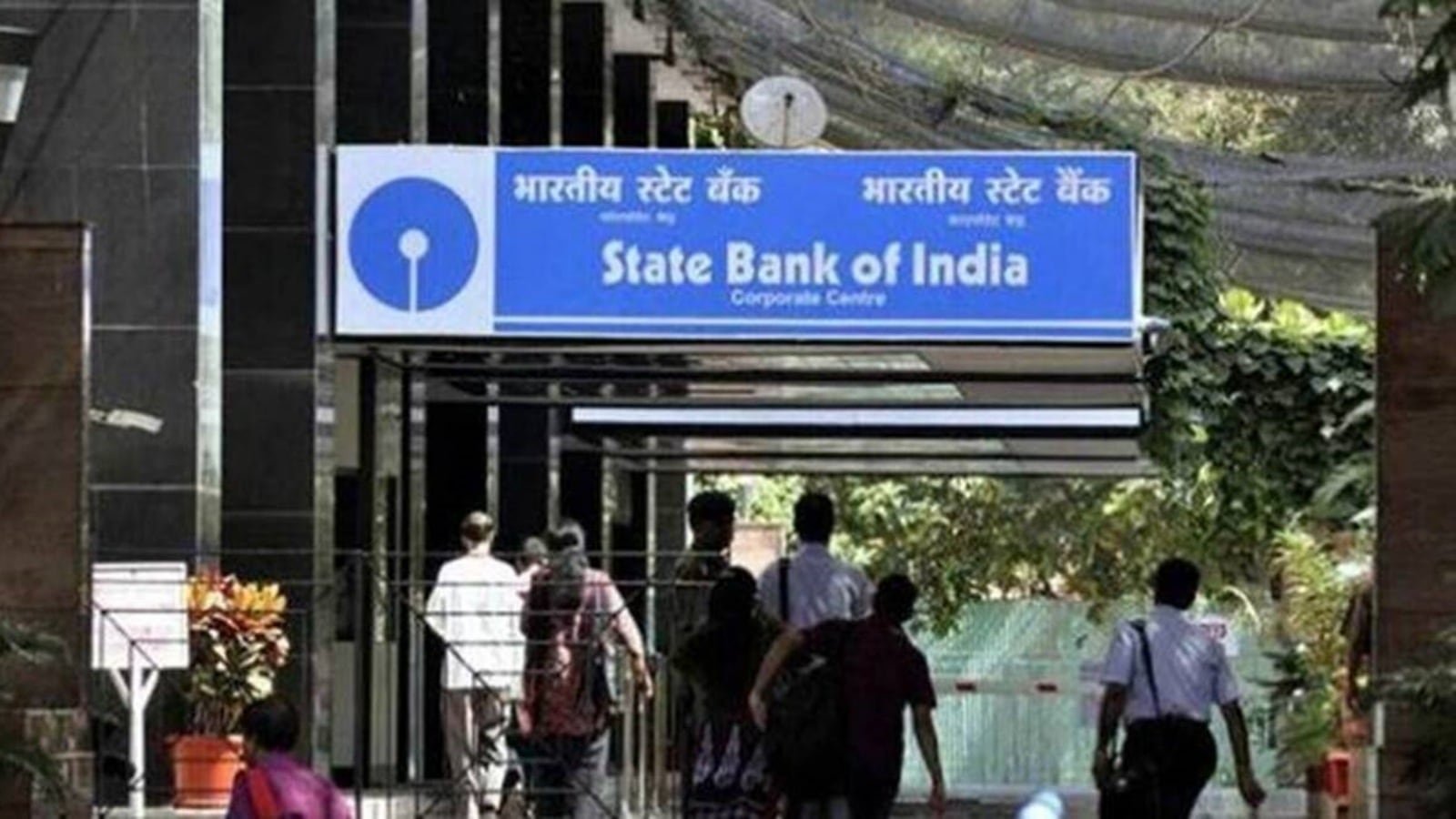
SBI is a bellwether in the banking sector, and the bank’s loan and deposit growth provide an indication on the state of the banking system.
Banking bellwether State Bank of India (SBI) on Friday reported a 5.6% on-year rise in net profit for the fourth quarter of
financial year 2026 (Q4FY26), missing analysts’ expectations as non-interest income fell sharply following the Reserve Bank of India’s restrictions on forex arbitrage and a rise in government bond yields due to the war in West Asia.
The lender’s net profit rose to Rs 19,684 crore in the quarter under review, against Rs 18,643 crore reported in the same period last year. The board has declared a dividend of Rs 17.35 per share for FY26.
Chairman CS Setty, while maintaining his guidance of 13-15% growth in loans going forward, did caution that should the West Asia conflict continue for an extended period of time, there could be an impact on demand. “While the impact of the West Asia war has so far been limited, it could affect the consumption environment of the country if the war significantly prolonged,” Setty said.
“…we assume that if inflation is at 4%, the domestic consumption may not be badly impacted, but if it goes beyond that and if the war lingers for a longer time, I think the consumption demand moderation will impact the economy,” he said in a post earnings call on Friday.
SBI shares fell by 6.62% to Rs 1019.55 on the BSE on Friday as the results were below market expectations.
Total income declined to Rs 1.40 lakh crore in Q4FY26 as against Rs 1.43 lakh crore a year ago. The bank’s income from treasury operations fell to Rs 1,259 crore from Rs 8,891 crore a year ago, resulting in total non-interest income falling 29% year-on-year (Y-o-Y) to Rs 17,314 crore.
Story continues below this ad
This was primarily seen due to yields on government bonds being sharply elevated since the West Asia war started in late February. The war has led to increased concerns that inflation might rise due to elevated crude oil prices, which led to the uptick in yields.
However, yields are unlikely to be of concern to the bank going forward, Chairman Setty said. “The overall treasury losses consist of your bond yield movement, which are sharply more than the last quarter. That is about Rs 1,800 crore,” Setty said.
The bank’s net interest income rose over 4% to Rs 44,380 crore. Its net profit grew 5.6% during the quarter to Rs 19,684. This was despite its net interest margin (NIM) declining 17 basis points quarter-on-quarter to 2.81%. The pressure on margins was largely due to the impact of the 25-basis-point cut in the repo rate by the RBI in December 2025, which has now been priced in fully in Q4, Setty said after the bank announced its earnings. For FY26, however, the bank delivered a domestic NIM of 3.03%, matching the bank’s earlier guidance of margins staying above 3% for the financial year. It also guided for NIMs to stay above the 3% mark in FY27.
On the asset quality front, SBI posted continued improvement in its gross non-performing asset (GNPA) ratio, which eased to 1.49% from 1.82% a year earlier.
Story continues below this ad
On an overall level, the bank’s loan book grew nearly 17% Y-o-Y to Rs 49.3 lakh crore as of March 31. Its retail and corporate loan portfolio, the two biggest components of the bank’s loan book, grew around 15% each.
SBI is a bellwether in the banking sector, and the bank’s loan and deposit growth provide an indication on the state of the banking system.
Setty said he expects credit growth to remain in the 13-15% band in FY27, based on the current macroeconomic environment in the country. In FY26, the bank saw credit growth of 16.9%.
The bank’s deposit base grew 11% to Rs 59.8 lakh crore as of March 31, led by a near 11% growth in savings account deposits. In comparison, current account deposits grew only 4.5%. This led to the bank’s current account, savings account (CASA) deposit ratio shrinking 51 bps to 39.46%.
Story continues below this ad
A lower CASA ratio indicates potentially higher lending costs for the bank, which might weigh on profitability in the long run.
The lender is in a position to disburse loans worth up to Rs 80,000 crore under the government’s Emergency Credit Line Guarantee Scheme (ECLGS) 5.0, Chairman C S Setty said on Thursday. “Now that the eligibility guidelines are clear, we know which customers qualify under the scheme. Credit facilities worth around Rs 70,000-80,000 crore could be extended to our customers through ECLGS,” Setty said.
