
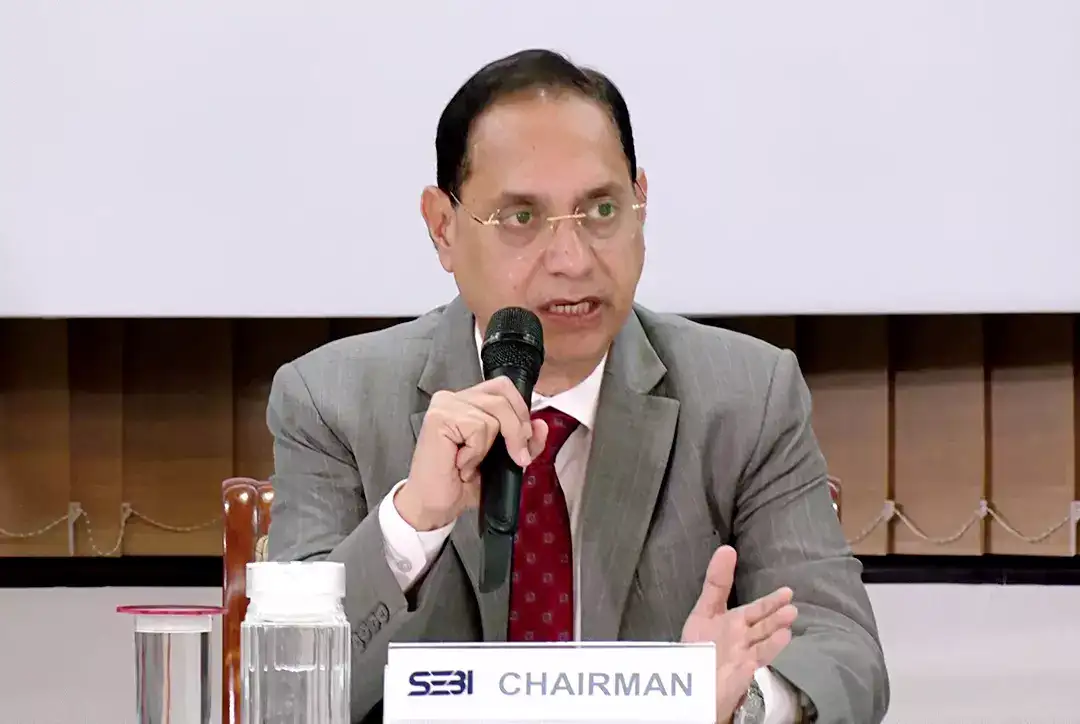
Capital markets regulator Sebi on Friday approved a series of regulatory changes aimed at improving market efficiency, easing compliance and strengthening investor protection. The decisions, taken at the regulator's board meeting, covered areas ranging from share buybacks and mutual funds to alternative investment funds (AIFs) and municipal bonds.
Here are the five biggest announcements:
Buybacks through stock exchanges make a comeback
In one of the most significant decisions, Sebi approved the reintroduction of open market buybacks through stock exchanges from August 1, 2026.
The route was discontinued earlier after changes in the tax regime. Companies can now choose between the tender offer route and open market purchases through exchanges.
The regulator has introduced safeguards, including mandatory utilisation of at least 40% of earmarked funds during the first half of the buyback period. The buyback must be completed within 66 working days. Promoters and their associates will not be allowed to participate, and their holdings will remain frozen during the buyback period.
Sebi has also made the appointment of a merchant banker optional, a move aimed at reducing compliance costs.
Mutual funds allowed intraday borrowing
The board approved amendments to the Mutual Fund Regulations allowing intraday borrowings to manage temporary liquidity mismatches.
The facility can be used for settlement timing differences, foreign exchange settlements and mark-to-market obligations in derivatives, among other operational requirements.
Sebi clarified that the borrowing cannot be used for leverage and must be repaid by the end of the trading day. Any borrowing extending overnight will have to comply with existing regulatory limits.
Faster launch of AIF schemes under GARUDA
SEBI introduced the GARUDA (Green-Channel: AIF Rollout Upon Document Acknowledgement) mechanism to speed up the launch of Alternative Investment Fund schemes.
Under the new framework, regular AIF schemes can now be launched within 10 working days. AI-only schemes and Angel Funds, which cater exclusively to accredited investors, will be allowed to launch immediately after registration or filing of the placement memorandum with SEBI without requiring merchant banker review.
The regulator said the move will help deploy capital faster and improve ease of doing business.
To deepen India's municipal bond market, Sebi approved several changes to the municipal debt regulations.
Municipalities will now be allowed to raise funds to refinance existing project debt. The regulator has also laid down a framework for pooled financing by multiple municipalities.
To improve retail participation, issuers will be permitted to offer incentives such as additional interest or issue-price discounts to categories including retail investors, senior citizens and women. The face value for privately placed municipal bonds has also been reduced to as low as Rs 10,000 under specified conditions.
Easier transmission of securities after death
Sebi also approved several measures to simplify the transmission of securities to legal heirs.
The regulator has done away with the mandatory requirement of probate of wills wherever succession laws permit. It has also allowed a combined affidavit-cum-No Objection Certificate (NOC), reducing documentation.
Death certificates carrying QR codes will now be accepted for verification, while additional verification methods have been introduced for death certificates issued overseas.
According to Sebi, these changes are expected to make the transmission process quicker, reduce costs and minimise procedural hardship for claimants.
Apart from these decisions, the board also approved amendments relating to securitised debt instruments, the transfer of the Social Stock Exchange Capacity Building Fund to a Section 8 company, changes to Sebi's internal code of conduct, and selected SME capital raising as the theme for an independent regulatory review during FY27.