

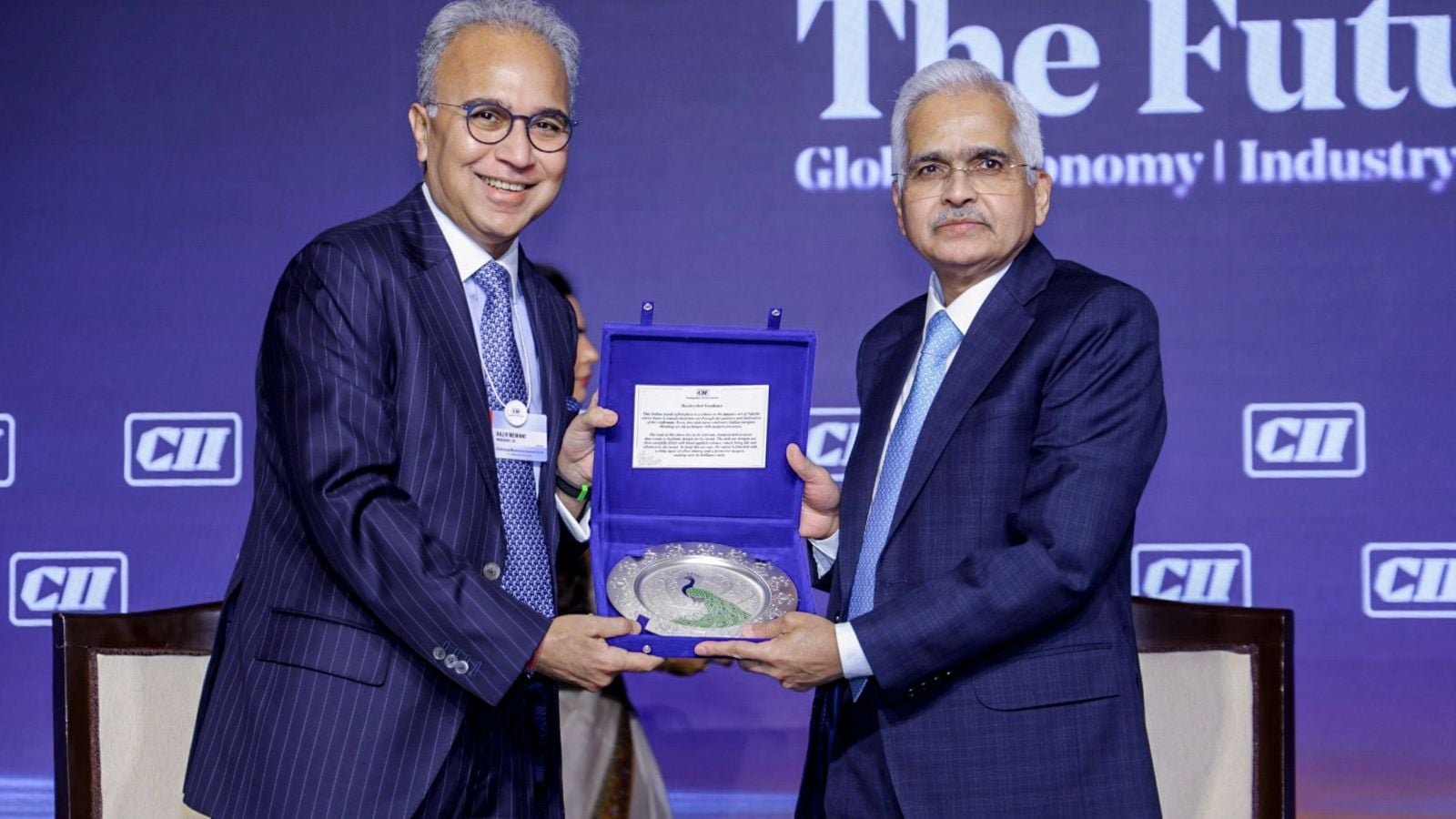
Amid the global economic landscape being in a “state of flux”, Shaktikanta Das, Principal Secretary to the Prime Minister urged Indian industry to undertake strategic reorientation of their businesses. Das spelt out seven strategies for India Inc — build organisational resilience in operating models; strengthen balance sheets; build new supply chains; reskill available manpower as technology, automation and artificial intelligence reshape industries; market diversification; invest strategically for future readiness and capitalising on new opportunities; and increase expenditure on research and development.
Stating that India is taking “bold and forward-looking” measures, Das also hinted towards “several other initiatives which are in the pipeline”. “…they will follow in the coming months and years to strengthen the long-term resilience of our economy,” he said while speaking at the Confederation of Indian Industry’s Annual Business Summit 2026. Quoting Mahatma Gandhi, he said: “the future depends on what we do in the present.”
Detailing the steps that the industry needs to take, Das said resilience maximisation is increasingly replacing cost minimisation as a priority for corporates. He said building “organisational resilience” will enable firms to absorb shocks, adapt quickly, emerge stronger and turn uncertainty into opportunity. “The message that we must give to the international community is that India is ready, ready to do business, ready to innovate and ready to contribute to global prosperity,” Das said.
Also Read | India’s IT sector is adapting to generative AI without mass job losses, new study finds
As the second strategy, companies should strengthen balance sheets. “Periods of global stress inevitably test the financial strength of companies, strong balance sheets provide the flexibility to withstand external shocks, manage cash flow pressures and invest when opportunities arise,” he said. Indian firms should prioritise prudent leverage, robust liquidity buffers and forward-looking capital allocation, he added.
The focus should also be on building new supply chains, he said, adding that companies and firms should proactively diversify sourcing localised critical inputs to the extent feasible and integrate into the multiple global value chains. “By doing so, firms can reduce exposure to external shocks while positioning themselves as reliable partners in the evolving global trading system,” Das said.
As the fourth strategy, Das talked about reskilling the available manpower. “The future competitiveness of Indian firms will depend heavily on workforce readiness. Continuous reskilling and upskilling through vocational training and industry-academia collaboration, particularly in digital manufacturing and advanced technical domains must become an organisational priority,” he said.
Das also emphasised on market diversification, stating that overdependence on a narrow set of markets or geographies increases vulnerability during global slowdowns, especially for exporters. “Indian businesses should actively explore, and engage with new export markets and leverage on India’s growing economic and diplomatic footprint. Market diversification would spread the risks, stabilise revenue streams and allow for firms to tap into new growth corridors and demand patterns,” he said.
Story continues below this ad
As the sixth strategy, Das highlighted the importance of thinking strategically and investing strategically by businesses. “Indian businesses that invest with a long-term perspective today will be in the best place to lead tomorrow,” he said. Moments of global disruption often sow the seeds of future business leadership. Strategic investments in technology innovation, sustainability, and capacity building etc, would enable firms to capitalise on structural shifts, rather than merely reacting to them,” he added.
As the last measure, Das stressed on the need to increase expenditure on R&D. He said India’s innovation ecosystem stands at an important inflection point and there is a need for greater and more active collaboration between government and the private sector in this area.
“Knowledge, as you know, is a key driver of growth. As you are well aware, frontier knowledge is generated through sustained R&D. Expenditure on R&D by corporates should not be seen as a cost centre. It must be seen as a strategic investment. It is said that innovation propels growth through creative destruction to realise the true potential of corporates and the economy,” he said. Das said R&D expenditure must be scaled up significantly both individually and through collaborative efforts.
These measures can significantly enhance sustainability, competitiveness and long-term growth of businesses and industry, he said, adding that these measures would help to not only weather global uncertainties, but emerge stronger and more confident.
India as an outlier
Story continues below this ad
The global economy has been subjected to a “relentless succession of shocks” since the Covid pandemic, he said. Citing the latest World Economic Outlook by the International Monetary Fund, Das said that supply shocks triggered by the West Asia crisis pose a serious threat to the global economy even if the conflict were to end tomorrow. “The lasting impact of the damage to infrastructure and supply disruptions will continue to impose high costs for quite some time to come. Every additional day of disruption can potentially translate into significant economic costs for the world economy, with cascading effects, on energy supply, fertilisers, food security, and global prices,” he said.
India, however, has been an outlier amid the turbulent global backdrop as it recorded average annual GDP growth of about 7.4% between 2022-23 and 2025-26, making it the fastest-growing major economy during that period, Das said. The significant point about this growth rate is that it is anchored not in overleveraging or overspending or loosening of the financial system, but it is anchored in macroeconomic stability, that is, contained inflation, prudent fiscal consolidation, resilient financial system and strong domestic demand, he said.
The fiscal position of the Government of India is stable with a decisive shift towards more capital expenditure and infrastructure spending. The banking sector stands out on a much stronger footing than in previous business cycles, he said, adding that years of balance sheet repair, improved asset quality recognition and tighter supervisory oversight have significantly reduced non-performing assets and enhanced capital.
