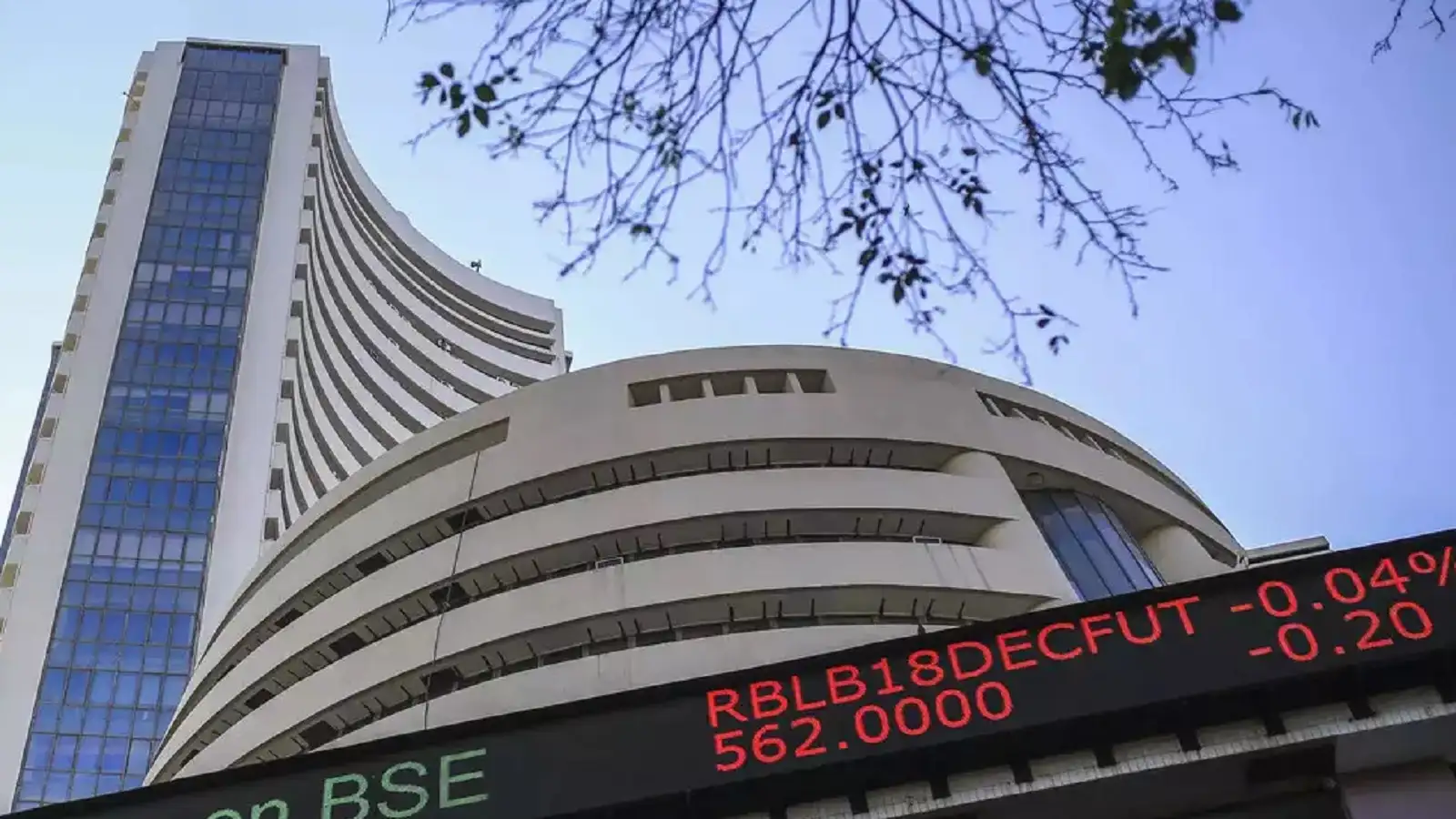

The Indian stock market extended losses on Wednesday, with the Sensex and the Nifty falling up to 0.2% as Tata Sons Chairman N Chandrasekaran resigned, triggering a sharp fall in Tata Group stocks, along with rising oil prices that spooked investors.
Sensex dropped 188 points to close at 77,966, while the Nifty 50 lost 36 points to end the session at 24,436 on Wednesday. The market recovered significant losses, as the benchmark indices had fallen nearly 1% intraday.
Tata Consultancy Services (TCS), Mahindra & Mahindra (M&M), Tata Steel, L&T, Eternal and Infosys shares were the top losers on Sensex, falling 1-4%. Bucking the trend, State Bank of India (SBI) and Bharti Airtel shares rose more than 1% each.
Broader markets however closed mixed, with Nifty Midcap 100 ending in the green and Nifty Smallcap 100 in the red. This came as India VIX, which measures volatility in the market, dropped 1.5% to 11.68.
Among the sectors, Nifty IT index dropped over 1.5% to lead losses, while Nifty PSU Bank jumped over 2% to lead gains. The overall market breadth turned negative, with NSE seeing 1,868 declines against 1,504 advances, while 104 stocks remained unchanged.
Here are the key factors that pushed the market down today.
Tata Sons Chairman N Chandrasekaran resigns
N Chandrasekaran on Wednesday resigned as Tata Sons Chairman after one board member did not support the proposal to extend his tenure. The Economic Times was the first to break the development this morning. Chandrasekaran’s current tenure as chairman of Tata Sons ends on February 20 next year.
“Tata Sons is a very large institution and there are many strategic projects that are under critical stages of execution,” he said. “It is not only necessary to have a leader in place to lead the Group beyond Feb 2027, but also clarity on leadership is important for employees, investors, partners and other stakeholders… Under these circumstances, earlier today, I have communicated to the Tata Sons Board that I have decided not to offer myself for reappointment when my term ends,” he added.
Following this, shares of the salt-to-airlines conglomerate Tata Group companies tumbled sharply, with heavyweight stocks including TCS, Titan and others pulling down overall market indices.
TCS, which has the largest market capitalisation in the Tata pack, crashed around 5%. Titan and Tata Steel fell around 2% each, while Trent shares were down around 1%. Tata Motors Passenger Vehicles (TMPV) was down 3%, while Tata Consumer and Tata Power fell up to 2%.
Oil prices rose on Wednesday as doubts over the US and Iran reaching a peace deal and attacks on two ships fuelled concerns about disruptions to Middle East supplies. Brent crude futures neared $90 per barrel, while WTI crude futures traded close to $84 per barrel.
Iran's top security official Mohsen Rezaei said the Strait of Hormuz would remain closed unless the US accepted Iran's conditions to end the war, including the release of its frozen assets and an end to other regional conflicts. US President Donald Trump, meanwhile, said the United States may let Iran "bop along" or "hit them really, really hard”.
The rupee dropped 5 paise to 95.41 against the US dollar in early trade today. This came as rising oil prices and weaker Asian currencies weighed on sentiment, while the central bank is likely to limit the decline.
Brent crude moving higher towards $90 per barrel is raising concerns over India's import bill and limiting the rupee's recovery, said Jateen Trivedi, VP Research Analyst of Commodity and Currency, LKP Securities. “Going forward, the currency will take cues from crude oil, the Dollar Index and FII flows, with US inflation data also likely to influence the dollar. Technically, the rupee range is seen between 95.25–95.75 in the near term,” he added.
What lies ahead for Dalal Street?
The impact of Chandrasekaran’s resignation is expected to be a knee-jerk reaction as he has been at the helm for a long time, said Ambareesh Baliga. “We have witnessed such uncertain periods for the Tata Group, when Ratan Tata had taken over in the early 1990s and more recently during the Cyrus Mistry imbroglio, but it has always managed to steer through. So this time it shouldn’t be any different,” he added.
Meanwhile, the market is defying a breakout on the upside and is moving sideways, said VK Vijayakumar, Chief Investment Strategist at Geojit Investments. He noted that the principal factor restraining a rally is the strengthening Brent crude, which has again moved above the $89 level. The off-and-on US-Iran skirmishes continue, with the latest attack by the US military on a Panama-flagged container ship. Iran now appears to be hardening its stance on the opening of the Strait of Hormuz. This might keep crude prices elevated, constraining a rally in the market, according to the analyst.
“On the positive side, India’s growth resilience is getting better. The latest report from SBI projects FY27 GDP growth at 8% against the RBI’s 6.7%. This optimism is based on trends in most leading indicators. If this turns out to be true, corporate earnings for FY27 will be much better-than-expected. This is a bullish factor,” Vijayakumar said, adding that a significant trend in the market is the hyperactivity in the mid and small-cap segments where stocks are responding to results and news.
Technically, Nifty’s undertone remained subdued yesterday below 24,650, said Rajesh Palviya, Head of Research at Axis Direct. He noted that the benchmark index will likely find immediate support at 24,400, followed by 24,250–24,200.
A sustained recovery in crude could, however, trigger renewed buying and push the index towards 24,800, according to the analyst.