
The Indian stock market rallied on Monday, with Sensex and Nifty jumping more than 1% each as falling oil prices, strong earnings by heavyweights including Reliance Industries and other factors strengthened the bulls of Dalal Street.
Sensex soared 900 points while Nifty 50 rose above 23,300 on Monday morning. TThe sharp gains added more than Rs 6 lakh crore to the total market capitalisation of all companies listed on BSE in less than an hour since opening, pulling it up to Rs 480 lakh crore.
Reliance Industries shares surged more than 5% to lead gains on Sensex, while Tata Steel shares jumped 4%. NTPC, Maruti Suzuki, BEL, Power Grid, SBI, Asian Paints, TCS, M&M, UltraTech Cement, HUL, L&T, Bharti Airtel and Adani Ports shares gained 1-3% to follow. Bucking the trend, Sun Pharma shares dropped 2%.
Among the sectors, Nifty Oil & Gas jumped nearly 3% to lead gains, while Nifty Metal, Nifty PSU Bank and Nifty Consumer Durables gained more than 1% each. Nifty Pharma, Nifty Private Bank and a few other indices however, slipped into the red.
Broader markets also remained in the green, although they underperformed benchmark indices Sensex and Nifty. Nifty Smallcap 250 rose nearly 0.6% while Nifty Midcap 100 was up more than 0.6%. The overall market breadth however, turned sharply positive, with NSE seeing 2,053 advances against 921 declines, while 98 stocks remained unchanged.
Here are the key factors boosting market today:
Oil prices dropped more than 3% on Monday as Iranian and Qatari officials continued discussions for a third consecutive day, seeking to conclude an agreement to end the US-Israeli war on Iran that began in February earlier this year and has been rattling the energy market ever since.
Brent crude futures dropped to Rs 110 per barrel while US West Texas Intermediate (WTI) crude futures dropped to Rs 101 per barrel. The latest talks for a peace deal comes after oil prices spiked recently following rising attacks on ships trying to pass through the Strait of Hormuz, a critical waterway that accounted for 20% of the world’s global oil shipments before the conflict escalated in late February.
Also read | Oil Price Today (November 2): Crude oil falls to $111 as Iran-Qatar talks continue to end war. What are experts saying?
2) Strong earnings by heavyweights
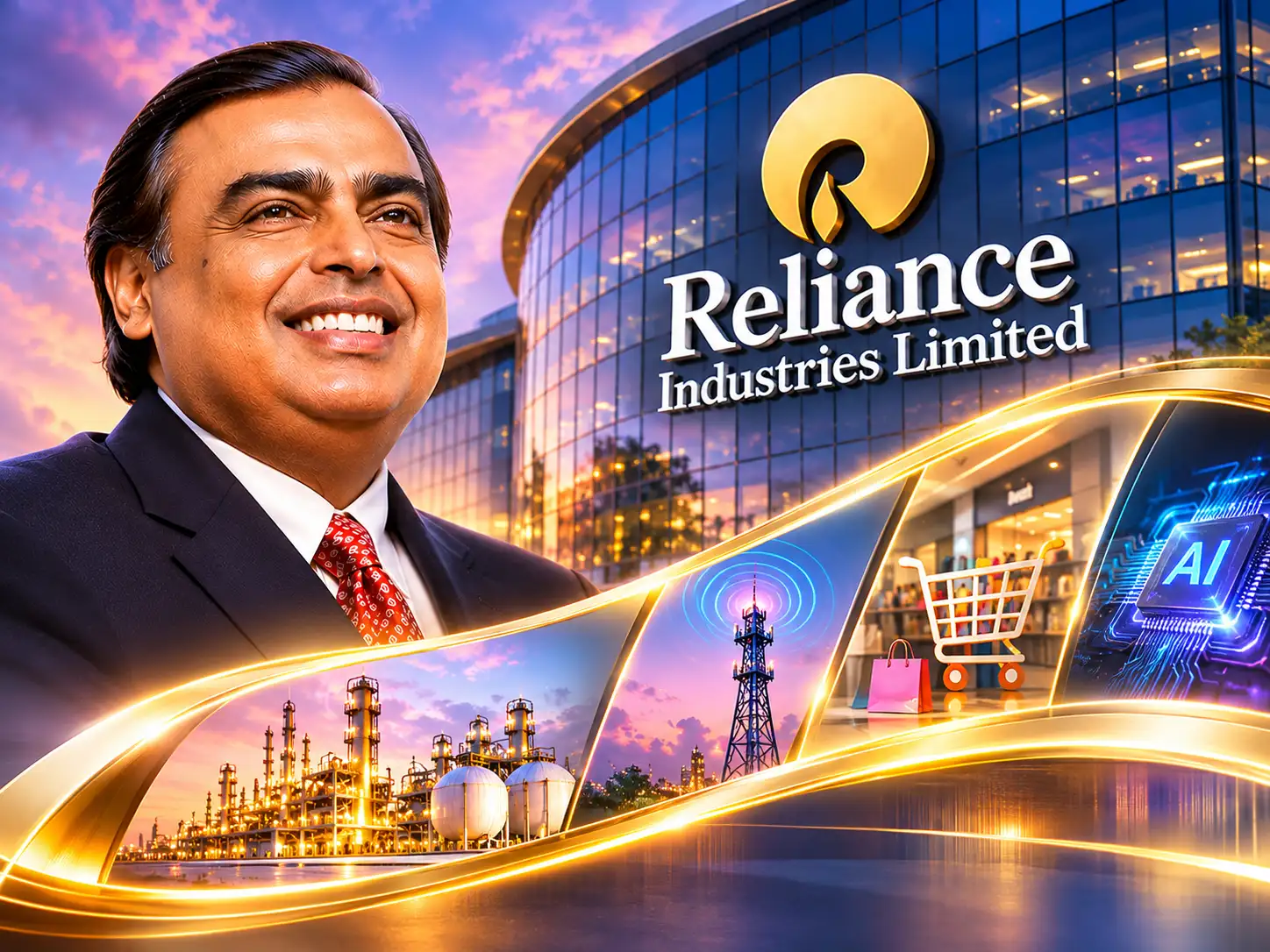
India’s most valuable company Reliance Industries is leading gains on Sensex and Nifty, with the stock soaring more than 5% after the company reported a 41% year-on-year (YoY) rise in consolidated net profit to Rs 25,548 crore in the July-September quarter of FY27, compared with Rs 18,165 crore in the year-ago period.
Jio Platforms, which debuted on Dalal Street last week as India’s second most valuable company, meanwhile saw its share price rally over 3% after reporting a 14% YoY increase in consolidated net profit to Rs 8,389 crore in its September quarter results.
Also read |Reliance Industries shares rally 6% after Q2 results. Here’s why Jefferies, others analysts see up to 47% upside
3) FII turn net buyers
After an incessant selloff last month and in the first half of October, foreign investors have turned net buyers of Indian equities, net purchasing shares worth nearly $1.2 billion over the past 10 trading sessions. They remained net buyers of Indian equities last Friday as well, purchasing shares worth nearly Rs 3,599 crore, according to provisional data on NSE.
4) Rising expectations of LTCG tax relief
The sharp rally on Dalal Street also comes amid rising expectations of the government announcing a possible relief on long term capital gains (LTCG) taxes. Market regulator Securities and Exchange Board of India (Sebi) has recommended the government remove the LTCG tax imposed on foreign investors and also proposed tax relief for domestic mutual fund investors, Reuters reported.
This comes after Finance Minister Nirmala Sitharaman earlier this month said discussions around long-term capital gains tax (LTCG) and securities transaction tax (STT) were ongoing, giving investors a fresh talking point at a time when markets are looking for relief after weeks of pressure.
Dalal Street. Is a reversal on the cards?
Rupee rose nearly 0.07% to open at 94.8850 against the US dollar, as against the previous closing level of 94.95. “The decline in precious metals provided some relief on the import front ahead of the festive season, supporting the domestic currency. Sentiment also improved amid speculation that the RBI and the Finance Ministry could consider tax-related changes or other measures to attract foreign portfolio and institutional inflows. However, these expectations remain speculative, and actual policy announcements will be important,” said Jateen Trivedi, VP Research Analyst of Commodity and Currency, LKP Securities.
Going ahead, the rupee’s movement will depend on dollar trends, capital flows and policy developments, with a near-term range of 94.50–95.50, according to the analyst.
Bond yields eased further, boosting sentiment across equity markets. The yield on the benchmark 10-year US Treasury bonds dropped below the crucial psychological mark of 5%. The 30-year US bond yield fell to 5.3% while that of the 2-year bonds, which moves in tandem with Fed rate decision expectations, hovered near 4.6%.
Falling bond yields typically makes the higher-return equity market more attractive for investors. However, a rise in the yields on the other hand boosts sentiment for the debt market, in comparison to the riskier stock markets.
7) Weakening of the AI trade
The continuing weakening of the global AI trade is further boosting sentiment for Dalal Street. More than $2 trillion in market value is said to have been wiped out from the technology-heavy Nasdaq which crashed over 4% on Friday and nearly 6% this month, as Big Tech earnings have intensified investor concerns over whether massive investments in artificial intelligence (AI) will generate returns quickly enough.
The rising worries around AI frenzy being a bubble is a positive for Indian equities as Dalal Street is being viewed as the ‘anti-AI’ trade. As a result, IT stocks have been rallying recently.
What lies ahead for Dalal Street?
There are clear indications of a turnaround in the Indian market assisted by positive external and domestic cues, said V K Vijayakumar, Chief Investment Strategist at Geojit Investments. Externally, the slight cooling of Brent crude prices from last week’s high of $118 to $110 now is a relief. Equally important is the decline in the US 10-year bond yield to 4.93%. But, perhaps, more important than these external tailwinds, is the sharp weakening of the AI trade which pulled down the Nasdaq sharply lower last Friday, according to the analyst. Weakening trend in AI trade is beneficial for India which is widely regarded as a counter AI play.
“Fundamental domestic cues are also supportive for a rally. The 17.94% credit growth in the economy and robust GST collections in October reflect a resilient economy, gathering momentum,” Vijayakumar said.
He noted that another strong positive, which can drive the market up, is the rising expectations surrounding a thorough rejig of the LTCGs tax in the coming Budget, most likely its abolition. “The market, it appears, has started discounting this. In brief, for now, it is advantage for bulls,” he further said.
While market remains optimistic, Anand James, Chief Market Strategist at Geojit Investments, advised investors to expect volatility to resurface once Nifty is in the vicinity of 23,175, October’s peak, which is likely to stand in the way of continued ascent aiming 23,500-23,800.
The benchmark index’s inability to close above 23,225 will prompt buyers to withdraw, exposing 22,807-22,715, the technical analyst warned.
Disclaimer: This article has been written by Debaroti Adhikary, who is not a SEBI-registered Research Analyst or an Investment Adviser. Debaroti Adhikary and his/her ‘relative(s)’ (as defined under Section 2(77) of the Companies Act, 2013) do not hold any financial interest in the companies mentioned in this article as of the date of publication. The views/recommendations mentioned in this article, wherever applicable, are those of the respective SEBI-registered Research Analyst/brokerage and have been reproduced/reported with due attribution. They should not be construed as the views or recommendations of The Economic Times Digital or the journalist. Readers are advised to consider the original research report and make their investment decisions based on their own assessment. Brokerage disclaimers here.