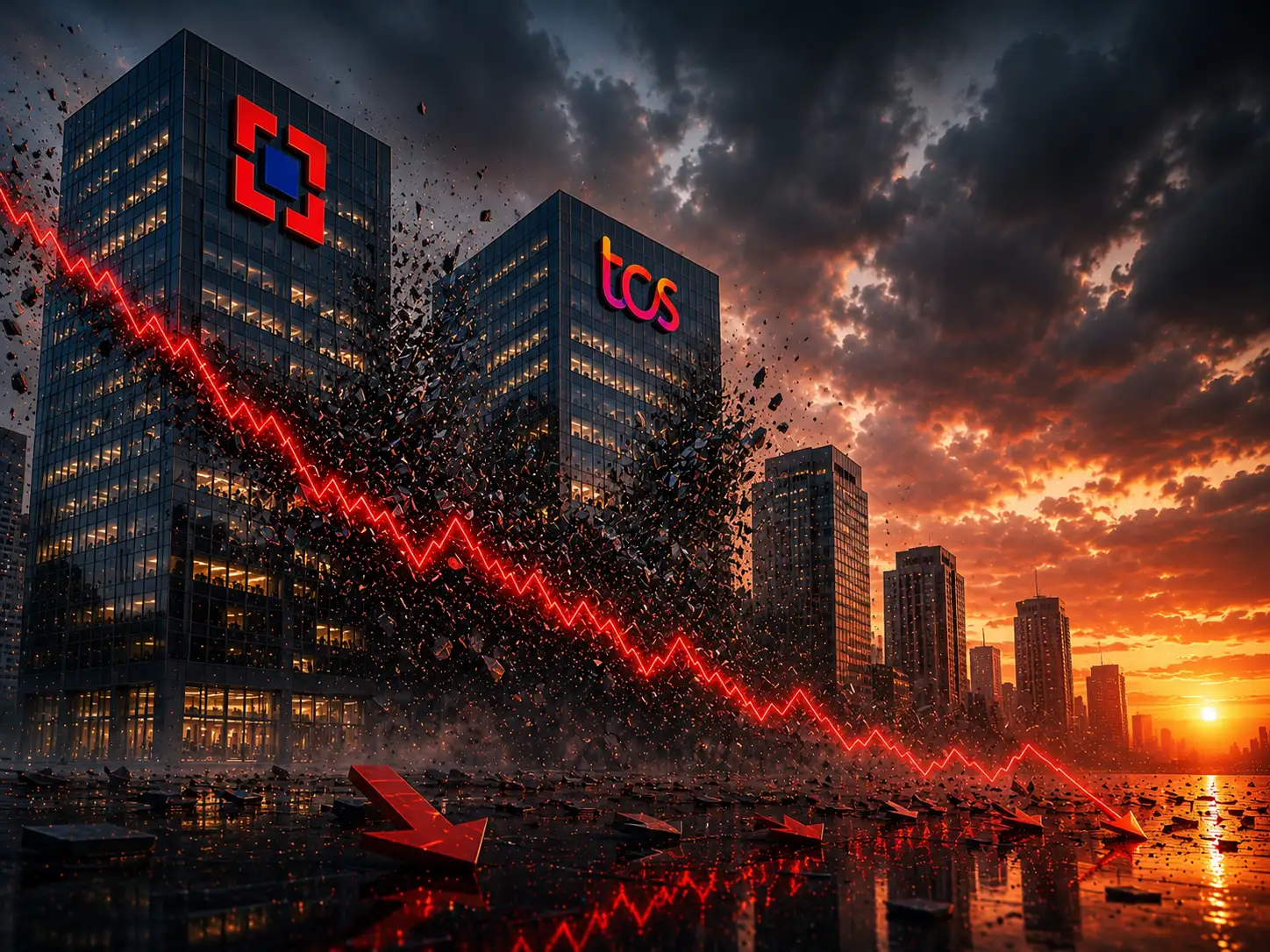
Thirty constituents of the Nifty 50 have together eroded investor wealth worth nearly Rs 22.64 lakh crore in 2026 so far amid persistent selling pressure in banking, IT, auto and consumption-linked stocks. The sharp correction comes against the backdrop of tariff concerns, AI fears, expensive valuations, foreign outflows and rising geopolitical tensions, which have weighed heavily on market sentiment this year.
Among the biggest laggards, HDFC Bank has emerged as the top wealth eroder with its market capitalisation shrinking by Rs 3.55 lakh crore, while the stock has fallen over 23% on a year-to-date basis. Tata Consultancy Services (TCS) followed closely, wiping out Rs 3.17 lakh crore in investor wealth as the IT bellwether plunged more than 27% amid mounting concerns over AI disruption and weak discretionary tech spending globally.
Oil-to-telecom conglomerate Reliance Industries (RIL) saw its market value decline by Rs 2.85 lakh crore despite a relatively lower 13% fall in the stock price, while Infosys erased Rs 1.70 lakh crore in market capitalisation after tumbling 26% this year. Another IT major, HCL Technologies, witnessed one of the steepest declines among heavyweights, shedding nearly 28% and wiping out Rs 1.23 lakh crore in investor wealth.
Other financial stocks like ICICI Bank, Kotak Mahindra Bank, Bajaj Finance and Bajaj Finserv too, came under pressure, together losing over Rs 2.11 lakh crore in market value. Even relatively defensive names such as ITC Limited and Hindustan Unilever Limited failed to escape the selloff.
Auto stocks also witnessed sharp wealth erosion. Maruti Suzuki India Limited lost more than Rs 1.16 lakh crore in market capitalisation as the stock corrected over 22%, while Mahindra & Mahindra Limited saw a Rs 72,995 crore erosion despite strong operational performance.
The IT pack remained among the worst-hit sectors overall. Apart from TCS, Infosys and HCL Tech, shares of Wipro declined over 25%, while Tech Mahindra slipped nearly 10%, highlighting continued concerns around global demand slowdown and the increasing impact of AI-led disruption on traditional outsourcing models.
Meanwhile, newer-age and financial services companies such as Jio Financial Services, Eternal and HDFC Life Insurance Company also featured among notable laggards, reflecting broader risk aversion in the market.
Despite the sharp correction across several frontline counters, analysts believe the selloff has turned pockets of the market attractive from a long-term perspective, particularly in financials and select consumption plays, though volatility is expected to remain elevated in the near term.
FY27 outlook
Despite the Nifty 50 declining more than 9% so far this year, smallcase managers remain constructive on FY27 and expect India’s benchmark index to climb towards the 28,000–30,000 zone by the end of the financial year. According to them, the next phase of the market is likely to be driven by earnings growth and corporate execution rather than valuation re-rating, with investors expected to prioritise durable profitability and business performance over aggressive expansion in valuation multiples.
They project EPS estimates for the Nifty and the BSE Sensex in the range of Rs 1,280 – Rs 1,320. Based on the expected earnings trajectory, the index is likely to trade within a valuation band of 22X–24X, reflecting confidence in India’s domestic growth momentum and corporate profitability, a media release by smallcase said.
“We expect NIFTY 50 to be in the range of 28,000–30,000 in FY27, a potential upside of nearly 15%–25% from current levels, supported by continued strength in sectors such as Banking, Capital Goods, Telecom, and domestic manufacturing themes,” Ashwini Shami, smallcase Manager, President and Chief Portfolio Manager, OmniScience Capital said.
Also read: GE Vernova T&D emerges as top BSE Power multibagger with 164% returns; should investors buy now?
Promising sectors
Anuj Jain, CIO and Co-Founder Green Portfolio said he remains constructive on sectors linked to India’s domestic capex and manufacturing themes, including capital goods, industrials, defence, and BFSI, where earnings visibility and policy support continue to remain favourable.
“Defensive segments such as Pharma and select FMCG are expected to provide portfolio stability amid market volatility, while IT Services may offer gradual recovery opportunities as global demand conditions improve. The implementation of key FTAs with regions such as the EU, US, and UK will also remain important, as it could materially reshape export competitiveness and sectoral profitability,” Jain said.
"One theme which is clearly coming out of the discussion is small & midcaps, Ambareesh Baliga, smallcase manager and market analyst said, emphasising they will outperform the large caps in the foreseeable future and there will still be pockets of opportunity in this space with performance vis-à-vis valuation mismatch.
(Disclaimer: The recommendations, suggestions, views, and opinions given by the experts are their own. These do not represent the views of The Economic Times.)