The Reserve Bank of India has announced its largest-ever dividend transfer to the central government, a record ₹2.87 lakh crore — providing significant fiscal headroom as India navigates global economic uncertainty.
The transfer, which forms part of the government's non-tax revenue, comes at a critical time. With geopolitical tensions in West Asia pushing up oil and fertiliser prices, the Modi government will need every rupee it can secure to manage rising subsidy bills while staying committed to fiscal consolidation.
Also Read
RBI declares record Rs 2.87 lakh crore dividend to cushion war shock
Why is this transfer so large?
The RBI earns returns primarily on government securities it holds on its balance sheet. At the end of each financial year, the surplus, after setting aside a contingency risk buffer, is transferred to the government of India.
Arvind Panagariya’s advice to RBI: ‘100 is just a number; let rupee depreciate or reserves will bleed out’
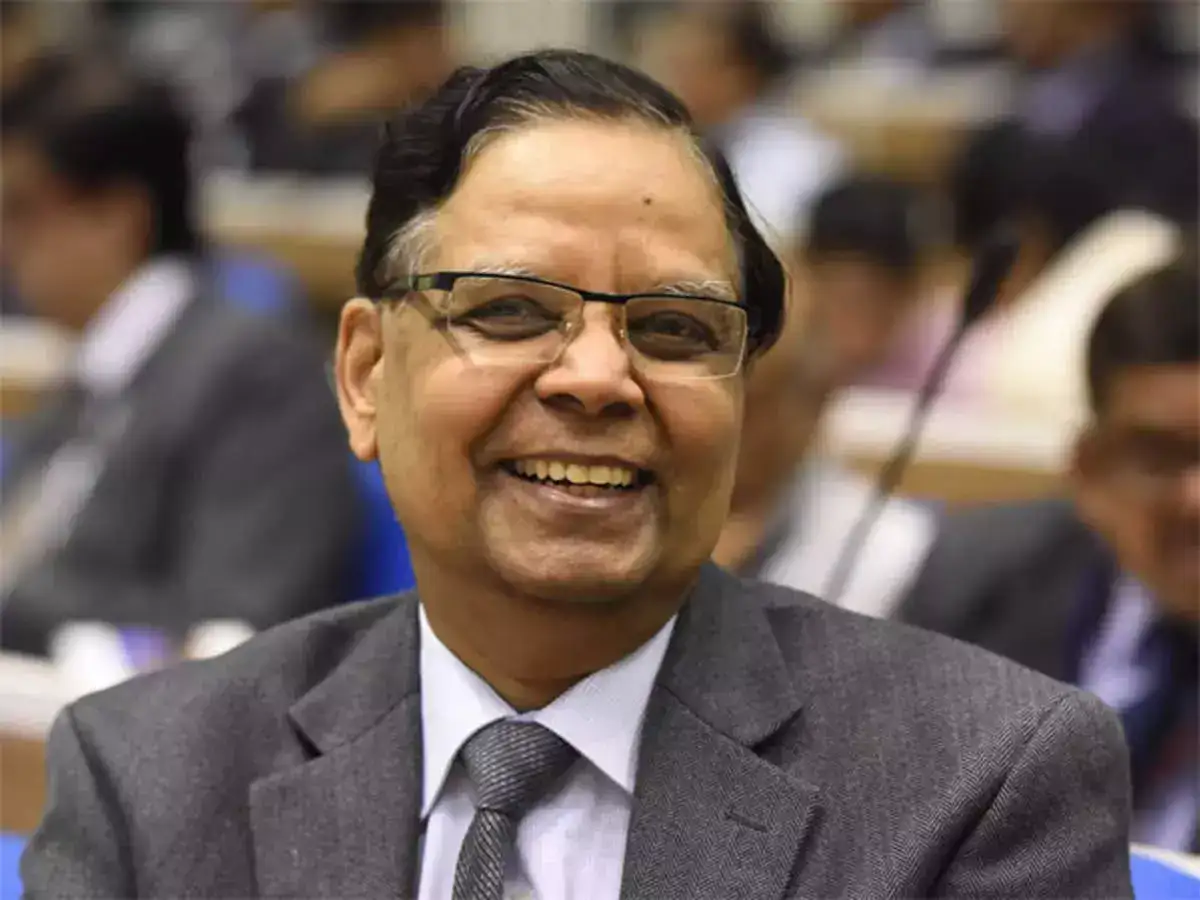
This year's ₹2.87 lakh crore figure exceeds market expectations, which ranged between ₹2.8 lakh crore and ₹3.5 lakh crore. Arvind Panagariya, Chairman of the 16th Finance Commission and former Vice Chairman of NITI Aayog, described the transfer as "a fairly substantial sum," noting it is significant even as a proportion of total government expenditure.
"The government needs all the revenues it can get," Panagariya told ET Now. "Particularly if the current situation in West Asia continues for a while, the government is going to be needing those revenues."
The contingency reserve question
One talking point around this year's transfer is the RBI's decision to lower its Contingency Risk Buffer (CRB) to 6.5%, down from 7.5% last year. The CRB is the internal reserve the central bank maintains as a buffer against unforeseen risks.
Critics have asked whether this represents a prudent trade-off. Panagariya, however, played down the concern, arguing that the RBI's credibility is ultimately tied to that of the government of India — not just its own balance sheet buffers.
"As long as the government of India is credible and solvent, the RBI will always remain solvent," he said.
How will the government use the money?
The surplus will flow into the government's consolidated fund and be deployed across multiple priorities. These include:
Capital expenditure, which remains the government's highest-spending priority for infrastructure-led growth
Fertiliser subsidies, which are set to rise sharply due to elevated global prices linked to the West Asia conflict
Consumption support for the poor, including potential temporary transfers if fuel prices or inflation rise significantly
Panagariya was clear that it is not productive to earmark specific revenue streams for specific expenditures. "In the end these revenues become part of the overall revenues of the government of India," he said.
The rupee and RBI's currency policy
Separately, Panagariya has weighed in on the ongoing debate around the rupee, which has been among the weaker performers in Asia this year. In a post on X, he warned against the RBI defending psychological currency levels — specifically the ₹100-to-the-dollar mark.
"There will be a time when that 100 number will be breached, and there is no reason to make that particular number the fulcrum of the policy of defending the rupee," he said.
He attributed recent rupee pressure not to economic weakness, but to a structural factor: large volumes of past foreign investments maturing, triggering repatriation outflows. Gross FDI into India, he noted, touched an all-time high of $81 billion in 2024–25 and is tracking close to a $100 billion annualised pace in the first quarter of 2025–26.
The bigger picture: India's macroeconomic fndamentals
Panagariya pushed back on what he called "social media noise" around India's economic trajectory. He pointed to average GDP growth of 7.3% over the last three years, with inflation running between 3–4% — a combination he described as rare globally.
"Which economy in the world is performing at that level?" he said.
The RBI surplus transfer, while significant, is best understood as part of a larger fiscal toolkit, one that the government will need to deploy carefully as it balances growth ambitions against global headwinds.
The fiscal deficit figures for 2026–27 will provide the clearest picture of how effectively this windfall has been deployed.