

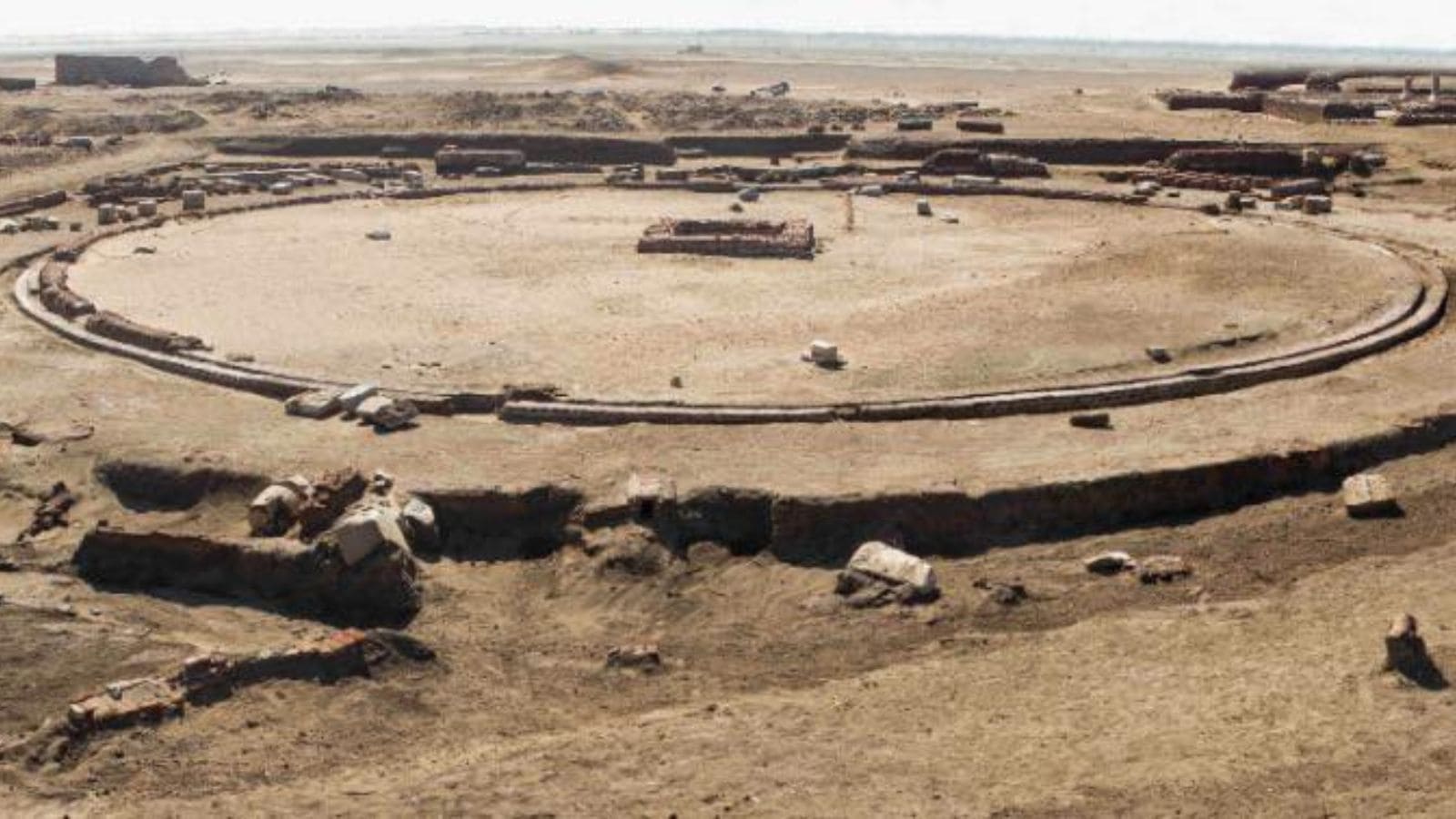
Post Content The newly excavated temple is dedicated to a local deity known as Pelusius. At its heart lies a large circular basin measuring about 35 metres in diameter.(Image: Facebook/ Ministry of Tourism and Antiquities وزارة السياحة والآثار)
Archaeologists have uncovered a rare, perfectly circular temple in Egypt’s Sinai region, shedding new light on ancient religious practices that may have centred on water rituals.
The remains are estimated to be about 2,200 years old and were discovered at the location of Tell el-Farama. Tell el-Farama is an archaeological site where the ancient city of Pelusium existed. Pelusium used to function as a port and fort in ancient times before becoming a customs point when Rome rose to power.
A temple with a unique circular design
The newly excavated temple is dedicated to a local deity known as Pelusius. At its heart lies a large circular basin measuring about 35 metres in diameter. In the centre of this basin stands a square pedestal, which archaeologists believe once supported a massive statue of the god.
The feature that makes the structure very peculiar is the way it is organised. In contrast to many ancient Egyptian temples that have a rectangular layout, this one is perfectly round, which is what made this architecture very remarkable.
Water connections and Nile
There are several water passages and reservoirs around the basin, which show the significance of water in the operation of the temple. Indeed, the basin was connected with a branch of the Nile, and water traces were found inside it.
Also Read | ‘Ice Age casino’: New study identifies 12,900-year-old Native American dice
This has led archaeologists to believe that the site was used for sacred water rituals. The deity Pelusius is thought to be associated with “mud” or “silt,” further strengthening the link between the temple and the Nile’s life-giving floods.
From misidentification to major discovery
The structure was first partially uncovered in 2019, when only about a quarter of it had been excavated. Initially, there was an assumption that it could be a senatorial hall because of its circular nature.
Story continues below this ad
Also Read: Shroud of Turin, linked by believers to Jesus Christ, has Indian DNA traces: Study
With the continuous excavation and exposure of its entire structure, this notion was later ruled out as the basin, the system of water supply, and the pedestal gave clues to its religious nature.
A glimpse into a cosmopolitan history
According to archaeologists, the temple was constructed during the second century BC and was functional up to the sixth century AD.
The architecture of the temple is a combination of Egyptian, Greek, and Roman styles. This reveals the multicultural nature of the city of Pelusium.
© IE Online Media Services Pvt Ltd
