

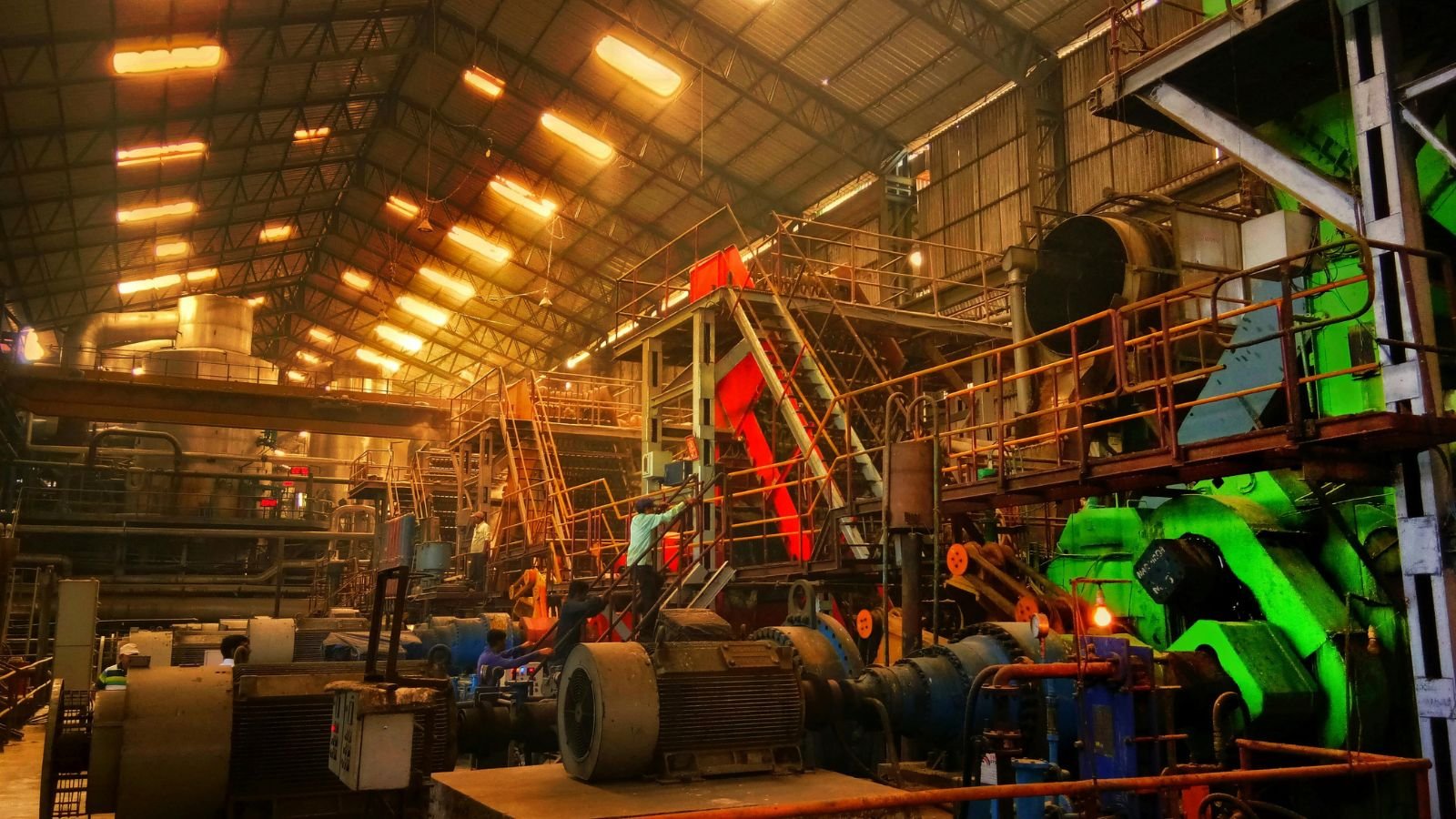
The industrial production figures come days after commerce ministry data showed on April 20 that output of India’s eight core industries (Credits: Pexels)
India’s industrial growth cooled only slightly in March to 4.1% year-on-year from 5.1% in February despite the disruptions caused by the war in West Asia, data released by the Ministry of Statistics and Programme Implementation (MoSPI) showed on Tuesday. At 4.1%, while industrial growth as measured by the Index of Industrial Production (IIP) is the lowest in five months, it has defied expectations somewhat.
ARTICLE CONTINUES BELOW VIDEO
[embedded content]
Economists, however, warned that the data for March reflects only a “part of the shock as uncertainty and weak producer sentiment have yet to fully manifest in production data”.
“The deeper impact is expected to show up down the road, particularly in the first quarter of this fiscal,” said Dipti Deshpande, Principal Economist at Crisil.
The industrial production figures come days after commerce ministry data showed on April 20 that output of India’s eight core industries – coal, crude oil, natural gas, refinery products, fertilisers, steel, cement, and electricity – contracted by 0.4% in March in what was one of the first signs of the impact of the West Asia war on economic activity in India, with production of fertiliser dropping 24.6% year-on-year – the largest decline on record. With the eight core industries making up around 40% of the IIP, the former’s performance is usually seen as a lead indicator of the latter. However, at 4.1%, the March IIP growth is better than what several economists had expected.
In 2025-26 as a whole, India’s industrial production rose 4.1%, broadly unchanged from 4% in 2024-25.
In March, the headline IIP growth was supported by a 5.5% rise in mining activity and 4.3% increase in manufacturing production. Electricity generation, on the other hand, rose only 0.8%, down from a growth of 2.3% seen in February.
Mining and manufacturing output had risen by 3.1% and 5.9%, respectively, in February.
Story continues below this ad
To be sure, there were some signs – albeit limited – of the war adversely impacting the manufacturing sector, which makes up more than three-fourths of the IIP.
“We awaited March IP (industrial production) data to assess any immediate impact on industrial growth amid energy shortage in general and gas rationing in particular,” Barclays economists Aastha Gudwani and Amruta Ghare noted. “To that extent, only chemical and chemical products saw slower year-on-year and month-on-month growth rates in March. Apart from that, we do not see any early signs of sharply lower output growth in impacted sectors.”
In terms of the goods produced, capital goods posted the biggest year-on-year increase at 14.6%, with output of construction goods also rising robustly by 6.7%. These two classes of goods together make up about a fifth of the IIP.
Meanwhile, production of primary goods was 2.2% higher in March, while that of intermediate goods rose 3.3% compared to the same month last year. On the consumer front, production of durable goods rose by 5.3%. Non-durables saw their output increase by 1.1%.
Story continues below this ad
“Going forward, urban consumption faces risks from uptick in inflation and subdued IT sector hiring. Furthermore, risks of below normal rainfall amid rising El Nino possibility pose a challenge for the rural demand scenario,” said Rajani Sinha, Chief Economist at CareEdge Ratings.
This is the last set of IIP numbers to be released with 2011-12 as the base year. On June 1, MoSPI will release the revised IIP series which will have 2022-23 as the base year. The new series is part of a broader overhaul of India’s official statistics, with the new Consumer Price Index (CPI) and GDP series released earlier this year in February. As previously reported, in the new IIP series, MoSPI has proposed swapping factories that have shut down with new ones, among other changes.
