
India may not have a direct play on the global artificial intelligence boom through large language models or semiconductor chips, but the massive investments flowing into AI infrastructure are opening up opportunities elsewhere.
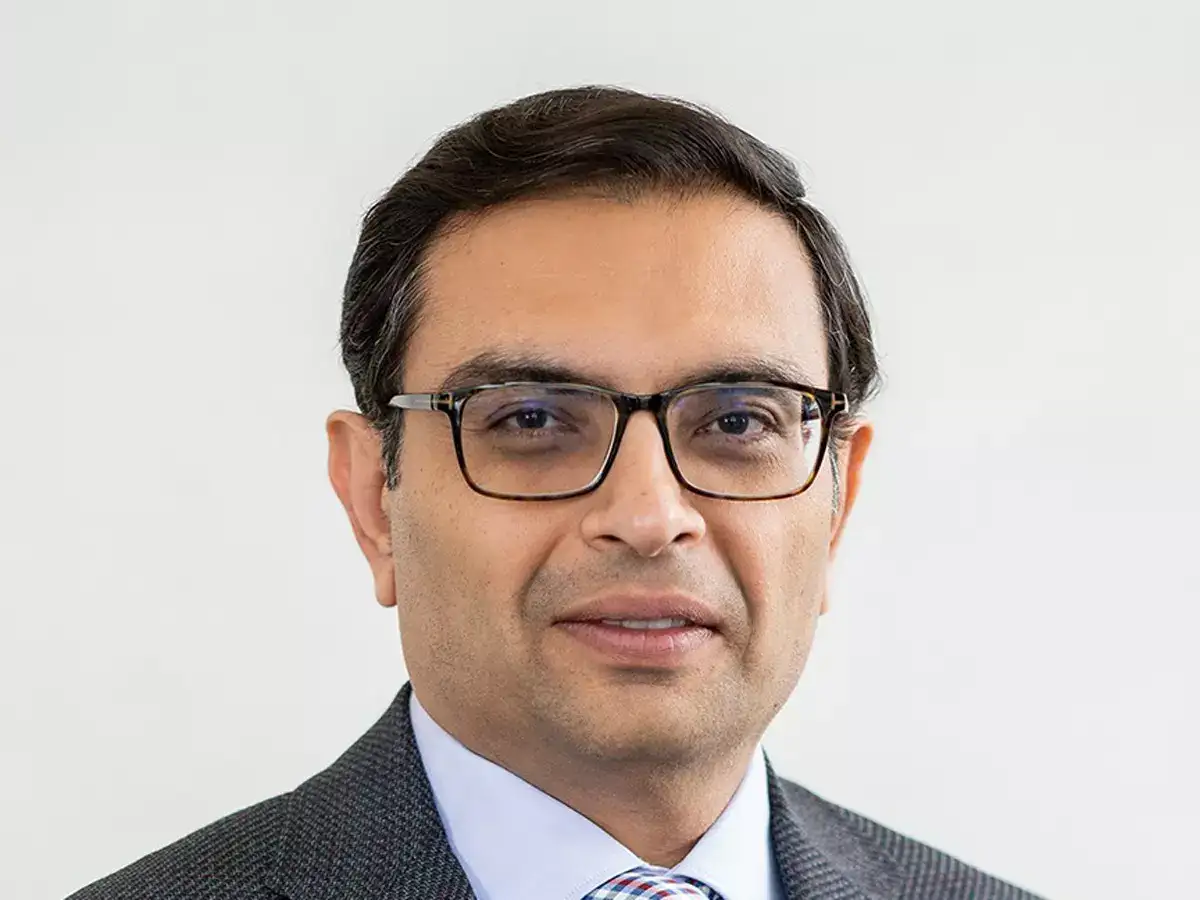
Hiren Ved, Director & CIO at Alchemy Capital, believes the country's indirect AI opportunity lies in areas such as power, data centres, electrical equipment and capital goods.
As hyperscalers ramp up spending on AI infrastructure globally and expand their presence in India, demand for transformers, cables, cooling systems, switchgear and other data centre-related infrastructure could create new growth opportunities for Indian companies.
Ved also expects the power ecosystem to emerge as a key beneficiary, given the enormous energy requirements of data centres.
In an interview with Kshitij Anand of ETMarkets, Ved discusses how investors can play the AI theme in India, the changing pattern of FII investments, why market leadership shifts with every cycle, and why the second half of 2026 could turn out to be better for Indian equities than the first. Edited excerpts:
Kshitij Anand: I wanted to come to you on the markets. We have seen quite a few external factors that have really impacted Indian markets, and one of the factors that has really come to light is geopolitical risk, as well as interest rates, which most were factoring could probably remain on the higher side rather than the lower side. So, according to you, which global risk do you feel investors are underestimating at this point in time?
Hiren Ved: The last few years have taught us that no risk is off the table. The whole geopolitical risk will continue, and the reason for that is that the largest power in the world is kind of, sort of, looking more inwards and asking its traditional allies, like Europe, etc., to fend for themselves. But having said that, they have also done some adventurism in the Middle East.
So, whether it be in trade, economics or geopolitics, it is difficult in the current environment to predict because there is no ideological mooring about anything. The world is becoming more transactional. It is all about gaining leverage and trying to maintain a certain level of leadership.
Everything was very calm because the US was the most powerful military and economy. Now, suddenly, you have China, which is rising both economically and militarily, and hence the need for the US to reassert itself is what is causing friction.
And then, obviously, President Trump has his own worldview about the fact that he thinks many countries have taken the US for a ride, more from a trade perspective, because most of them have a surplus vis-à-vis the US. He realises that the US is the largest consumer in the world and everybody has been freeloading on that consumer. And he is, therefore, using trade, tariffs, and geopolitical and military power to balance that, and that is what is causing this uncertainty.
So, because we were so used to thinking about the world in a certain way and this has been completely upended now, therefore, from a market's perspective, in my view, we have to keep at the back of our minds that this will keep happening. We cannot say, "Oh, this erupted, now luckily we have a closure, and therefore we will not have anything else coming up," because this will not be settled so soon.
And as long as people are using trade, tariffs, and political and military power to score over others or to achieve certain objectives, I think this challenge will continue to remain.
From India's perspective, our weakest link in all of this has been our overdependence on imported energy, and every time oil prices spike because of any geopolitical event, it definitely puts a significant strain on our economy, on our current account, and therefore, we will have to take a lot of steps to reduce this dependency.
I do not think we can eliminate it. It is not going to happen overnight. There are a few things that we have done, like the big push towards renewables, and during this conflict, the government realised this and tried to incentivise an increase in domestic oil and gas production by reducing royalty rates.
So, they are doing what needs to be done, but much more will have to be done. Therefore, for us, in all of this, I think energy security will remain a big issue.
Kshitij Anand: And you also track FIIs very closely. In fact, FII ownership across India's top 10 listed companies has fallen to just about 34% of the free-float market cap, the lowest level seen in the past two decades. How should one decode this?
Hiren Ved: So, here, to my mind, there are two factors at play simultaneously. The most oft-repeated reasons that are given for FII outflows or lack of inflows are that: A) India is expensive relative to other markets; B) India does not have an AI trade; and C) we are probably the only country that taxes foreign capital in (---) short-term and long-term capital gains, and therefore, that puts us at a relative disadvantage compared to other destinations.
So, this is one cohort of reasons that have been, I am sure, oft-repeated again and again. So, there is some truth to this.
I also believe that, alongside this, because you mentioned the top 10 companies, I think what has happened is that FIIs were largely invested in many of these top 10 large-caps, which historically have given them very good compounding returns over fairly long periods of time.
So, there was really no need for them to go deeper down beyond the top, maybe 50, at best 100 companies—mostly not even 100. Maybe you can count amongst the top 50 companies because that is where the liquidity was and that is where the size was.
And therefore, if you look at it, their largest investments were in the financial services sector, in the big banks, followed by IT services, and then, obviously, there are others. But, by and large, a large part of FII investment was concentrated in these two sectors.
Now, what has happened is that post-COVID, these sectors have not delivered any returns. There are always some exceptions to the rule, but by and large, the big IT services companies have not delivered. The big banks have not delivered. The big FMCG companies have also not delivered, which is where a large part of their investment was concentrated.
Also, a part of the selling is because the FIIs now want to rethink where they want to allocate, if at all they want to allocate to India. So, if you see over the last few years, I think there has also been a shift in FII ownership, where another growth area that they liked was the Indian internet consumer space.
So, whether it was Eternal, Swiggy, Paytm, Meesho or Nykaa, these are just a few examples that I am giving. But A) they like this space because of two reasons. One is that the growth rates are much higher compared to the traditional businesses that they see. Secondly, they have made money in these sectors in other countries.
So, many of them have made a lot of money betting on Chinese internet companies and Chinese consumer internet companies. And they think that, obviously, India being a large, underpenetrated market, especially with very fragmented markets when it comes to B2C businesses, the platforms are probably far better off at aggregating demand and supply, growing faster and disrupting the old order.
So, to me, actually, if you look at it, while on the surface it would look like the FIIs have only been selling, below that, while the numbers do show that there has been net selling, there has also been a healthy churn in terms of where they are looking at growth over the next 5-10 years.
Also, after a long time, they have the opportunity, beyond the internet space, to look at capital markets. One of the largest exchanges will go for an IPO now. For them, it is a great proxy to play India and India's growth in the capital markets.
They have also invested a little bit in the industrial space and in the infrastructure space. There are large build-outs that are going to happen in airports, and they want to play these proxies again because, for them, these are fairly large, capital-intensive businesses.
And in all of these companies, whether in the large internet consumer space or many of these pseudo-infrastructure consumer spaces, they can deploy large amounts of capital, meaningful capital, and play the same growth.
So, they do not want to now invest in a typical FMCG company to play the consumption growth in India. They might as well invest in an airport company because the consumption basket of the Indian is also changing. He is travelling more often. He is doing more discretionary consumption. And therefore, there are more appropriate and better ways to play that.
So, FII selling has to be seen in both contexts because you may continue to see selling in the traditional ownership sectors, but the same money, or some of it, could come back in very different forms and in different sectors.
Kshitij Anand: Where we say where the smart money is moving.
Hiren Ved: Where the smart money is moving. And one great way of attracting foreign capital again, beyond addressing some of the structural issues like taxation, etc., is high-quality, large IPOs—NSE, Jio, and many other large IPOs—because then, for them, it is easy to deploy large amounts of capital without a lot of friction or impact cost. So, they prefer to come when there is a big issue coming up.
Today, we are seeing that a lot of private equity investors want to exit, and that also can be a route, though in the current round, it is mostly Indian mutual funds that are picking up all the selling that is happening. But I think when they decide to come back, that could be another route for them to come back.
Kshitij Anand: And there is another theme that is playing out right now, which is the AI story. Like you mentioned how FIIs are playing the consumption story, is there also a way—because there is no direct representation of AI in India, but there are other ways and other sectors that could benefit from it? So, from that perspective, where do you see the opportunities coming from AI, especially in, let us say, software services, industrials, automation, or manufacturing?
Hiren Ved: So, if you really look at the whole AI story, there are several layers to that story. I mean, right at the top is the application layer. Now, within the application layer, there is the consumer application layer and there is the enterprise application layer.
The consumer application layer is largely going to be dominated by the big US tech companies like Google because you do search, YouTube, Instagram—AI will get embedded into many of these consumer internet apps where we have no play, so that is out for us.
Then, you come to enterprise. In enterprise also, you have the Anthropics, OpenAIs, and Microsofts of the world that are doing that. Now, maybe there is a hypothesis that when it comes to enterprise AI adoption, Indian software services companies will actually help enterprises implement a lot of the AI tools and platforms in their businesses.
While that is the thinking, and many of the existing incumbent large software services CEOs have been saying this, the markets are not convinced that that is indeed going to be the case. And the reason for that is that what is happening, in fact, is that in the initial phase, there is actually deflation in revenues.
So, the investor is thinking that, yes, probably all these companies should see a big advantage or a new growth vector coming to them because they will have to start helping enterprises build all these AI capabilities. But to begin with, what is happening is that there is deflation in their existing revenues, and therefore, the markets are waiting for data to emerge to see when enterprises start spending on the application layer. This should then be seen in revenues actually accelerating rather than decelerating.
So, unless that happens, it is going to be very difficult for the markets to bet on software services companies. And from growth, they have now become dividend-yield plays. It is funny, but that is how it has played out.
So, for the time being, at the top layer, one, we do not have a play; another, we still have to wait and see. People are waiting for data to see whether there is actually a play for us in the software services layer.
The next, obviously, below that, is the large LLMs. Again, we have no play there. Though I think that selectively, there will be small SLMs or industry-specific vertical language models where there could be a play in India, but it is probably at a slightly early stage. There are a few companies that are attempting that. I am sure many more will attempt that. And I think at some point in time, there will be a play there, but right now, it is not very evident.
And then we come down to the infrastructure layer, which is actually building the data centres. So, you need to build these factories that will run the GPUs on which the LLMs are running, either for training or inference or whatever.
There, what we have found is that there are plays because there is a lot of equipment that goes into this—not the chips, because we do not have a play there. It is largely the Nvidias and AMDs of the world—but there are cooling systems. There are backup gensets. There are racks, the real estate that is required, the designing of the data centre, and cables that go into it. There is a lot of equipment and switchgear that goes into it.
Kshitij Anand: And that is all heavy-duty.
Hiren Ved: It is all heavy-duty electrical and physical systems hardware. So, what has happened in India is that people have looked at companies in the electrical and capital goods space, which are benefiting because of the capex that is happening, both in India, where we are still at about 1.5 gigawatts and are expected to go to 6-7 gigawatts, and in the US, where we are talking about 50 gigawatts going to probably 150 gigawatts.
So, many of these companies are now exporting. Transformers are being exported. Cables are being exported. Optical fibre is being exported. Preforms are being exported. And a lot of the demand will also come as India builds out its AI infrastructure because, as you know, the government has now given a fairly long 20-year tax holiday, and the big hyperscalers are coming to India. Google, Microsoft and all these companies are coming to India and building here.
India has one advantage because the capital cost of setting up a megawatt of AI infrastructure is probably 30% cheaper than what it would cost in the US. So, if you see, there are many states like Telangana and now even Maharashtra, which are saying, "We will give you land." They are really going after the hyperscalers and attracting them to come and invest.
So, there is a play at that infrastructure layer.
And then there is one more—the last layer—which is power. You need power, which is the raw material that feeds into the data centre, and then there are a whole lot of power ancillaries. So, transmission equipment, power cables, and therefore you need transformers. You need a whole lot of adjacent power infrastructure, whether you are pulling it from the grid or—and this is not very prevalent in India, but in the US it is starting to happen—what is called off-premise power.
So, there is a power system just behind the data centre. It is like captive power. It is similar to what happened in India when we did not have high-quality, uninterrupted power from the grid. Cement companies, and in fact every metal company, had a captive power plant. Their business was not to run a power plant. Their business was to produce cement, copper or aluminium, but because it was so power-intensive, they actually became utilities as well.
The same thing is today happening in the US when it comes to data centres. Google is becoming a utility. Apart from building data centres, they are saying, "You know what, I need power." So, if the state utilities are too slow to provide it, they will do it themselves.
So, what is happening is that they are investing in all kinds of power—whether it is gas turbines, solid-fuel power, gensets, coal-fired power plants, or whatever they can lay their hands on. They want to invest.
Now, this is also creating a domestic as well as an export opportunity for many Indian capital goods companies. So, if you look at companies like ABB, GE Vernova, Hitachi and many of the transformer companies, apart from India—which was anyway doing well because India has its own plans to build electrification and grid infrastructure—suddenly the demand from the US is so severe that they are now beginning to export.
So, there is a new growth story there.
From India's perspective, the power layer and the physical data centre construction layer, and whoever is supplying into these, present an opportunity. So, some of the domestic and foreign investors have both figured this out and have invested in some of these names to play the AI theme because, as I said, in LLMs we do not have a play, in consumer apps we do not have a play, and in enterprise we think we have a play, but we are waiting for that to materialise. So, in the meantime, there is a play that is happening here.
Kshitij Anand: So, the direct play is not there, but the indirect play is there.
Hiren Ved: Yes, the indirect play is there. But obviously, a lot of the emerging market money was diverted away from India into countries like Taiwan and South Korea because they had the chip layer and the memory layer, which again is in short supply because of the whole boom that has happened.
Therefore, people have said, "India is probably a great long-term market, but right now I am going to make a lot of money betting on the Samsungs and the SK Hynixs of the world. Let me first make money here. We will think about India later."
Kshitij Anand: So, can we also say that some of these themes could be—I will not use the term multibaggers—but wealth-creating themes?
Hiren Ved: They have been. I mean, if you really look at many of these companies, they have gone up 3x, 4x, even 5x.
Kshitij Anand: They have already produced multibagger returns for investors.
Hiren Ved: Yes, because the base was so low, and this whole AI capex theme has only accelerated since mid-2024. It really came into being when all the hyperscalers started to disclose—because they are all listed companies—the kind of money they wanted to spend.
Then it struck everybody that if there is so much spending... they all started with $200-250 billion, and within a few quarters they were all talking about $750 billion. Now there are estimates that next year this could go to $1 trillion.
Over five years, research houses—there are various estimates from Morgan Stanley, Goldman Sachs and other US investment banks—are talking about anywhere between $5 trillion and $8 trillion of cumulative capex over the next five years.
Now, whether it plays out like that or not, markets start to think about these numbers.
Kshitij Anand: That is a kind of opportunity....
Hiren Ved: It is an opportunity. When the TAM is so big, some of that starts to get reflected in stock prices and valuations. So, many of these have already become multibaggers. If, genuinely, these companies follow through on the level of capex that we are talking about, then there is far more space left for these companies to deliver returns, even though we have had staggering growth in many of these companies.
But if this were to come into question at some point in time, because now there are debates on both sides, it is not a one-sided game where everybody is going to spend trillions of dollars. There are also dissenting voices saying that if you are spending so many trillions of dollars, what kind of revenue do you need to generate to justify this kind of spending?
And then there are comparisons to the internet boom and bust and many other such cycles—the electric boom, the railway boom, the internet boom—and there are comparisons to all those cycles. So, I think we have to wait and see the durability of this capex boom. And if these figures are to be believed, and if the hyperscalers continue to spend this kind of money, there is still upside left in many of these companies.
Kshitij Anand: You are here, and you have three decades of experience. Any key learnings that you would like to share with our readers?
Hiren Ved: So, some of them are things that you would hear from most experienced investors, which is that, A) it is all about patience and the long term. Markets are cyclical. Generally, investor behaviour is largely dictated by what they have experienced in the recent past.
So, people generally seem to be very optimistic when past returns are great. They seem to be generally pessimistic when they have not made money, like, for example, in the current cycle. In the last two years, it has not been easy.
But I think that if you look at the last 30 years, the general trend of the market has been up, but there have been phases where you make no returns, and then you suddenly make up all the returns in a very short period of time.
And what that tells you is two things—one is that, beyond a point, you cannot time the market, and second, if you really want to make those average compounded returns that everybody talks about, then you have to stay in the game.
Now, this is something that is very generic. I think what the last 30 years have also taught me, beyond this, is that leadership changes in the market. What worked may not necessarily work in the future.
So, I think every cycle is different. Every bull market cycle is different, and then that cycle ends with a big bear market, which can happen because of anything. The last one was COVID, before that was the Global Financial Crisis, and before that was the tech bust.
And whenever that cycle changes, inevitably, what I have learnt is that leadership across sectors and companies changes. So, what worked may not necessarily work in the next cycle. And whether you analyse the Dow over several decades or you analyse the Nifty or the Sensex, you will see that every 10 years there is a churn. A lot of companies go out, and a lot of new heroes come in, new leaders come in.
Now, therefore, it is very important. What I have seen is that a lot of investors are not able to understand this. So, they continue to remain largely invested in the leaders of the previous cycle.
And what happens is that even though the next cycle is already playing out, they suddenly feel they are not participating in that cycle because what they own is, in relative terms, not doing as well as something else that is doing well.
And the ability to change that mindset is extremely important. Now, either you do it yourself, which is that you self-learn and understand through previous cycles, because today there are far more tools available to investors than in the past. Today, a lot of intelligence is available through AI models. Or you give it to professionals who can figure this out at some point in time and adapt the portfolios to the next level of changes.
And leadership changes for several reasons. Sometimes, it is that one generation of founders creates the wealth, the second sustains it, and the third may not be able to take it to the next level.
In some cases, there is a great handover from a family-run business to a professionally run business. We have seen that in the case of Dabur. We have seen that in the case of Bharti. They have been successful in handing over from the family to professionals, and they are able to create value.
Sometimes, that transition does not happen, and they are not able to create value. Sometimes, leadership changes because there is massive disruption because of technology and you do not adapt. You stay behind. Something else comes and takes away your profit pool.
So, there are several reasons why leadership changes. And sometimes there are macro conditions that change. For example, India doubled down on capex rather than giving stimulus to consumers, and a lot of the policy framework around PLI, Make in India, Atmanirbhar Bharat, geopolitics and China Plus One meant that this cycle looks very different from the 2008-09 to 2019-20, just pre-COVID cycle, which was largely about B2C businesses, private banks and consumer franchises.
The entire thing flipped to PSUs, defence, power, EMS and manufacturing across sectors. A very different set of businesses have grown much faster, and that is also emblematic if you look at the data over the last four-five years.
If you break down earnings growth—because we typically talk about earnings growth as Nifty earnings growth—but if you split it as per the SEBI definition, which is large-caps, comprising the top 100 companies, mid-caps, which are the next 150 companies, and then the rest, you will find that large-caps have not been able to grow beyond single digits. It has been very difficult to grow.
It is really the middle, the belly of India—the mid-caps—where earnings compounding has been 2x to 2.5x that of the top 100 companies. So, they have grown earnings at between 20% and 25% compounded, which is fantastic.
And the small-caps have also grown faster, but it has been more volatile, and that volatility has come largely from the macro events that we have seen—wars, tariffs, and again wars—and it takes time for small-caps to deliver consistent growth.
But if you still look at the average growth, the small-caps have also done far better than the large-caps. And hence, you see that in this cycle, by and large, mid- and small-caps have done better, and a large part of that has got to do with earnings because that is where the growth is. The growth is not in the top 100 companies.
So, I think this cycle has been a little different—mid- and small-caps over large-caps, more manufacturing, more cyclical businesses, and more capital-intensive businesses, as opposed to more B2C, traditional IT services, FMCG or the big private banks. They have been laggards in relative terms.
So, this cycle looks to me more like the 2003 to 2008 kind of cycle. Obviously, every cycle has its own nuances, and you have new heroes. In the previous cycle, it was the infrastructure and real estate guys.
Kshitij Anand: The winners are usually very different.
Hiren Ved: Very different. So, I think that, to me, in my 30 years, apart from certain foundational principles—that A) you need to have patience and a long-term approach to investing; B) do not get carried away by what has happened in the last three years or five years because markets are forward-looking, so do not be too optimistic. If you have made great returns, 20-30% returns cannot be compounded forever. And if you did not make money in the last two years, it does not mean that you may or may not make money in the next two years.
But beyond that, the ability to judge the fact that leadership changes and the fact that we are seeing far more disruption at faster intervals, whether it is tech disruption—earlier, it happened because of e-commerce and digital platforms that came and disrupted traditional businesses. Now, AI is creating one more level of disruption. Then, there is disruption caused by geopolitics. There is disruption caused by trade and tariff barriers.
So, while being long-term, we have to recognise that long-term does not mean that you do not recognise some of these larger trends and what they do. So, you have to be careful that what you hold does not lose value because of this and that you are not making an error of omission by not investing in the sectors and companies that are actually likely to benefit from this disruption.
That is the learning which, I think, we have to constantly keep in mind. Therefore, it does not mean that you buy and sell constantly, but you have to be vigilant, look for opportunities and look for any significant structural change in trends.
Kshitij Anand: If we look back, the first six months have not been that great in absolute terms. We were down 8-9% odd on the Nifty 50. I know it is a pure market question, but we still have to give it a go as to how you see the next six months, including, let us say, July. So, we are starting off with the second half of 2026. Do you see some improvement, or will it not be as bad as what we have probably seen in the first half?
Hiren Ved: Well, as I said right at the beginning, I mean, we are constantly seeing things happening in our macro environment.
Kshitij Anand: And most of these are external
Hiren Ved: Yes, most of it is external. My sense is that, and I think even the markets are waiting to see how the Q1 results fare, because the last time, for example, in 2022, when the Russia-Ukraine war broke out, you had energy prices going up, you had supply chains getting disrupted, and we saw that, at that time, for two quarters, we took a big knock on earnings because EBITDA margins came down due to cost pressures, all (---).
We had something very similar happen this time. But my guess is that, learning from that cycle, the impact in this cycle, to my mind, will be relatively less because everybody has learned to pass on things much faster. Not to say this would not impact earnings. There will always be a few sectors that have been.... People have faced logistics problems because the Strait of Hormuz was closed, shipping delays—those things can happen.
I just feel, when I speak to a lot of companies this time, what I think is that the whole system is now used to saying that, look, this is a disruption, my costs have gone up, and I need to pass it on to you, and then you, in turn, have to pass it on to the end consumer or whoever.
So, this time, the transmission of higher costs or dislocations may be better passed on. I am not saying completely passed on, but at least the extent to which people have been able to manage should be better. So, I would not be surprised if Q1 turns out to be better than what most people expect. That is point number one.
Point number two, when I look at a lot of the high-frequency data, like credit growth, for example, auto sales, credit card spending—a lot of this data tells you that the consumer has also been fairly resilient. And probably the cumulative impact of all the stimulus that was given last year—for example, we gave tax cuts; first, it was income tax cuts, then we gave GST cuts.
Also, there has been indirect stimulation because of the handouts given before every state election. That has also gone, one way or another, into the hands.
So, in this cycle, the cumulative effect of all these stimuli is what, in my mind, we are seeing in the consumption data—that it has not fallen off the cliff like most economists would have thought it would.
Even when I speak to the banks and NBFCs, some of the leading ones, they do not see a significant deterioration in asset quality, which is again something that you would expect when the economy gets a shock like this.
So, to my mind, when I look at some of the lead indicators, it gives me the confidence that Q1 results will be better than what most people expect. And if that happens, then the answer to your question is that I certainly believe that the second half will be much better than the first half.
So, if earnings come back, valuations have now receded somewhat, though from the March lows, many mid- and small-cap stocks have delivered fantastic returns. But on the whole, I am just saying that valuations have corrected.
I think earnings should accelerate. I think the economy has been far more resilient to the current shock than we would have believed, and I also believe that the intensity of FII selling should come down. Whether it finally turns into net buying or not, I do not know. I hope so.
But even if the selling intensity reduces, which we have seen in the last few weeks, if that happens, that itself should help the markets deliver a fairly strong rebound. That is my expectation.
(Disclaimer: Recommendations, suggestions, views, and opinions given by experts are their own. These do not represent the views of the Economic Times)