
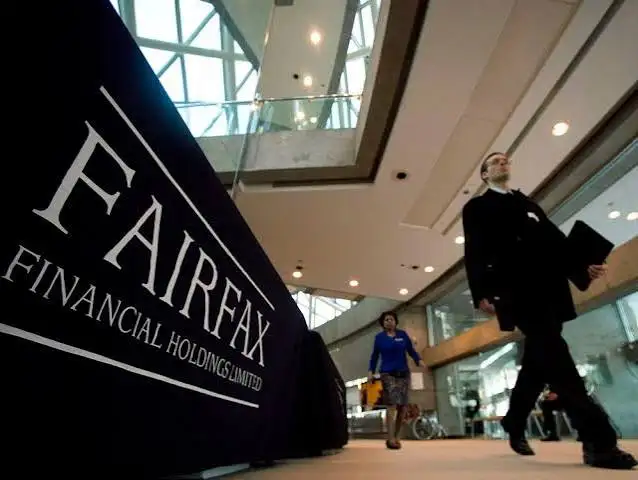
Fairfax Financial Holdings likely bought nearly half of the three-year government bond paper auctioned Friday in what is seen as a prelude to acquiring a stake in IDBI Bank, said people familiar with the development. This is the second bond purchase by the Prem Watsa-owned company in less than two months.
In June, Fairfax likely bought around ₹9,600 crore of government securities in an auction.
"They (Fairfax) are not a usual market participant, and the purchase is just a way to move capital into India ahead of a potential acquisition," said a person aware of the matter. The purchases are likely the means for the Canadian company to bring capital into the country ahead of a potential deal to buy a stake in government-owned IDBI Bank.
ET reported in its July 15 edition that Fairfax Holdings aims to secure a major stake in IDBI Bank through a $5.5 billion deal. Fairfax is offering ₹81 per share, which is higher than the ₹75 a share it offered last year, ET reported.
The Toronto-based company bought ₹5,000 crore in the 6.03% GS 2029 paper, which had a notified amount of ₹11,000 crore in Friday's auction, two people aware of the matter said.
The cut-off on the three-year bond was at 6.12% in Friday's auction, while it closed at 6.20%, CCIL and RBI data showed. The company did not respond to an email seeking comment until press time.
Another person aware of this said that Fairfax has been buying Indian government bonds in the shorter tenure segment over a couple of months, and would likely sell these when clarity on the IDBI Bank process emerges.
Fairfax needs to have around $5.5 billion, or ₹52,580 crore, available in India to fund the acquisition of the IDBI Bank stake when the transaction closes.
Fairfax maintains a 40% stake in CSB Bank and is in the process of raising its holding in IIFL Capital Services to at least 51%.
The IDBI Bank privatisation process has been underway since October 2022, when the government formally invited bids from prospective investors, although the decision to privatise the lender dates back to 2021.