

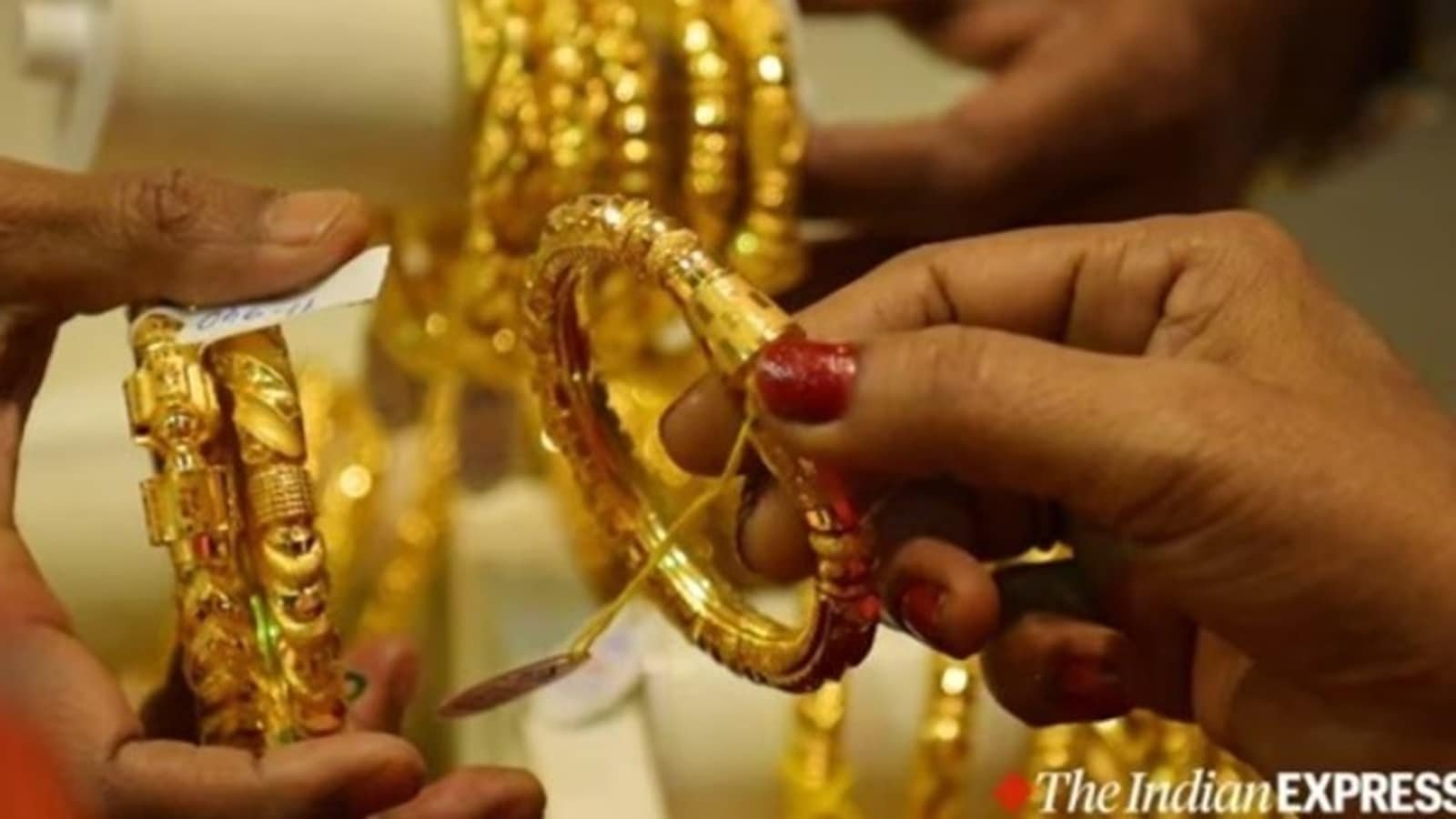
TO PRESERVE foreign exchange, the government Wednesday hiked the customs duty on gold and silver imports from 5% to 10%, and Agriculture Infrastructure and Development Cess (AIDC) from 1% to 5%, taking the total effective import duty to 15%.
This may be the first of a series of measures to bring stability to the capital account and prevent the rupee from further depreciation. It closed at 95.71 to a US dollar on Wednesday, losing almost 5 per cent since the beginning of the West Asia conflict. There are discussions already in the government about hiking petrol and diesel prices with global crude oil sizzling at over $100 a barrel and state-owned oil marketing companies suffering losses of almost Rs 1,000 crore to Rs 1,200 crore a day.
The import duty hike on gold comes in the wake of Prime Minister Narendra Modi’s call for austerity measures and appeal to citizens to reduce petroleum consumption, avoid non-essential foreign travel and gold purchases for a year as part of measures to help the country deal with global disruptions and challenges.
The government has also increased import duty on gold and silver findings to 5% – the findings are small components such as hooks, clasps, clamps, pins, screws used to hold the whole or a part of a piece of jewellery in place. Platinum findings will attract a 5.4% import duty.
The effective import duty on platinum has also been increased to 15.4% from 6.4%.
Additionally, a 3% Integrated GST (IGST) will be payable on all imports of precious metals in addition to the basic customs duty and AIDC.
All these measures will help reduce outflows of foreign exchange; since the onset of the conflict, foreign exchange reserves have been depleted by almost $38 billion.
Story continues below this ad
Managing the current account credibly, financing it, and preventing further currency depreciation are the central macroeconomic imperatives of FY27, Chief Economic Advisor V Anantha Nageswaran had said on Tuesday. This imperative comes in the wake of concerns that even a current account deficit of 1% of GDP has been difficult to finance in recent years due to a confluence of factors leading to persistent weakness in the exchange rate, said analysts.
Officials said the move is a “carefully calibrated and proportionate intervention” to “encourage moderation in non-essential imports at a time when external vulnerabilities remain elevated”.
“The government has increased the customs duty on imports of precious metals, including gold, gold dore, silver, silver dore, platinum, etc., as a policy measure aimed at safeguarding macroeconomic stability, conserving foreign exchange, and moderating non-essential imports during a period of heightened global uncertainty arising from the ongoing West Asia crisis,” an official said. The increase in customs duty on precious metals, the official said, is intended to moderate avoidable import demand and ease pressure on the external account.
Impact on current account deficit
Gold constitutes the second-biggest item in India’s import bill after crude oil imports. In FY26, the country’s gold imports jumped by 24.1% to $71.97 billion compared to $58 billion in the previous financial year.
Story continues below this ad
This was largely due to the value of gold prices, with gold imports falling to 721.04 tonnes in FY26 as against 757.09 tonnes in the previous financial year, according to data from the Ministry of Commerce and Industry. Gold prices have surged over 40% in the last year, inflating the import bill.
The current geopolitical situation has created significant volatility in global crude oil markets and international shipping routes, officials said, adding that as a large importer of crude oil, India remains vulnerable to elevated energy prices and supply-side disruptions, which can increase the import bill, exert pressure on inflation, and the CAD.
“In such circumstances, prudent management of the country’s external sector becomes essential. Historically, customs duty adjustments have been used as one of several policy instruments to support macro-economic stability and effectively manage CAD-related pressures during periods of global volatility,” the official said.
Forex conservation
A depreciating rupee is also adding to the country’s import bill burden. Officials said precious metals, while culturally and financially significant, are “predominantly consumption and investment driven” in nature and such imports involve “substantial outflow of foreign exchange”.
Story continues below this ad
“Precious metals occupy a unique position in the import basket because they involve significant foreign exchange outflows while being relatively less linked to productive industrial activity compared to sectors such as energy, manufacturing inputs, infrastructure, or technology,” the official said.
India’s foreign exchange resources, therefore, must be prioritised towards essential imports such as crude oil, fertilisers, industrial raw materials, defence requirements, critical technologies, and capital goods, the official said.
“These imports directly support economic activity, food security, infrastructure, manufacturing, exports, and national security,” the official said.
The rupee hit an all-time low Tuesday, falling to as much as 95.75 per dollar during the day before closing at 95.63 — the lowest it has ever ended a session. Since the war in West Asia began, the rupee has slumped by almost 5% against the US dollar and has been Asia’s worst performing currency so far in 2026 – a period in which it has fallen by 6%.
Story continues below this ad
Over the last few years, India has seen significant foreign exchange outflows on account of higher gold imports and spending on overseas travel under the Liberalised Remittance Scheme (LRS). The pressure on India’s external sector has been felt amid the ongoing West Asia war with forex reserves plummeting by $38 billion in just two months since the start of the conflict, and crude oil prices continuing to hover over $100 a barrel.
The fall in reserves to $691 billion has also been driven by sustained capital outflows from foreign institutional investors amid heightened global uncertainty. FII outflows in the January-May period were Rs 1.97 lakh crore as foreign investors continued their sell-off in the stock markets.
