

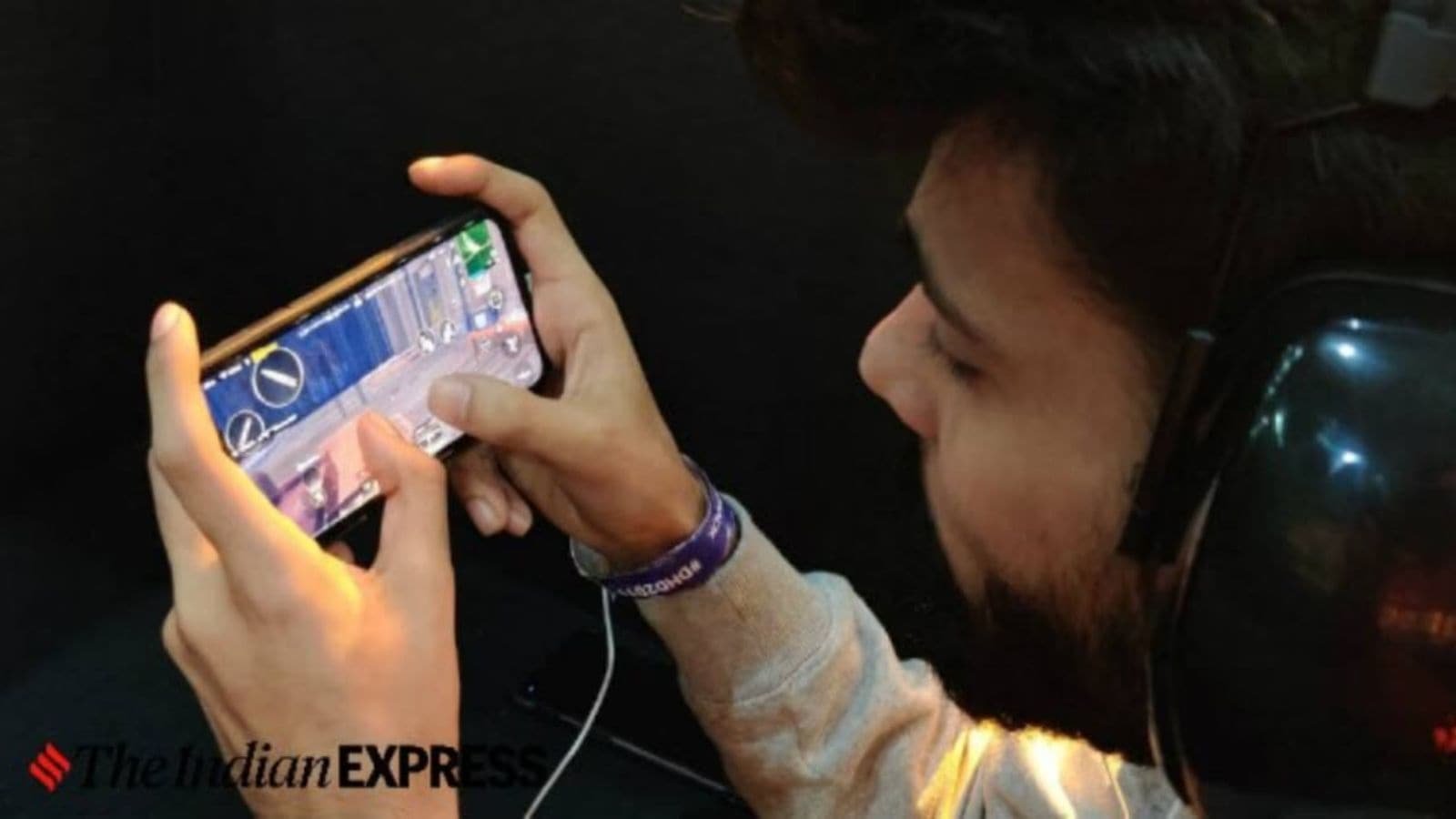
What the ministry will watch out for is the manner in which the winnings from e-sports are distributed among participants.
Despite effectively banning online real money games in India, the Ministry of Electronics and Information Technology (MeitY) is stepping up vigil so that such entities don’t find their way back online by getting themselves categorised as an e-sport — a class of online game that India’s gaming law allows — with enhanced safeguards.
ARTICLE CONTINUES BELOW VIDEO
[embedded content]
“MeitY fears that e-sports is one potential way in which banned money games could seek a re-entry after making some tweaks to their models. The applications of such games will be scrutinised quite closely,” a senior government official told The Indian Express.
Last year, the IT Ministry notified the Promotion and Regulation of Online Gaming Act, 2025, which banned online real money games of all types, shutting the door on popular apps such as Dream11, Mobile Premier League and Winzo. The Act allows e-sports to operate, but places them under greater compliance burden than other types of permissible games. For instance, the law mandates registration for e-sports while easing requirements for non-monetary games.
What the ministry will watch out for is the manner in which the winnings from e-sports are distributed among participants. “Say, five people are playing a chess game online, and there’s an entry fee for participation and a prize pot for the winners, those winnings should be okay. However, the moment there’s a game where there are factors involved beyond an individual’s control, that would raise red flags for us,” a government official said.
Another official added that while e-sports are generally finding mainstream acceptance and are also part of international sporting events like the Asian Games, caution has to be taken to ensure that banned games don’t rework their platforms while keeping their original model intact to be classified as one.
“The problem with e-sports is they could potentially involve wagering, betting or gambling of some kind. That’s why in the law we have said that only e-sports that are recognised under the National Sports Governance Act can seek registration under the gaming Act,” the official said.
However, there is a potential grey area, an IT Ministry official said. While the Promotion and Regulation of Online Gaming Act, 2025, states that the e-sports will have to be duly recognised under the National Sports Governance Act, 2025, the latter does not provide a clear mechanism for such recognition, the official said. The sports governance Act was enacted before the online gaming Act.
Story continues below this ad
It is also understood that the Ministry of Youth Affairs and Sports had informally sought removal of e-sports from the IT Ministry’s gaming Act. However, this category of games was retained in the Act, and subsequent rules notified recently.
Queries sent to the ministries of IT, and Youth Affairs and Sports did not elicit any response.
After the gaming Act was passed last year, there were discussions between the industry and ministry to figure out if gaming entities that were facing a ban could rework their business model and register themselves as an e-sport, according to three industry sources and a government official.
Multiple models were proposed, including allowing users to play for free, or taking a small subscription fee to offer an advertisement-free model with other add-ons such as short form content. However, MeitY remained concerned that these companies may try to sidestep the law.
Story continues below this ad
Under the Promotion and Regulation of Online Gaming Act, 2025, an e-sport has been defined as an online game played as part of multi-sports events; that involves organised competitive events between individuals or teams; is duly recognised under the National Sports Governance Act, ߩ has outcome determined by factors such as physical dexterity, mental agility, strategic thinking; and does not involve the placing of bets, wagers or any other stakes by any person, whether or not such person is a participant, including any winning out of such bets, wagers or any other stakes, among other things.
