
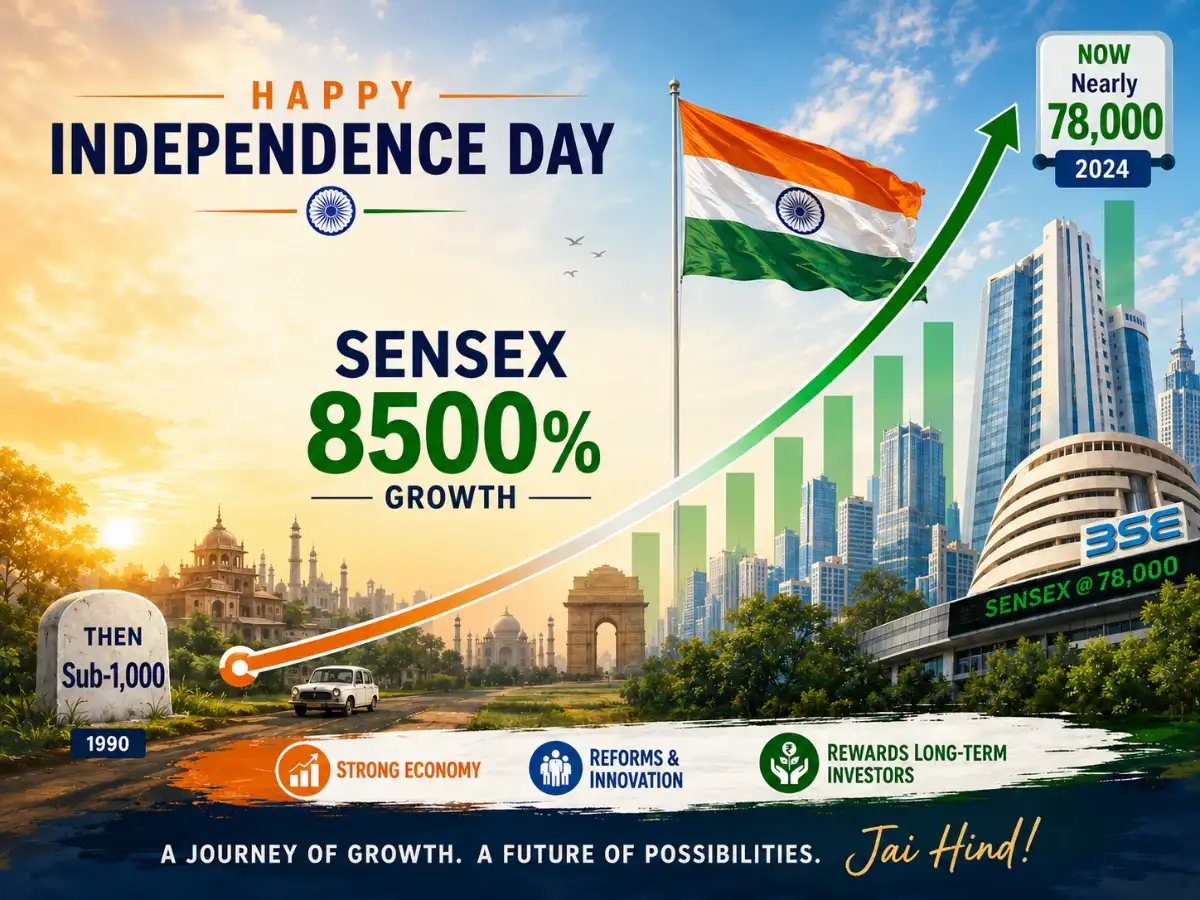
India is celebrating its 80th Independence Day today, but the Indian stock market has charted its own remarkable journey. Benchmark index Sensex has rallied a whopping 8,500% in less than 35 years since the big bang economic reforms changed the trajectory of the country.
Sensex was launched in January, 1986, soon after which India faced a massive balance of payment crisis that almost pushed the country on the edge of bankruptcy. The then Finance Minister Manmohan Singh warned that the foreign exchange reserves had fallen to such low levels that it would suffice to finance imports for only a fortnight. The government scrambled for emergency loans to protect the economy. Sensex back then was trading below 1,000.
Big Bang reforms of 1991 and impact on Sensex
In July 1991, Manmohan Singh presented the historic budget that ended the license raj, opened doors for globalisation, privatisation and liberalisation. On the 1991 budget day itself, Sensex jumped nearly 5%. The benchmark index delivered a massive 82% return in 1991, closing at 1,909.
Sensex then went on a bull run after the historic budget of 1991. In the seven months before Dr Singh presented his second budget in February 1992, Sensex rallied a massive 94%. In addition to the impact of the historic budget, the markets were in the grip of a bull run driven by Harshad Mehta.
In March 1992, Sensex crossed 4,000 for the first time, before bears took over. On April 28, 1992, Sensex fell by a massive 13% as the Harshad Mehta scam came to light. But as time passed, more and more reforms came over, India’s economy boomed and so did its stock markets.
Sensex last year in December crossed the 86,000 mark. This implies a massive 8,500% return or 14% CAGR since the reforms were announced in 1991. Overall since its inception, Sensex has delivered positive returns in 30 out of 40 years. 2024 marked a big year for the index, as it crossed three milestones- 75,000, 80,000 as well as 85,000. From 2014 to 2025, Sensex has moved up from 25,000 levels to 86,000 levels.
Also read | Rakesh Jhunjhunwala death anniversary: 5 market lessons every investor should learn from the Big Bull
After hitting a lifetime high above 86,000 last year, Sensex has declined around 10% since then to trade below 78,000 currently as global AI frenzy, rising oil prices amid a raging war in the Middle East and other factors spooked investors. However, analysts continue to remain bullish on the stock market’s long term outlook, with corporate earnings impressing investors.
The market expert highlighted that India’s market capitalisation has compounded at nearly 14% annually in dollar terms over the last two decades, compared with around 7% for the US market. “Every five to six years, you double. That is the pace,” he added.
Also read | Sensex to hit 3 lakh by 2036? Raamdeo Agrawal says India is the 'Ferrari' among markets, here's why