

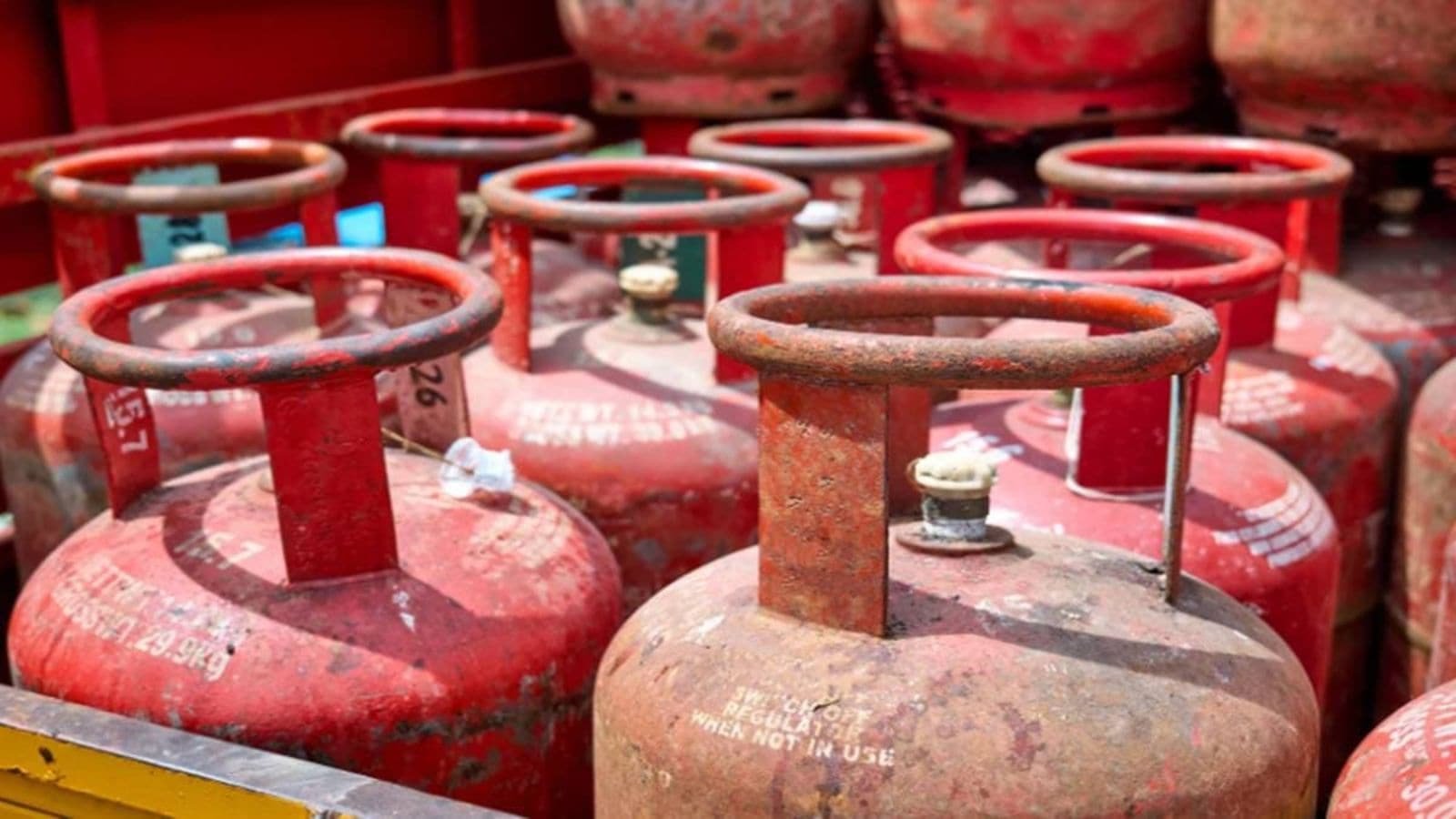
Demand for liquefied petroleum gas (LPG) from households has declined significantly from the peak levels seen during the phase of panic bookings last month amid the West Asia war, and is expected to come down with the onset of summer. Daily LPG bookings by households have been consistently lower than 50 lakh cylinders for most of this month; they were over 50 lakh a day throughout March, and peaked at 89 lakh on March 13. The seasonal dip in demand is likely to take some pressure off of LPG supplies. While the West Asia war has hit overall energy supplies to India, LPG has been the worst affected due to extreme reliance on imports from the Gulf states.
“Yes, LPG demand is expected to come down (in summer). Bookings have declined and now we are witnessing bookings in the range of 46 lakh to 50 lakh (per day), which was more than 50 lakh earlier. And the deliveries are normal,” Petroleum Ministry Joint Secretary Sujata Sharma said at the inter-ministerial press briefing on the West Asia crisis on Friday. She added that the lower LPG demand during the summer season is a “natural trend”. Consumption of the fuel is higher during winters when its use for heating increases in addition to a growth in use for cooking as well.
The effective halt in vessel movements through the Strait of Hormuz due to the West Asia war has hit India’s energy supplies, particularly those of LPG, given that India depends on imports to meet around 60% of the fuel’s needs and 90% of those imports came through the critical maritime chokepoint.
This means that around 54% of India’s LPG supplies were effectively disrupted, which forced the government to heavily cut supplies to commercial and industrial consumers in an effort to ensure uninterrupted supplies to crores of households that use the fuel for cooking. The government also ordered refiners to maximize LPG production, divert gas streams from petrochemical production to LPG production, and even increased the minimum booking intervals between LPG refills for households.
With supplies to commercial and industrial consumers of LPG having been stopped completely in the initial days of the conflict, panic gripped various parts of the country, and spilled over to household consumers of the fuel as well. This led to panic bookings for LPG cylinders; instances of hoarding and black-marketing were also reported from different parts of the country.
According to the government, the LPG supply situation has improved notably with additional domestic production of the fuel, along with additional LPG cargoes coming in from non-West Asian suppliers. Late March, it said that around one month of LPG supply was “firmly arranged” through imports from non-West Asian suppliers, and additional procurement was being tied up on a continuous basis. This is also evident from the fact that commercial LPG supplies have now been restored to up to 70% of the requirement. On Thursday, commercial LPG sales stood at 8,200 tonnes.
On Friday, Sharma said that India’s domestic LPG production is currently fluctuating between 46,000 tonnes and 50,000 tonnes per day, or about 58% to 63% of the daily domestic demand of around 80,000 tonnes. According to industry insiders, the average daily LPG demand in the country was around 90,000 tonnes, but with commercial LPG supplies curtailed by the government, the daily requirement has fallen.
Story continues below this ad
According to the government, despite LPG supplies to India being affected by the West Asia war and the Strait of Hormuz closure, the OMCs are maintaining supplies to households at the pre-conflict level of over 50 lakh cylinders a day, and no dry-out has been reported at any of the 25,000-odd LPG distributorships across the country.
“The net daily import requirement has consequently come down to only 30 TMT (thousand metric tonnes) — meaning India is now producing much more than it needs to import. Over and above domestic production, 800 TMT of assured inbound LPG cargoes are already secured and en route from the United States, Russia, Australia, and other countries… Approximately one full month of supply is firmly arranged, with additional procurement being finalised continuously,” the Petroleum Ministry had said on March 26.
