
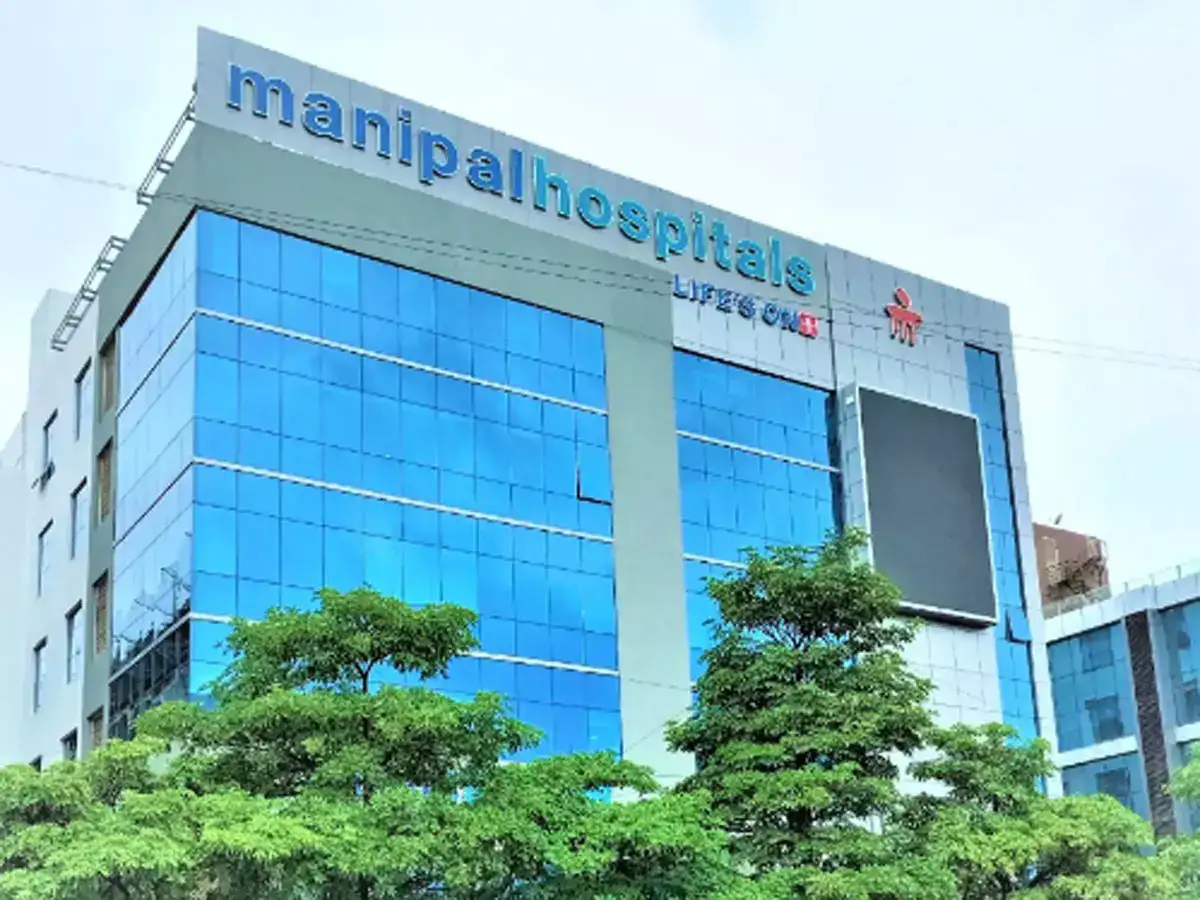
Manipal Health Enterprises' IPO opens for public subscription on Wednesday, July 29, and will remain open until July 31. Backed by Temasek and Ranjan Pai, the Bengaluru-based hospital chain aims to raise about Rs 9,275 crore through its maiden public offering.
Ahead of the issue, the stock is commanding a grey market premium (GMP) of around 2%, indicating only a modest listing gain if the trend sustains.
The IPO comprises a fresh issue of 13.56 crore shares worth Rs 8,000 crore and an offer for sale (OFS) of 2.16 crore shares aggregating to about Rs 1,275 crore by existing shareholders, taking the total issue size to about Rs 9,275 crore. The price band has been fixed at Rs 560-590 per share.
The OFS comprises stake sales by Imperius Healthcare Investments, Manipal Education and Medical Group India, TPG SG Magazine, Seventy Second Investment Company, Ammar Sdn Bhd, Novo Holdings Invest Asia, and Phoenix Bear Investments.
The company is expected to finalise share allotment on August 3, with a tentative listing on the NSE and BSE on August 5.
Retail investors can bid in lots of 25 shares, requiring a minimum investment of Rs 14,750 at the upper end of the price band.
Kotak Mahindra Capital is the book-running lead manager, while KFin Technologies is the registrar to the issue.
Manipal Health IPO GMP today
According to the latest grey market trends, Manipal Health Enterprises shares are commanding a GMP of around Rs 8, implying an estimated listing price of Rs 598, about 2% above the upper issue price of Rs 590. Investors should note that the grey market is unofficial and unregulated, and GMP is only a sentiment indicator—not a reliable predictor of listing performance.
Founded in 2010, Manipal Health Enterprises is one of India's largest healthcare providers, operating a network of multi-specialty hospitals, clinics and diagnostic centres. Part of the Manipal Group founded by T.M.A. Pai, it offers tertiary and quaternary care across specialties including oncology, cardiology, neurology, orthopaedics, organ transplants and preventive healthcare.
As of March 31, 2026, the company operated 49 hospitals with 13,037 licensed beds and 21 clinics across India. It employed 24,240 full-time staff, including 11,048 nurses, 6,362 paramedics and 6,830 administrative personnel.
The company has expanded through acquisitions, investments in medical infrastructure and digital healthcare initiatives.
Of the fresh issue proceeds, Rs 5,378 crore will be used to repay borrowings, strengthening the balance sheet and lower interest costs. Another Rs 574 crore will fund the acquisition of a minority stake in step-down subsidiary Sahyadri Hospitals, while the balance will be used for general corporate purposes.
Should you subscribe?
Brokerages are largely positive on Manipal Health's long-term prospects, although many have flagged its premium valuation.
SBI Securities has a 'Subscribe' rating, citing the company's leadership in the multi-specialty hospital segment, strong acquisition track record, plans to add over 2,400 beds by FY30, and scope for margin expansion following debt reduction and the integration of Sahyadri Hospitals.
Anand Rathi Research has also recommended 'Subscribe for Long Term', despite noting the IPO is valued at 85.4x FY26 earnings.
Arihant Capital and Angel One have maintained a 'Neutral' stance, arguing that the company's strong fundamentals and long-term growth prospects are already reflected in the valuation.
Meanwhile, Axis Capital, Sushil Finance and Ashika Research have highlighted Manipal Health's healthy revenue and earnings growth, operational efficiencies and strong market position, while cautioning that the rich valuation limits near-term upside.
Manipal Health Enterprises enters the market with a strong healthcare franchise, a dominant presence in key metros and a growth strategy driven by acquisitions and capacity expansion. The IPO will also materially reduce debt, potentially improving profitability.
That said, the premium valuation and muted 2% GMP suggest limited listing-day upside. The issue appears better suited for long-term investors seeking exposure to India's healthcare growth story than for those chasing listing gains.