

Citing the latest Periodic Labour Force Survey figures, he noted that more than two crore children between the ages of 14 and 18 are currently not in any school.
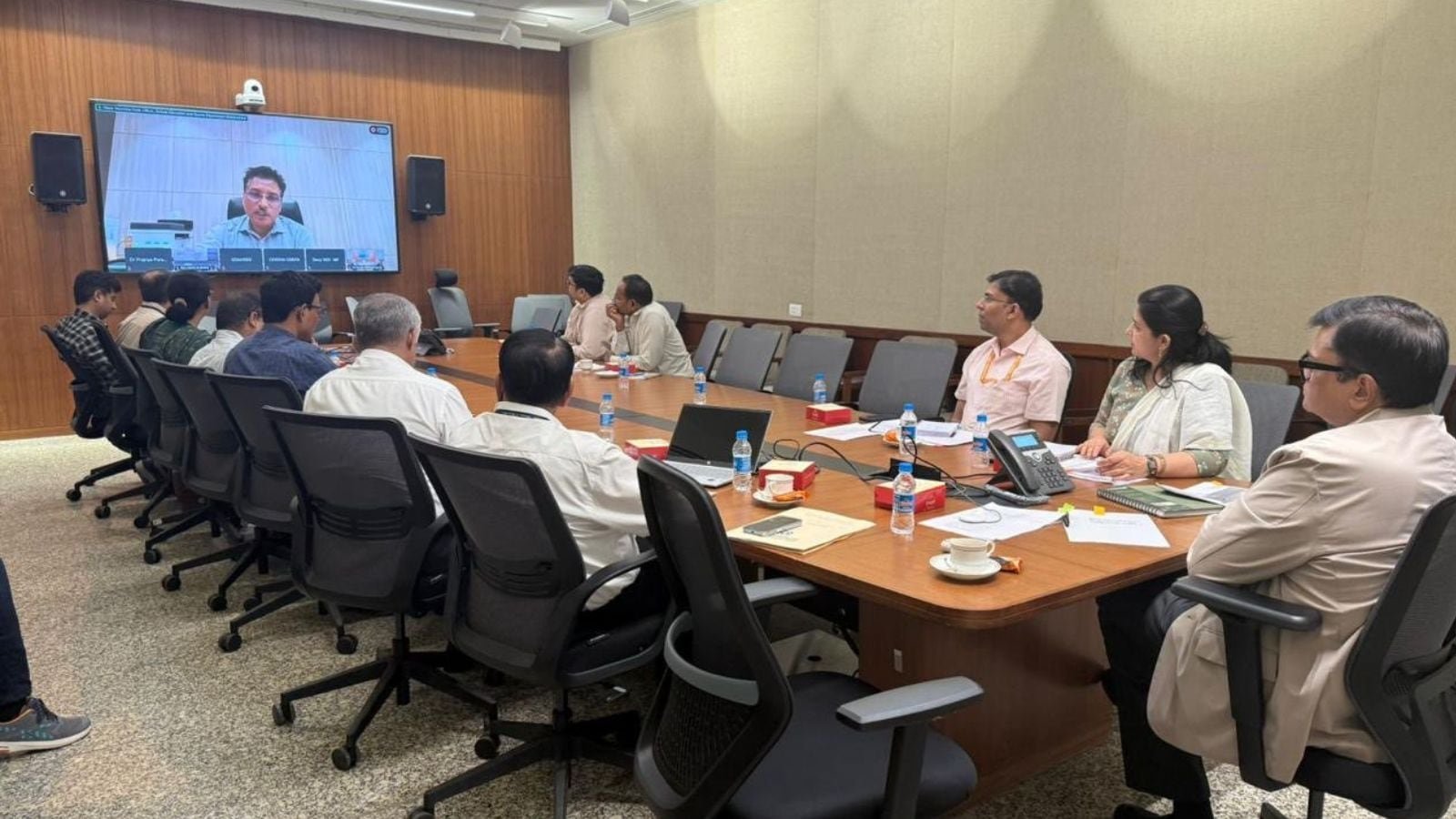
The Ministry of Education convened a high-level meeting on Saturday to chart a course for one of India’s most pressing educational challenges — getting millions of children back into classrooms. Chaired by Sanjay Kumar, Secretary of the Department of School Education & Literacy (DoSEL), the session brought together officials from the National Institute of Open Schooling (NIOS), state governments, and district administrations to shape a coordinated national response.
Kumar opened the discussion with a sobering statistic: of every 100 children who enrol in Class I, only 62 make it to Class 12. Citing the latest Periodic Labour Force Survey figures, he noted that more than two crore children between the ages of 14 and 18 are currently not in any school.
The reasons, he said, are largely socioeconomic. Financial pressure, household duties, and the need to earn a livelihood push many children out of the education system before they can complete even basic schooling.
Kumar made clear that the goal must go beyond mere enrollment — every child deserves access to education through the senior secondary level, paired with practical, employable skills tied to local economic realities.
For children who cannot return to conventional schools, Kumar emphasised that flexible alternatives must be made available through NIOS and State Open Schools, leveraging Open and Distance Learning frameworks to ensure no child is simply left behind.
Joint Secretary Prachi Pandey reinforced that the government is tackling the issue in mission mode, backed by data and a firm commitment to reaching the most underserved communities.
NIOS Chairperson Akhilesh Mishra framed the initiative as more than a policy intervention — calling it a people’s movement for educational inclusion, one designed to reconnect young Indians with learning through pathways that adapt to their circumstances rather than demanding they adapt to the system.
Story continues below this ad
NIOS Secretary Shakeel Ahmad laid out the operational blueprint, which includes systematic identification of out-of-school children, deployment of trained facilitators, app-based monitoring tools, and a phased rollout plan.
In the first phase, the initiative will be piloted across 10 districts in states identified as having high concentrations of out-of-school children — Odisha, Maharashtra, Chhattisgarh, Bihar, Uttar Pradesh, Gujarat, Karnataka, Madhya Pradesh, and Delhi.
The meeting concluded on a note of collective resolve, with all participating states and district authorities pledging full cooperation toward a single goal: ensuring that every child in India has a place in education.
© IE Online Media Services Pvt Ltd
