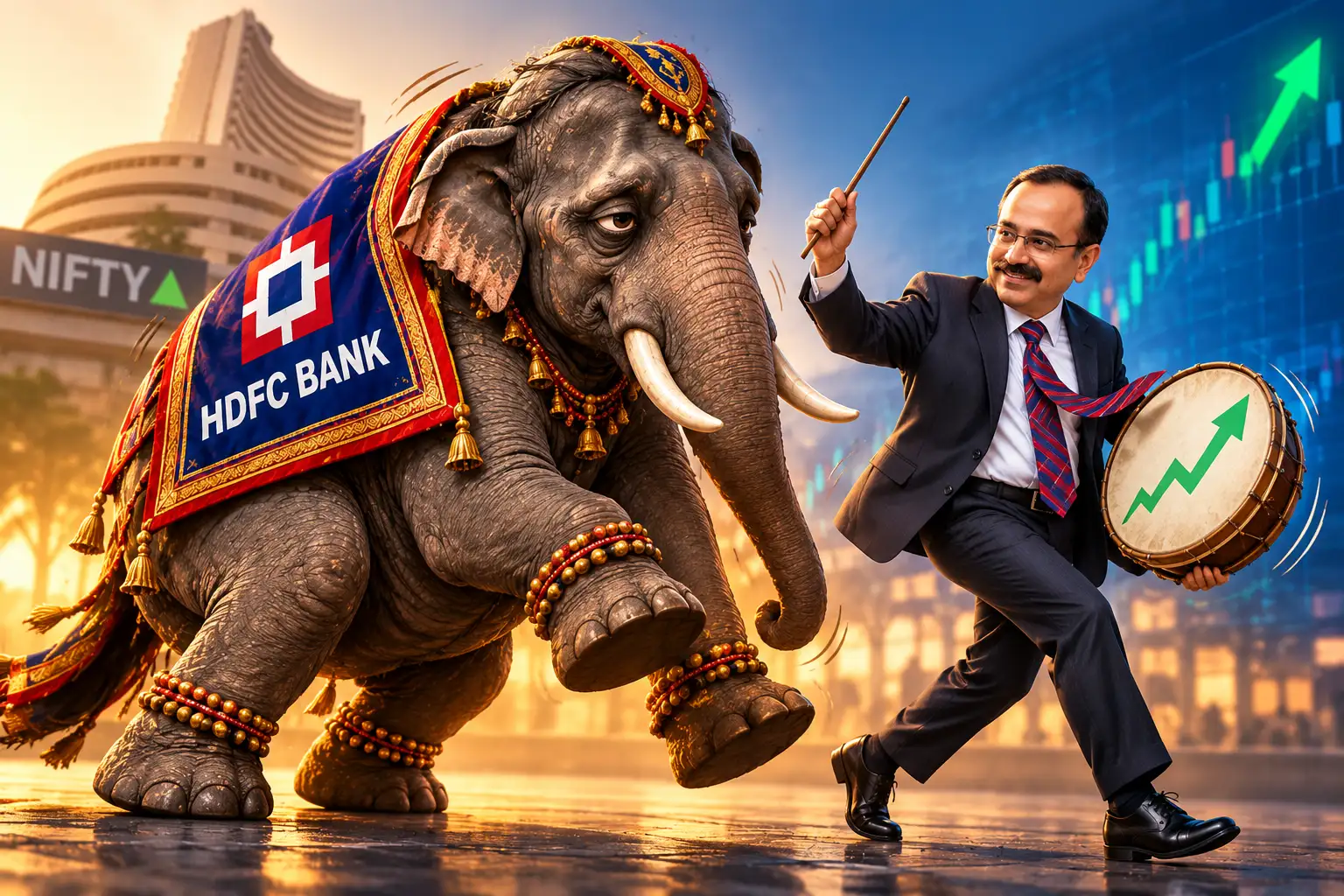
HDFC Bank’s new CEO inherits a bank in need of a business reset, with the stock languishing 29% below its all-time high even as investors look for evidence that growth, margins and merger synergies can be revived.
The shares traded in the deep red on Monday at around Rs 701, compared with their NSE peak of Rs 1,020.50 on October 23, 2025. The stock has struggled after the reverse merger with parent HDFC Ltd, a slowdown in loan growth, pressure on deposits and concerns over leadership stability.
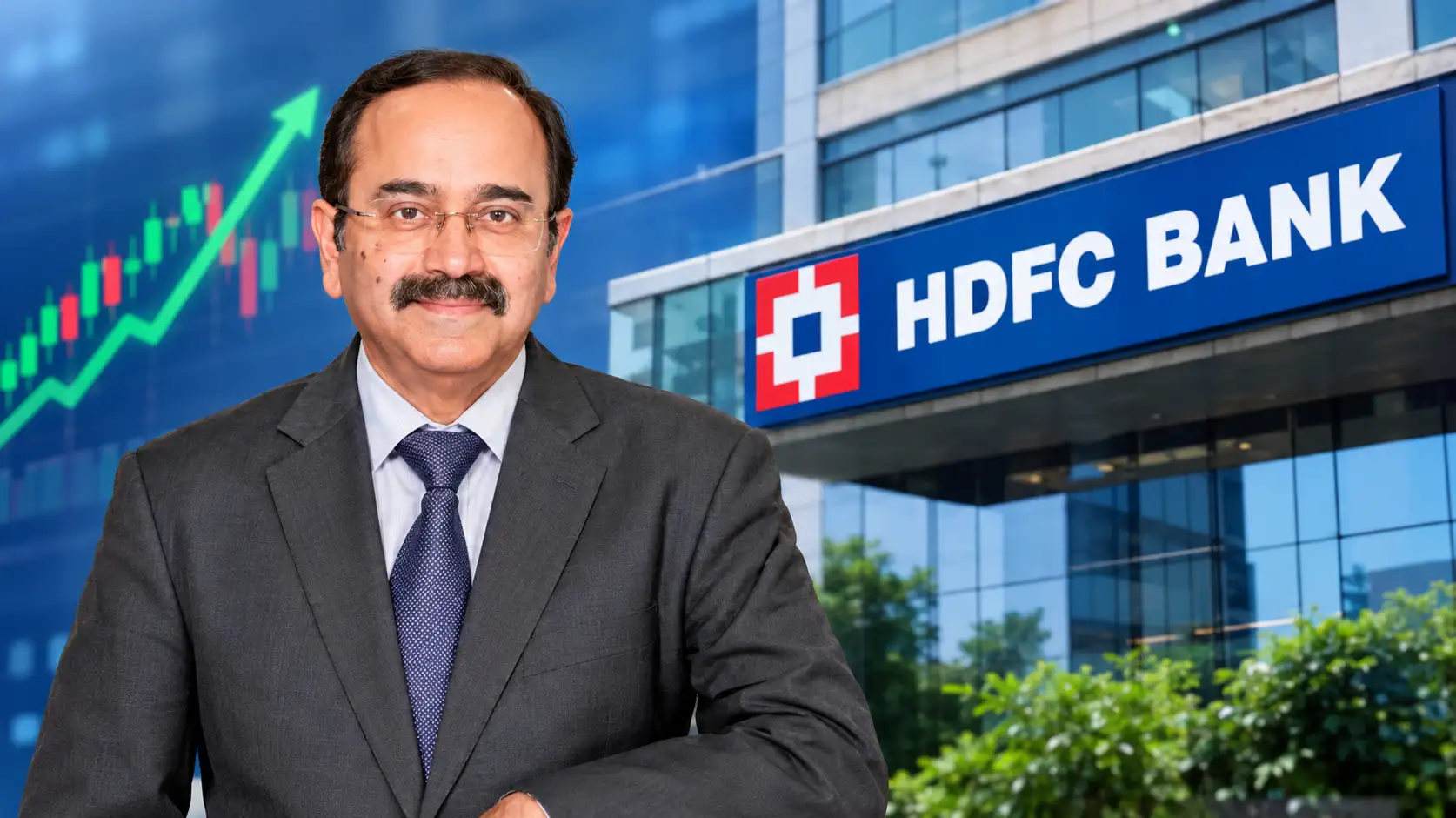
The appointment of Anup Bagchi as managing director and chief executive officer removes one of the biggest uncertainties surrounding India’s largest private sector bank. The Reserve Bank of India approved Bagchi’s appointment on October 1 for a three-year term beginning October 27. He will succeed Sashidhar Jagdishan, whose term ends on October 26.
Bagchi brings more than three decades of experience across retail and wholesale banking, digital financial services, capital markets, wealth management and insurance. He has held senior roles at ICICI Bank, ICICI Securities and ICICI Prudential Life.
Also Read | Anup Bagchi's big test at HDFC Bank is winning back investor trust
Deposit growth is the first test
HDFC Bank’s retail deposit franchise has come under pressure, with retail LCR deposit growth lagging peers. Jefferies estimates retail LCR deposits grew 12%, compared with 15% at ICICI Bank and 14% at State Bank of India.
The bank has, however, made significant progress in FCNR-B deposits. It mobilised $11–12 billion within two months, equivalent to about 8%–9% market share, according to Jefferies. These deposits account for around 3% of total deposits and 8% of LCR non-retail deposits.
The immediate opportunity for Bagchi will be to strengthen retail deposit mobilisation and reduce dependence on relatively expensive sources of funding. Analysts believe his experience in retail liabilities, digital channels, partnerships and third-party distribution could help the bank deepen customer relationships and improve its CASA franchise.
Also Read | HDFC Bank shares rise 2% after appointing Anup Bagchi as new CEO, Q2 biz update. Buy, sell or hold?
Margins and merger benefits remain unfinished business
The HDFC Ltd merger expanded the bank’s mortgage and customer franchise but also weighed on margins because of the inherited high-cost liabilities.
Nuvama estimates margins could rise from 3.3% in FY26 to 3.4% in FY27 and 3.5% in FY28.
The merger was also expected to create significant cross-selling opportunities across mortgages, banking, insurance, wealth management and other financial products. But those benefits have not yet fully appeared in the earnings profile.
Jefferies said fee growth in the past two quarters was only 8% and 11% year-on-year, held back by weaker credit card fees, third-party product income and retail liability fees. Bancassurance fees accounted for about 8% of FY27 pre-tax profits on a normalised basis, making the segment an important earnings variable.
Bagchi’s experience across banking, insurance, capital markets and wealth management could help HDFC Bank extract greater value from its enlarged customer base.
That experience could help HDFC Bank improve product distribution, customer-level economics and operating productivity.
But the leadership transition also carries risks. Nuvama expects the possibility of another wave of management attrition across businesses and subsidiaries. Bagchi will have to blend the execution-oriented culture associated with ICICI Group with HDFC Bank’s risk discipline, scale and brand strength.
The challenge, according to Nuvama, will be combining ICICI’s “disruptive and outcome-driven DNA” with HDFC Bank’s more siloed organisational structure.
The new CEO’s priorities will therefore extend beyond growth. Analysts expect him to rebuild the leadership bench, strengthen governance, modernise the technology platform, improve accountability and re-energise the frontline workforce.
Can the stock rerate?
HDFC Bank’s share price has fallen sharply from its peak, making valuation a key part of the turnaround thesis. The stock’s decline has widened its valuation gap with peers and left analysts arguing that much of the disappointment is already reflected in the price.
The optimism is based on a combination of factors: removal of the leadership overhang, stronger deposit growth, improving margins, a recovery in loan growth and better execution of merger synergies.
That gives Bagchi a potentially attractive starting point but also a demanding mandate. The market may be willing to give HDFC Bank’s new CEO the benefit of the doubt in the near term. A sustained rerating, however, will require visible evidence that deposits are growing faster, margins are recovering and the merger is finally translating into stronger returns.
For now, Anup Bagchi has inherited an elephant with scale, franchise strength and a beaten-down valuation. The task is to make it move faster.
(Disclaimer: This article has been written by Nikhil Agarwal, who is not a SEBI-registered Research Analyst or an Investment Adviser. Nikhil Agarwal and his/her ‘relative(s)’ (as defined under Section 2(77) of the Companies Act, 2013) do not hold any financial interest in the companies mentioned in this article as of the date of publication. The views/recommendations mentioned in this article, wherever applicable, are those of the respective SEBI-registered Research Analyst/brokerage and have been reproduced/reported with due attribution. They should not be construed as the views or recommendations of The Economic Times Digital or the journalist. Readers are advised to consider the original research report and make their investment decisions based on their own assessment. Brokerage disclaimers here)