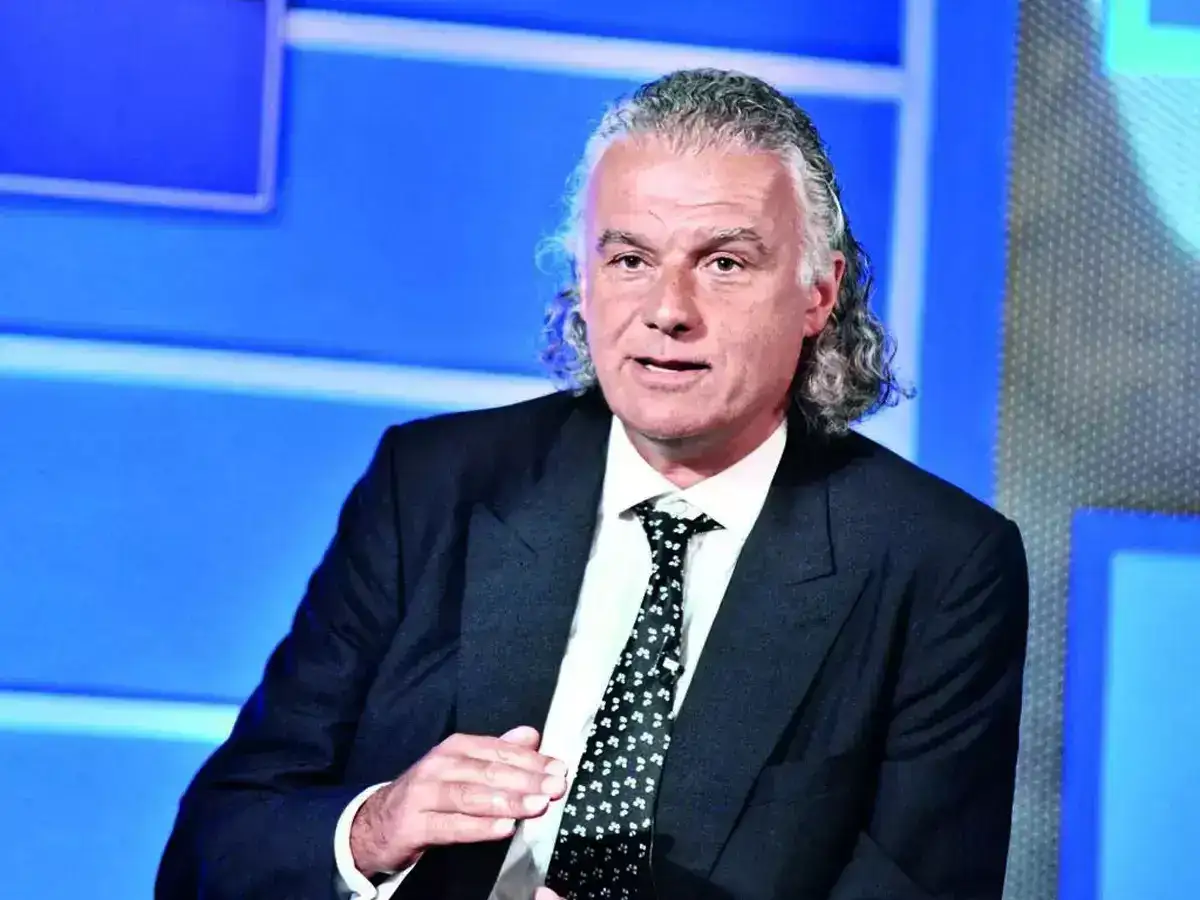


A massive structural shift is underway in India’s mutual fund landscape. Anil Ghelani, Head of Passive Investments at DSP Mutual Fund, predicts that low-cost passive funds, currently holding a 17% market share, will command 30% of the industry’s total assets within five years. This explosive growth marks a permanent evolution in how Indian retail investors build long-term wealth.
Passives are becoming increasingly popular in India with the launch of several new products suited to meet the needs of different kinds of investors. How popular do you think ETFs will become in the next five years?
In the US, we have already seen passive funds, i.e. ETFs and index funds, take over in size, with AUM exceeding 50% of the total mutual fund industry. In India, we are gradually seeing this growth. Today, ETFs and index funds account for about 17% of the total mutual fund industry AUM, which, in my view, could grow to 30% in the next five years.
However, the more interesting trend would not be the growth in the size of ETFs, but the evolution of investor behaviour. We often spend a significant amount of time trying to identify the next big stock idea or chasing a star fund manager, whereas there are more important aspects that we miss out on: prudent asset allocation aligned with our life goals, and staying invested until we reach them. ETFs and index funds will be natural beneficiaries of this shift.
In the coming years, passive investing is likely to become a much larger part of investors’ portfolios as a core allocation, while active funds will be selectively used as satellite allocations for alpha opportunities.
The consensus used to be that India is an inefficient market where active managers will always beat the index. However, information is now real-time, and alpha in the large-cap space is shrinking. In which segments do you think active management still holds an edge, and where is passive now the obvious choice?
While ETFs and index funds can be used across market-cap segments and sectors to build a portfolio, the largest AUM today is still in large-cap passive funds. In my view, the case for passive investing is strongest in the large-cap segment.
In the small-cap and micro-cap segments, the stock universe is much larger, and there is greater potential for bottom-up research, management assessment and identifying under-researched stocks. So, active management may continue to have an edge in these segments and in certain niche sectors. That said, such outperformance potential often comes with higher volatility and manager-selection risk.
Hence, for core portfolio allocations, passive strategies are increasingly becoming the default choice. I have always believed that “and” is better than “or”. We will see a thoughtful blend where passive strategies form the core of a portfolio, while active strategies are used selectively in areas where alpha opportunities exist.
When an investor is looking at a theme, such as large caps, how should they decide between an ETF and an index fund? What are the liquidity and execution realities of trading ETFs on Indian exchanges that retail investors often overlook?
When investors compare an ETF and an index fund tracking the same benchmark, it is important to remember that both aim to deliver the same index return. The difference is primarily in the mode of access, not the underlying exposure.
For investors who prefer convenience and automated investing through SIPs, index funds are often a straightforward option. They do not require a demat account, and transactions happen directly with the fund house at end-of-day NAV.
ETFs, on the other hand, offer intraday liquidity, transparency and potentially lower expense ratios. They are useful for investors who already have a demat account and are comfortable transacting on exchanges. The choice is less about expected returns and more about convenience, flexibility and execution preference.
With multiple indices being launched by BSE and NSE, AMCs are following up with ETF NFOs. How do you view this trend?
The launch of many indices reflects the growing maturity of capital markets and the passive investment industry. However, every new index does not automatically need to become an ETF or index fund.
As a responsible fund manager, we ask whether it solves a genuine portfolio need or is just another option in an already crowded space. More choice is useful, but beyond a point, it can make decision-making harder. Simplicity is as important as innovation.
Broad-based market-cap indices should continue to form the core of most portfolios. Thematic, sectoral and factor-based products can play a satellite role where investors understand the risks and investment thesis.
Help us understand parameters like iNAV and tracking error before buying ETFs.
Many investors start by comparing an ETF’s size or expense ratio. Instead, one should first evaluate the underlying index: whether it is large, liquid and transparent.
Next, assess how closely the ETF tracks that index. Tracking difference is the gap between ETF returns and index returns, while tracking error measures consistency. Lower is better on both counts.
For ETFs, liquidity and execution also matter. Intraday iNAV helps assess whether the ETF is trading close to its underlying value. A good ETF tracks a large, liquid index efficiently and allows fair pricing.
What would be your advice for someone looking for a low-cost product for child goals over 10 to 15 years?
When investing for children, the biggest risk is emotional decision-making driven by greed and fear. Over long horizons, staying invested and maintaining the right asset allocation matters more than finding the best-performing fund.
A simple, low-cost approach would be an index fund. A disciplined SIP strategy aligned with the goal timeline, reviewed periodically with a financial adviser, would work best.