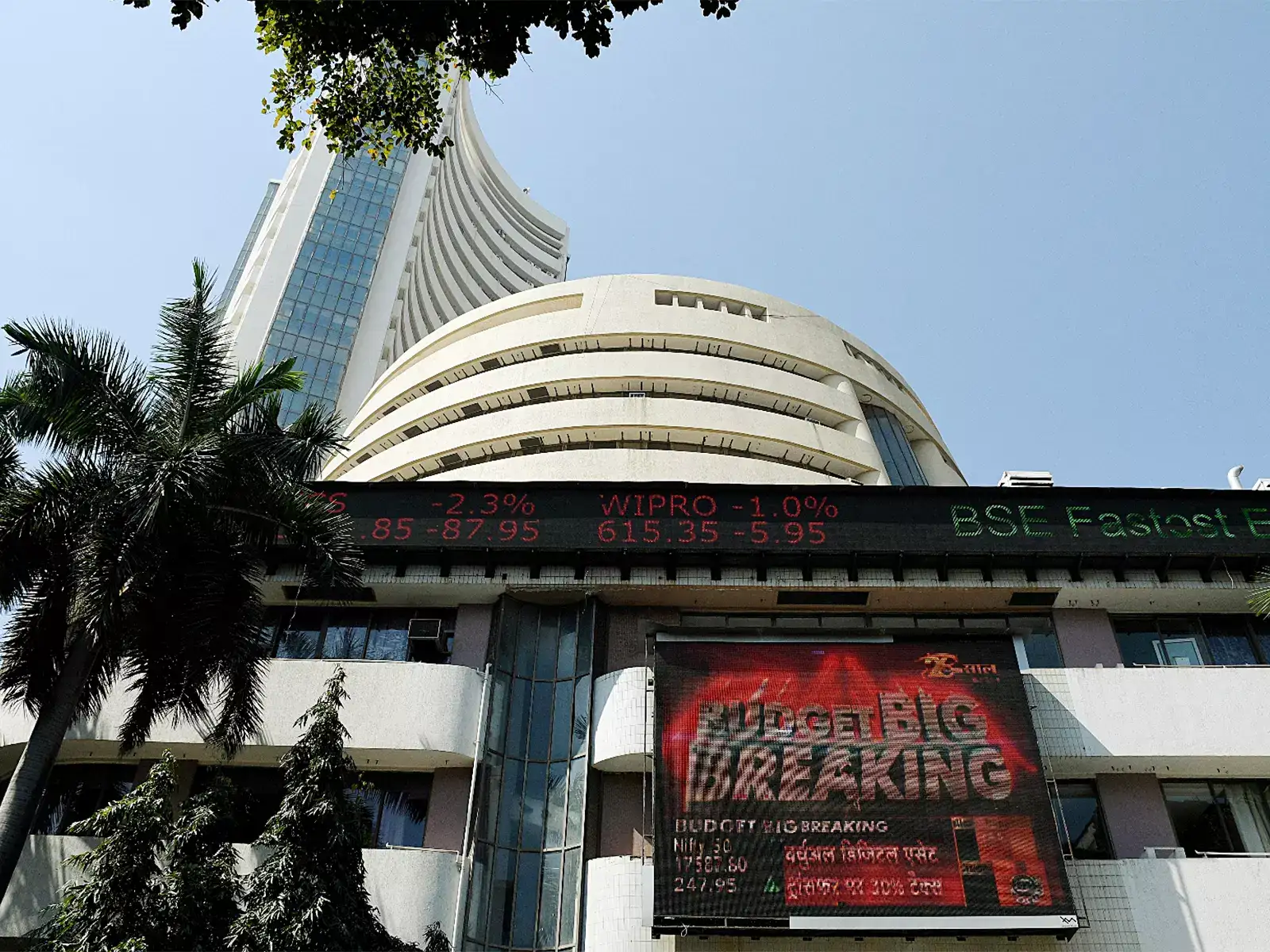


Look at one number. Alphabet, the parent of Google, is worth about $4.3 trillion, while every listed company in India put together is worth around $5 trillion. Its yearly profit of close to $160 billion sits in the same range as the combined profit of all our listed companies. That gap should worry us. A single American company is now almost as large as India's entire listed market.
For months, foreign investors have been steadily pulling money out of India. By March 2026, their ownership of NSE-listed companies had fallen to the lowest level in seventeen years, and during the last financial year they sold a record amount of Indian equities. This is not a one-off reaction to market volatility. It reflects a gradual shift in where global investors see the next decade of growth.
So where is that money going?
A large share is finding its way into other emerging markets such as Taiwan and South Korea. The reason is simple. They own companies that sit at the centre of the artificial intelligence (AI) and semiconductor boom. Investors chasing the world's fastest-growing industries have meaningful opportunities there, despite recent profit booking in these markets. India, despite its size, offers very few opportunities in these sectors.
The real issue runs deeper than temporary foreign outflows. It exposes structural gaps that we have ignored for years.
The Same Names Keep Winning
Our market creates wealth, but rarely new wealth. Banks, oil firms, software services, carmakers, cement and consumer companies still earn most of the profit. These are strong businesses with proven models, yet they belong to industries that grew up long ago. In the last twenty years, very few large new companies from first-generation entrepreneurs have risen to join them. Our biggest industrial groups keep growing, but mostly by entering businesses next to the ones they already run. So money builds up within the same old names instead of creating new leaders. The list of winners barely changes, and that is the quiet problem.
We Execute Brilliantly, But Rarely Invent
We have become very good at execution, not invention. Our IT firms solve hard tech problems, but mostly for foreign clients. Our drug makers make cheap medicines, mostly based on discoveries made elsewhere, though the recent move from plain generics to CDMO work is a real step up. Our defence firms now build complex gear, yet the core technology still often comes from abroad. None of this is small, and skill at this scale matters. But the world now pays more for owning the idea than for making it well. We earn the thin margin, while others keep the richer one.
Nothing to Buy for Tomorrow
Finally, our market offers little for those who want to own the future. You can buy banks, carmakers and consumer firms in plenty. But if you want a real bet on AI hardware, advanced chips, next-generation batteries or world-class deep-tech, India has almost nothing on its list. The very industries the world is rushing towards are missing from our exchanges. And money always follows opportunity. When the chance to back tomorrow's growth is not there at home, money does not wait politely. It travels to the markets where that future is already being built.
For now, domestic investors have absorbed much of the foreign selling. Mutual funds and retail investors have become the market's strongest support. But even this support is beginning to show signs of moderation. Systematic investment flows remain healthy, yet they are no longer accelerating at the pace they once were.
That naturally raises a valuation question. If earnings growth is moderating, foreign participation is falling and the opportunity set remains narrow, should Indian equities continue trading at a premium over other emerging markets?
There is also a broader economic implication. When investors find fewer high-growth opportunities, they demand higher returns for the risks they take. That increases the cost of capital and encourages money to seek better opportunities elsewhere. Combined with external factors such as a strong dollar and elevated geopolitical tensions and resultant higher oil prices, this adds another layer of pressure on the rupee over the long run.
The bigger message is clear. India does not suffer from a shortage of capital. It suffers from a shortage of scalable innovation. The next wave of wealth will come from building businesses that invent new technology, create intellectual property and define entirely new markets.
The same lesson applies to investors. If India Inc cannot offer exposure to the world's fastest-growing sectors, investors will increasingly build that exposure themselves by investing overseas. Capital has no nationality; it follows frontiers that foster growth.
India has every ingredient to become one of the world's largest markets. The next challenge is becoming one of the world's most innovative markets. Until that happens, foreign capital will continue looking elsewhere, and over time domestic capital may begin doing the same.
(Jimeet Modi is Founder & CEO at SAMCO Group.)