

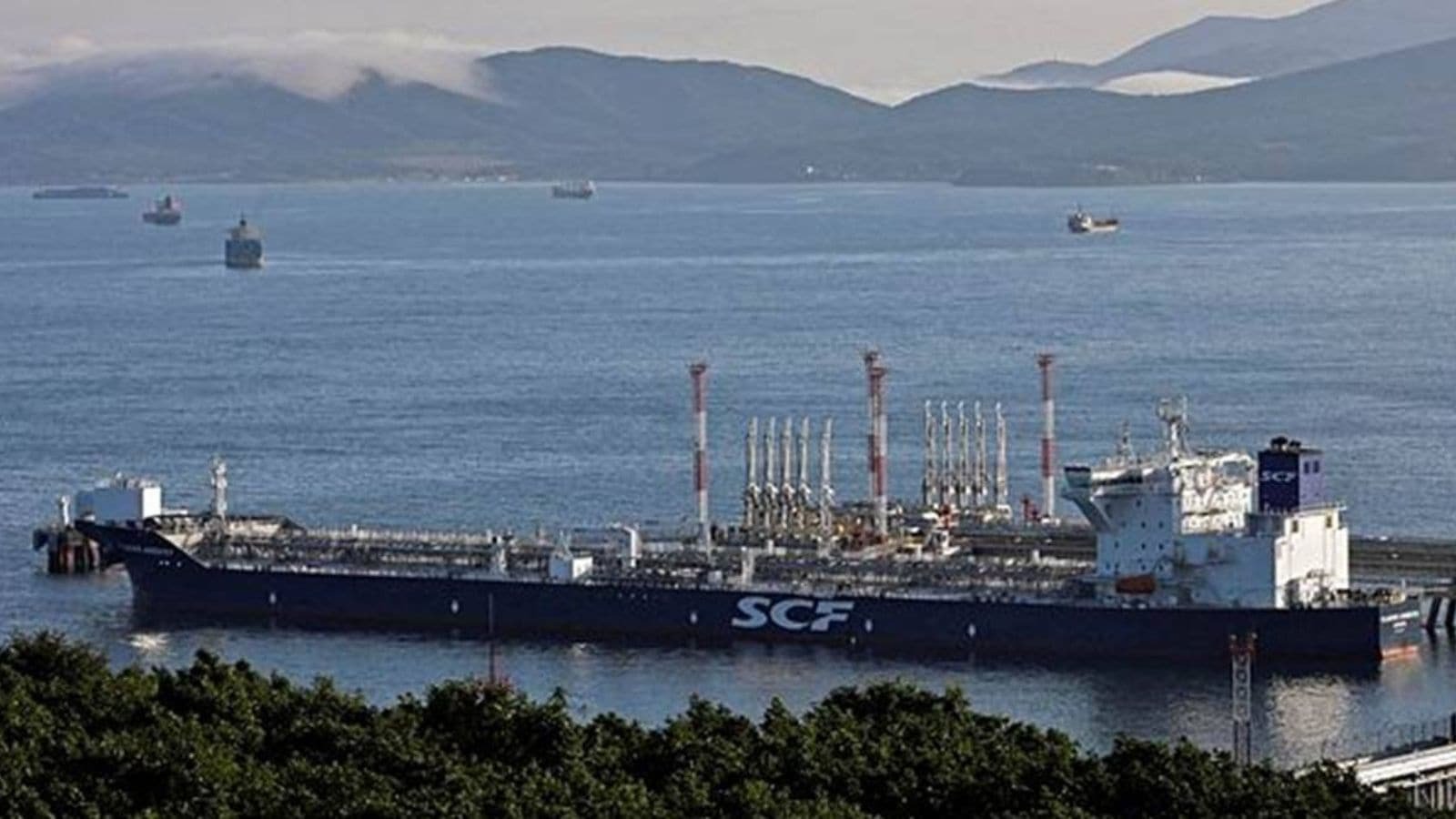
India has been regularly buying Russian oil irrespective of any sanctions waiver from the US, and will continue to do so with commercial viability of the imports and the country’s energy security being the primary considerations, a senior Petroleum Ministry official said Monday. Over the weekend, the US allowed its sanctions waiver on importing Russian oil already at sea to expire.
There is no word yet from Washington on whether the waiver will be extended further. In April, too, the waiver had expired, but the US then extended after a few days, that too after first claiming that it won’t be extended.
“Regarding the American waiver on Russia, I would like to emphasise that we have been purchasing from Russia earlier, before waiver also, during waiver also, and now also. So, it is basically the commercial sense, which should be there for the OMCs (oil marketing companies) to purchase (Russian oil),” said Petroleum Ministry Joint Secretary Sujata Sharma.
According to a General License issued by the Office of Foreign Assets Control (OFAC) of the US Department of the Treasury last on April 17, Russian oil and petroleum products loaded on tankers, including sanctioned vessels, on or before 12:01 eastern daylight time (9:31 am India time) on April 17 could be purchased and received by most countries till May 16.
The earlier waiver—issued in March—had expired on April 11. The waiver’s renewal came barely two days after US Treasury Secretary Scott Bessent had said that it won’t be extended. According to industry experts, the decision to extend the waiver till mid-May likely came after pressure from countries buying Russian crude to partly offset the loss of Gulf barrels due to the Strait of Hormuz closure amid the West Asia war.
Also Read | West Asia war impact on oil market worse than earlier anticipated: What’s the worry for India?
With global oil supplies hit due to the effective halt in vessel movements through the Strait of Hormuz, such waivers were aimed at allowing more barrels of oil to reach the international market and exerting downward pressure on spiralling oil prices. Experts saw such moves as part of the Donald Trump administration’s effort to prevent a sustained spike in international oil prices—and the consequent rise in domestic fuel prices in the US—given the midterm elections later this year.
But the Russian oil waiver attracted criticism from various sections in the US. Critics argued that it led to a windfall for Moscow, which would fund its war effort in Ukraine. These arguments were also made against the similar waiver for purchase of Iranian oil and fuels, with whom the US was locked in battle in West Asia. While Washington made a U-turn and extended the Russian waiver, it didn’t renew the Iranian waiver.
Story continues below this ad
While government officials maintained that India didn’t require a US waiver to buy Russian oil, industry experts said that the waiver indeed helped. It enabled Indian refiners to be able to take deliveries of Russian oil even on tankers sanctioned or blocked by the US, and they could deal directly with sanctioned Russian companies like Rosneft and Lukoil. Moreover, it temporarily removed the friction between Washington and New Delhi over the latter’s hefty purchases of Moscow’s crude.
Had the Russian oil waiver not been extended, some adjustments and downward pressure on India’s oil imports from Russia were likely. Without the waiver, Indian refiners wouldn’t have been able to take deliveries of Russian crude on sanctioned tankers or deal with Russian oil suppliers sanctioned by Washington, as that would have exposed them to the risk of attracting secondary sanctions from the US. India is the world’s third-largest consumer of crude oil and depends on imports to meet over 88% of its requirement.
Although India was buying significant volumes of Russian crude even before the West Asia war began, the quantity had reduced notably over the past few months, evidently due to the US imposing sanctions on Russian oil majors Rosneft and Lukoil, and amid trade pact negotiations with Washington. The US made a meaningful reduction in India’s Russian oil imports a prerequisite for scrapping its 25% additional penal tariff on New Delhi.
Also Read | ‘Ties with Russia more valuable in volatile times’: Jaishankar as he meets Lavrov
In February, Indian refiners had imported just over 1 million bpd of Russian crude, almost half of the 2025 peak of over 2 million bpd. Even with the significant reduction in volumes, Russia was India’s largest source of crude in February, accounting for about fifth of its total oil imports.
Story continues below this ad
Then, with the war in West Asia raging and the sanctions waiver in place, oil imports from Russia nearly doubled to 2 million bpd in March, accounting for almost 45% of India’s total oil imports for the month, while imports from West Asia crashed, according to tanker data from commodity market analytics firm Kpler. In April, imports of Russian crude moderated to 1.6 million bpd, which was mainly due to the Nayara Energy refinery—a heavy consumer of Russian crude—taking a maintenance shutdown. Imports of Russian crude so far in May are pegged at almost 2 million bpd.
Around 2.5–2.7 million barrels per day (bpd) of India’s crude imports—accounting for around half of the country’s total oil imports—have transited the Strait of Hormuz in recent months; the longer-term average is around 40%. Most of that supply is effectively offline due to the war.
