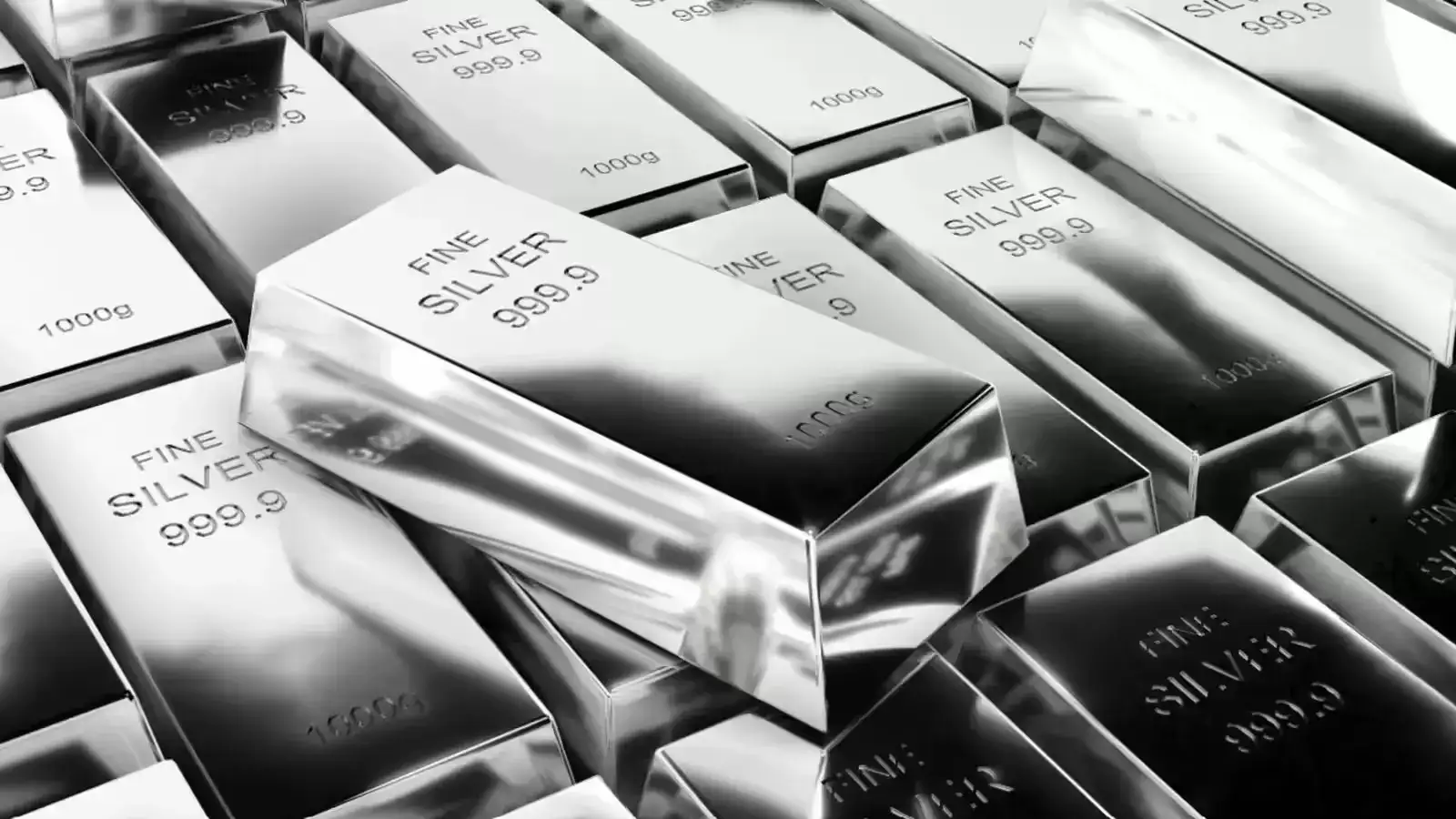
Since touching an all-time high of $121 per ounce in the last week of January this year, international silver prices have witnessed a sharp and rapid correction, plunging to below $64 per ounce by last week—a decline of nearly 50% within just five months. A similar trend has been reflected in India’s MCX futures market, where silver prices tumbled from a record ₹4.28 lakh per kg to around ₹2.39 lakh. This steep fall has unsettled investors, raising concerns about whether the rally was driven by speculative excesses and whether further downside risks remain. With silver traditionally viewed as both a precious and industrial metal, its recent underperformance amid a complex macroeconomic backdrop has sparked debate about its near-term outlook and long-term investment potential.
Why Have Silver Prices Crashed So Sharply?
The decline in silver prices appears to be a mix of both speculative unwinding and shifting fundamentals. Earlier this year, prices surged significantly due to heavy speculative positioning, driven by expectations of aggressive monetary easing, geopolitical tensions, and strong industrial demand from green energy sectors.
However, as global central banks—especially the US Federal Reserve—turned more cautious on rate cuts and speculative long positions started unwinding rapidly. This triggered a cascade of selling pressure, amplifying the decline. Additionally, profit booking after a historic rally played a crucial role, as investors exited positions to lock in gains. Thus, while fundamentals remain supportive in the medium term, the speed of the correction suggests a strong speculative component.
Supply-Demand Dynamics: Any Sudden Shift?
The underlying supply-demand picture for silver has not deteriorated drastically. Global mine supply has remained relatively stable, with only marginal increases in output. Recycling supply has also been consistent.
On the demand side, while industrial demand remains structurally strong—particularly from solar panels, electric vehicles, and electronics—there has been some near-term moderation due to slower global manufacturing activity, especially in China and Europe. Importantly, no significant glut or collapse in demand has occurred, suggesting that the correction is more sentiment-driven rather than based on a fundamental imbalance.
Why Are Geopolitical Risks Not Supporting Silver?
Traditionally, geopolitical tensions boost safe-haven assets like gold and silver. However, in the current scenario, silver has lagged behind gold in safe-haven demand. This divergence is primarily because silver is not purely a safe-haven asset—it has a strong industrial component. Rising geopolitical tensions often coincide with fears of economic slowdown, which negatively impacts industrial demand expectations. As a result, while gold benefits directly from risk aversion, silver faces a balancing effect between safe-haven buying and weaker industrial outlook.
Investment Demand vs Industrial Demand
Investment demand for silver has weakened considerably in recent months. Exchange-traded funds (ETFs) have seen outflows, and speculative interest has declined after the price correction.
On the other hand, industrial demand remains a long-term positive. Silver plays a crucial role in renewable energy—particularly in photovoltaic (solar) cells—as well as in EVs and electronics. Although short-term demand may fluctuate with economic cycles, the structural demand outlook remains strong, providing a floor to prices.
Indian Context: Can Silver Substitute Expensive Gold?
In India, high gold prices traditionally lead to substitution demand for silver, especially among retail and rural investors. With gold trading near elevated levels, silver becomes a more affordable alternative for jewellery and investment.
This substitution effect could provide some support to domestic silver demand, particularly during festive and wedding seasons. However, silver’s higher volatility compared to gold means that its appeal as a store of value remains relatively lower.
Role of Weak INR and Seasonal Demand
A weakening Indian Rupee typically supports domestic bullion prices, including silver, as imports become more expensive. However, despite INR depreciation, domestic silver has not shown strong resilience due to the sharp fall in global prices dominating the trend. That said, the upcoming festive and wedding season in India could revive physical demand. Combined with a weak currency, this could lend some support to domestic prices in the near term.
Impact of Geopolitics, US Dollar, and Currency Movements
If geopolitical tensions—the war between the US and Iran—ease, it could stabilize global markets and improve industrial demand expectations, thereby supporting silver prices.
However, the strong US dollar has been a major headwind. Silver, like other commodities, is inversely correlated with the dollar. A strong dollar makes silver more expensive for non-dollar buyers, reducing demand. In India, while a weak INR should ideally cushion price falls, the magnitude of the global decline has overshadowed this effect, limiting any significant upside in domestic silver prices.
From a supply-demand perspective, silver does not appear to be fundamentally weak. The current correction has largely been driven by speculative unwinding and macroeconomic factors rather than a structural demand slowdown. In the near term, prices may remain volatile, influenced by US monetary policy, dollar strength, and global growth signals. However, the sharp correction has improved valuations, making silver more attractive for long-term investors.
(The author of the article is Hareesh V, Head of Commodity Research, Geojit Investments Limited)