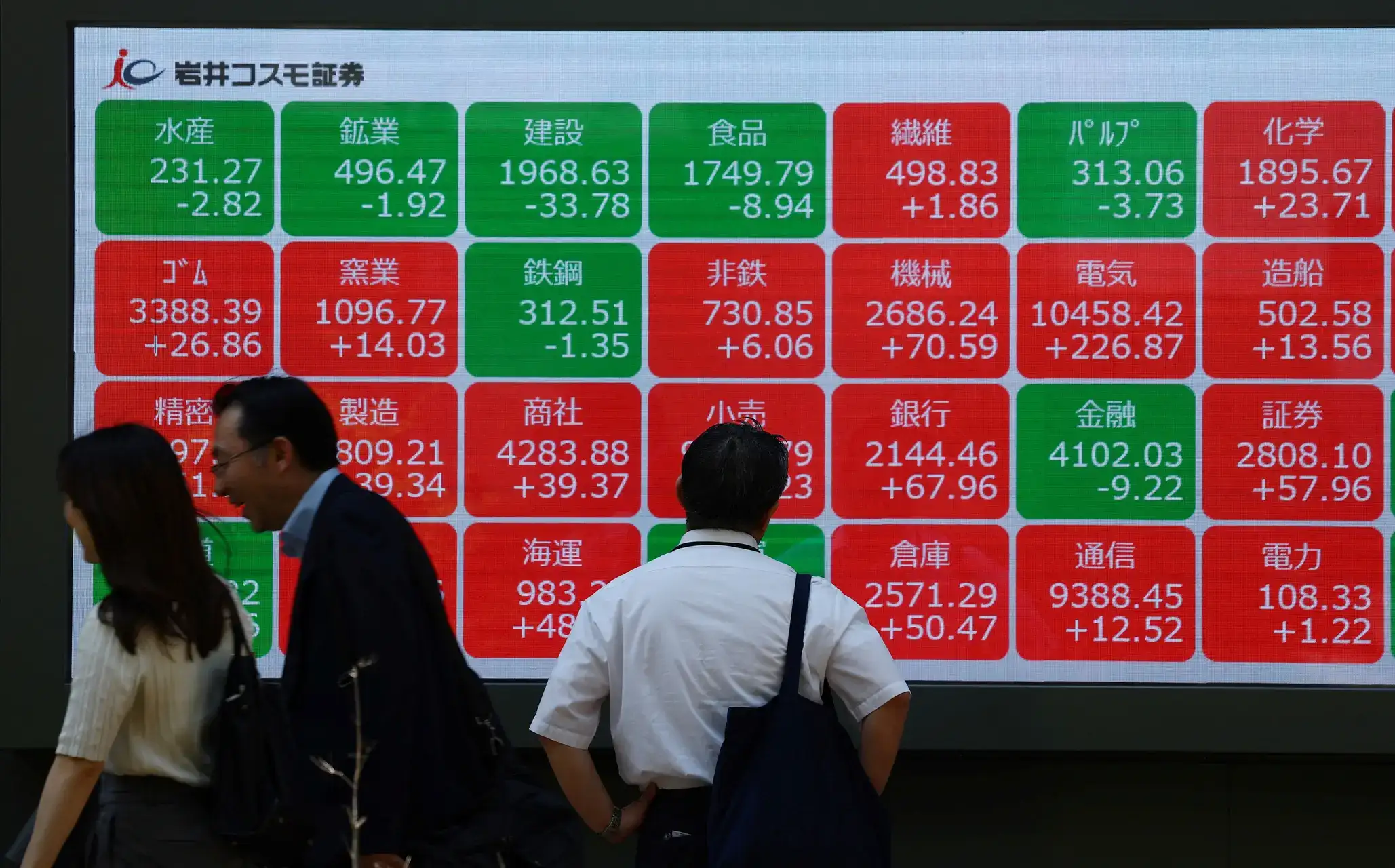

Indian equity benchmarks Thursday logged their longest run of weekly losses in a quarter century as an unprecedented surge in US 10-year bond yields, the key reference frame for global asset pricing, roiled currencies across the Asia Pacific and prompted investors to seek the safety of dollar-based instruments.
The Sensex declined 570.59 points, or 0.79%, to close at 71,909.70, while the Nifty 50 dropped 199 points, or 0.9%, to settle at 22,422.
The current selloff surpassed the seven-week decline witnessed during the initial days of Covid-induced shutdowns six years ago, although the magnitude of the recent decline - around 9% over the past 8 weeks - pales before the 25%-plus routs on two previous occasions the gauges slipped for at least this duration.
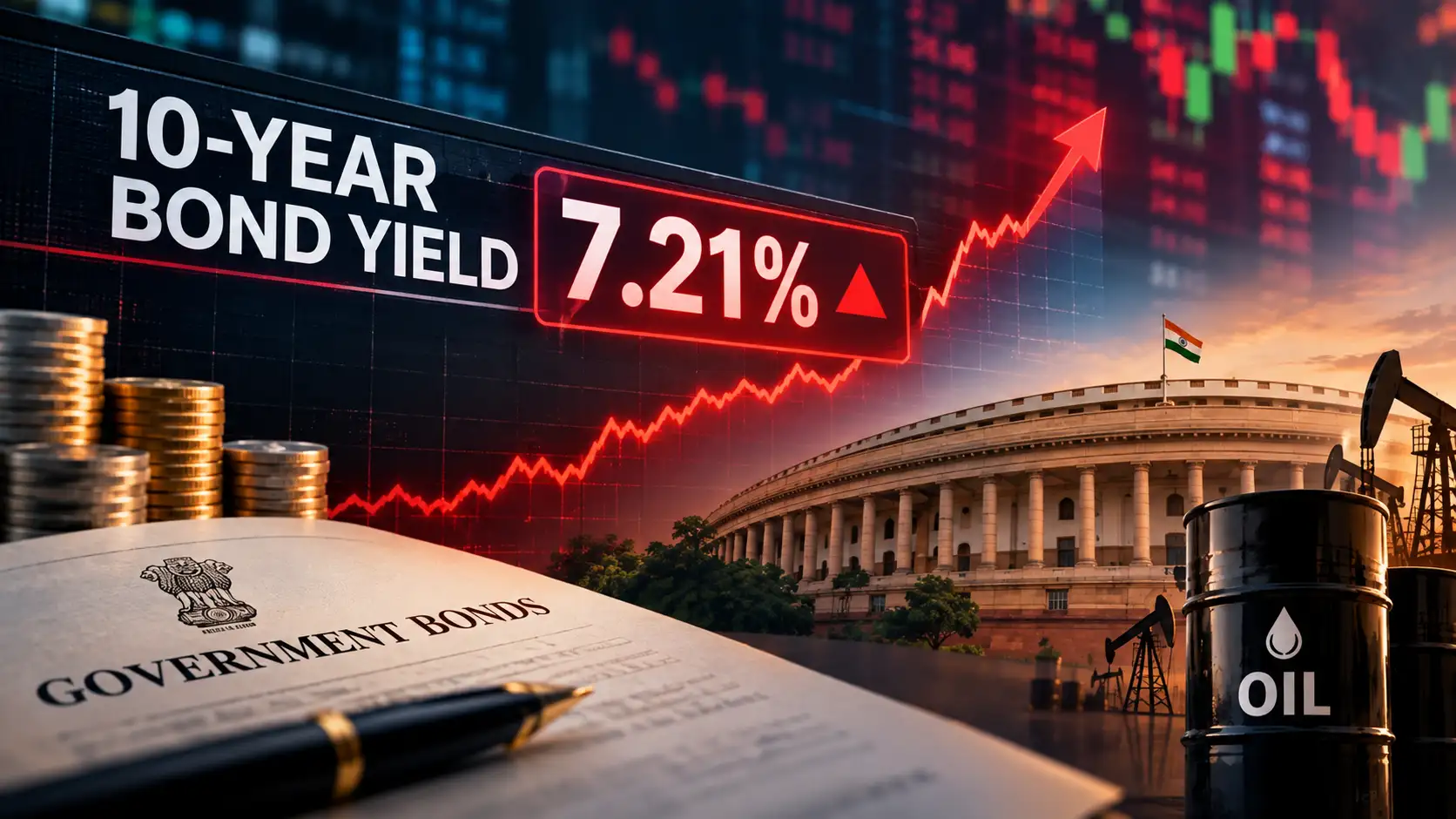
"The US 10-year Treasury yield has broken past its 2007 peak to 5.3%, the highest since April 2002, with the 30-year at 5.6%."
Challenges Ahead
Indian financial markets are shut Friday.
The broader market also remained under pressure, with the Nifty Midcap index falling 1.1% and the Smallcap index losing nearly 1%. The rupee lost half a percentage point and was the worst performer in the continent, with the Indonesian Rupiah, the Thai Baht and the Japanese yen each losing between 0.35% and 0.45%.
Foreign investors continued to dump Indian equities, said Sunny Agrawal, deputy vice president-fundamental research at SBI Securities. Investors are also perturbed by elevated crude oil prices and the resultant decline in the rupee against the dollar, said Ankur Punj, managing director, Equirus Wealth.
'Capital Flight'
In September, overseas funds net sold stock worth ₹44,013 crore. In August, they sold worth ₹7,532 crore. In March, during the peak of the Iran crisis, they sold stock worth ₹1.2 lakh crore.
Foreign portfolio investors were net sellers of equities worth ₹9,484.22 crore on Thursday, while domestic institutional investors were net buyers to the tune of ₹10,041.84 crore.
Analysts are of the view that elevated crude prices, bond yields and global liquidity remain key risks. However, continued weakness could increasingly create selective stock-specific opportunities as positioning and valuations reset.
The macro environment remains challenging, with Brent crude hovering near US$100/bbl and the US 10-year Treasury yield staying around 5.3%, Agarwal said.
The biggest drags on the Nifty included Bajaj Auto, Maruti Suzuki, M&M, Adani Enterprises and Adani Ports, while HDFC Life, SBI Life Insurance, HDFC Bank, Infosys and TCS emerged among the key gainers.
At the sectoral level, the IT index advanced 2%, while telecom rose 0.5%. Auto, Media, FMCG, Infra, Metal, Consumer Durables and Realty indices declined 2-3%. Energy, Pharma, PSU Bank and Oil & Gas indices fell more than 1% each.
On the technical front, the short-term market outlook remains weak, though conditions are oversold. A pullback rally from current levels cannot be ruled out, said Amol Athawale, VP Technical Research, Kotak Securities.
On the downside, 22,200/71,300 is a key support zone, while 22,500/72,200 is immediate resistance. A move above 22,500/72,200 could extend the pullback to 22,700-22,800/73,000-73,200. Conversely, a break below 22,200/71,300 could intensify selling pressure and take the market down to 22,000-21,950/71,000-70,700, he said.
"For Bank Nifty, 54,000 is a crucial support zone. If the index holds above this level, it could rebound to 55,000-55,500. However, a break below 54,000 could increase selling pressure and raise the possibility of a decline to 53,500-53,200," he added.