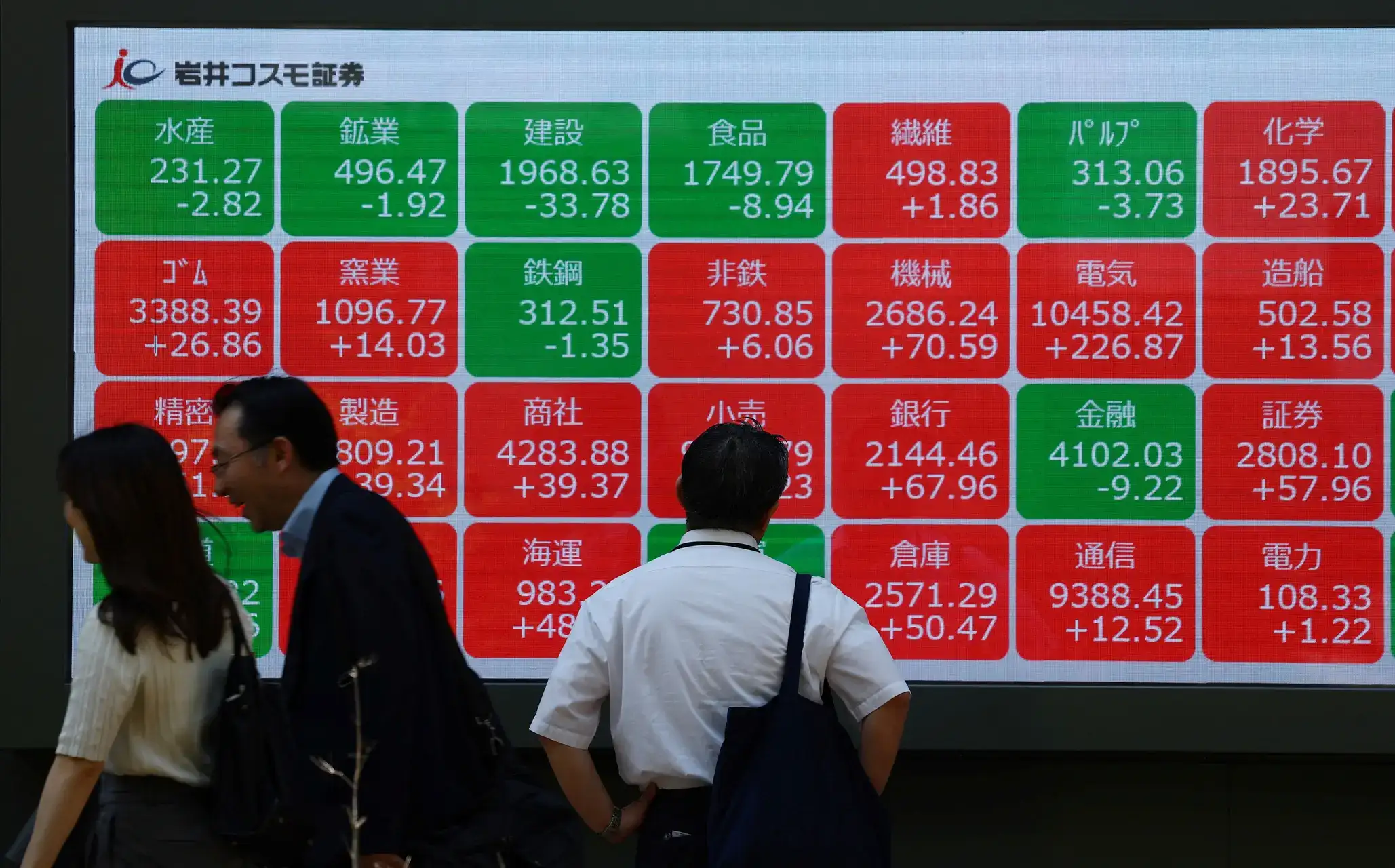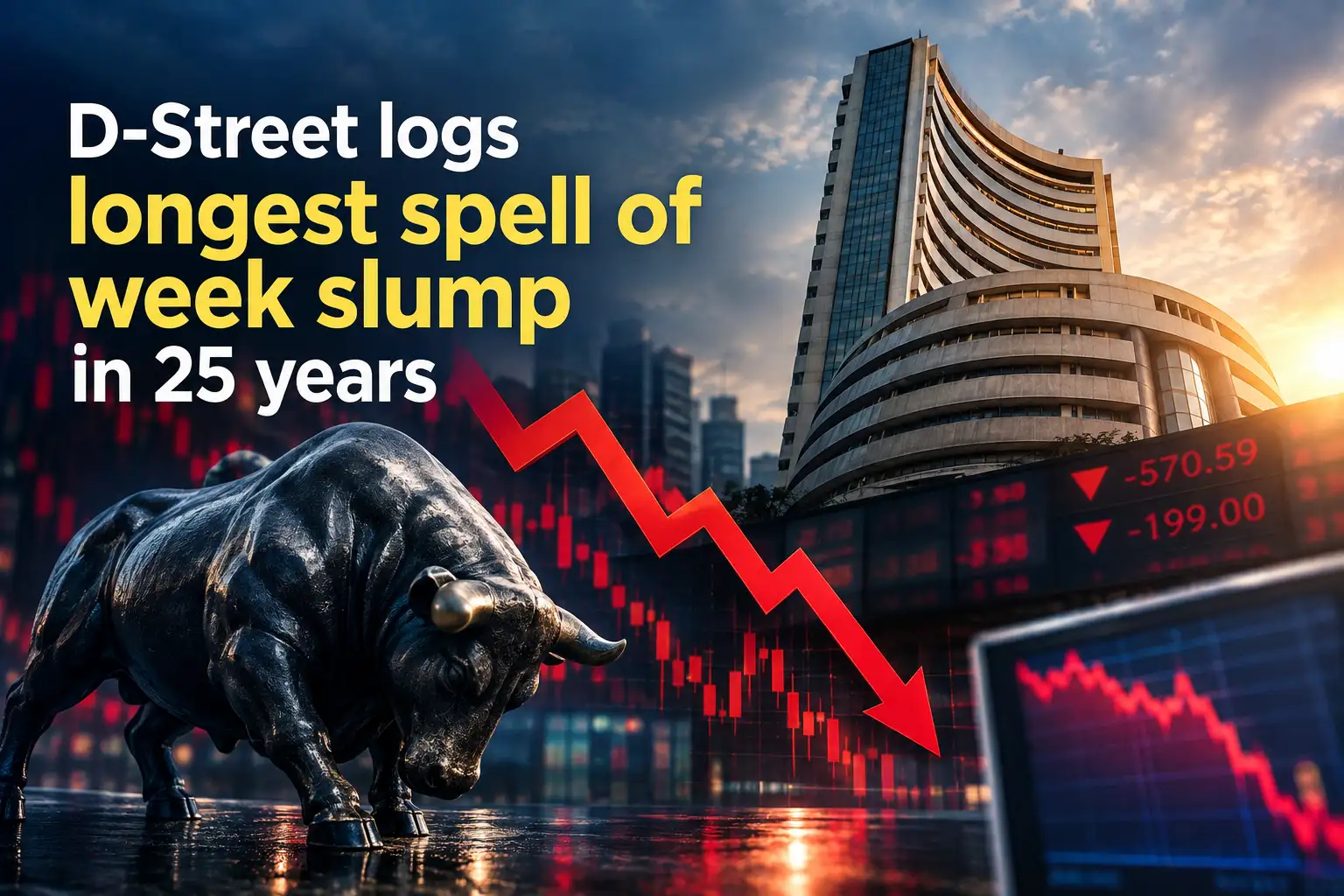

The Indian stock market has just set a record, but not one investors hoped for. Dalal Street has logged losses for eight consecutive weeks, surpassing the streaks seen during the 2020 Covid-19 crash and the 2008 global financial crisis.
The Middle East crisis has pushed oil prices to elevated levels since late February, but the bigger drag may be coming from bond yields, which have climbed to levels not seen in more than a decade.
The Sensex has plunged 6,590 points over the past eight weeks, while the Nifty has lost 2,149 points. The selloff wiped out more than Rs 26 lakh crore from the BSE’s total market capitalisation, dragging it below Rs 467 lakh crore.
Also read | Why did the market crash on Thursday?
The war between Iran and US-Israel began late in February, triggering a skyrocketing rally in oil prices. Brent crude surged to as high as above $120 per barrel in March-April 2026. Dalal Street bore the brunt along with global peers, with Sensex crashing around 9,340 points or 11% in March alone. The index recovered some of those losses, rising nearly 7% in April and briefly crossing 78,000 in the following months, but has since given up most of those gains.
Sensex hit a 52-week low of 71,293 on Thursday, lower than what the market had seen when oil prices had surged above $120 per barrel. Notably, the crash came even as oil prices dipped below $100 per barrel.
The latest selloff has pushed the market below levels seen even during the height of the Middle East conflict, and may have been intensified by surging bond yields.
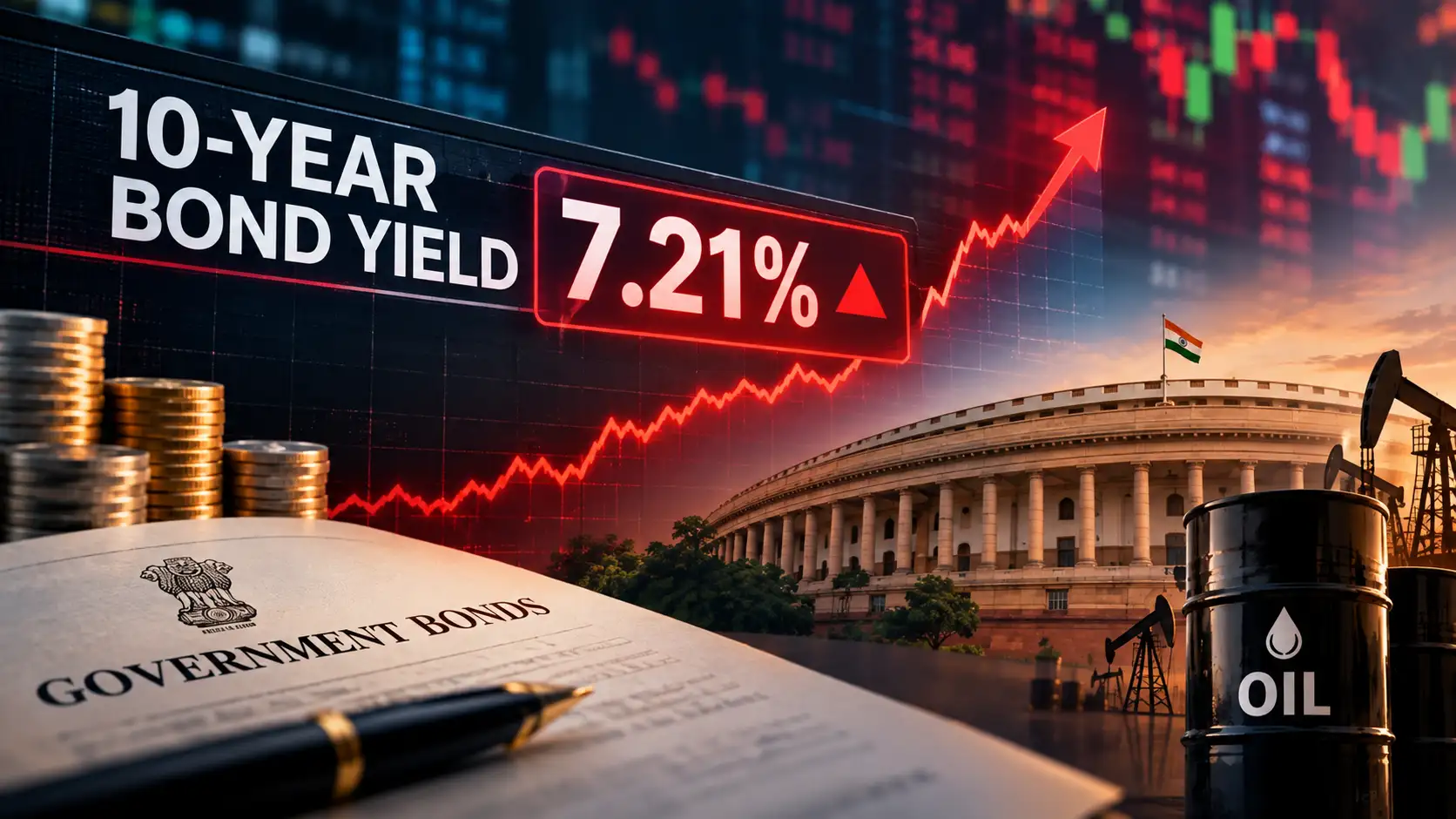
The benchmark 10-year Treasury yield rose as high as 5.31% on Thursday, its highest level since 2007, after having climbed more than 87 basis points during the September quarter to mark its biggest quarterly increase since 1994, according to LSEG data cited by Reuters.
The 30-year Treasury yield also climbed above 5.65%, reaching its highest level since 2002. Soaring bond yields typically make debt markets more attractive to investors, which in turn puts pressure on the riskier equity markets. Bond yields move inversely to bond prices, so the soaring yields reflect a sharp selloff in bonds.
Why surging bond yields may be scarier than surging oil prices
While temporary crude spikes squeeze operating margins, surging global bond yields pose a far more structural threat to equities, warned Vaqarjaved Khan, Senior Fundamental Analyst at Angel One. He explained that rising yields directly elevate the cost of capital, compress P/E multiples and trigger persistent foreign capital outflows from emerging markets.
Other analysts noted that the sharp selloff was exacerbated by soaring bond yields, not being driven by it alone.
The key concern for the market is not oil pressure alone now but the combined pressure from elevated bond yields, tight global liquidity and geopolitical uncertainty, said Ajit Mishra, SVP Research at Religare Broking. While softer crude prices and improving shipments are constructive, higher yields raise the cost of capital, compress equity valuations and make fixed-income assets relatively more attractive, he noted. “This becomes particularly relevant for high-duration, richly valued segments.”
FII outflows adding fuel to the fire
Another factor that is sharpening the claws of bears on Dalal Street is the massive FII outflows.Foreign investors net sold a massive amount of Indian equities worth Rs 10,148 crore in just one session on Wednesday, according to provisional data on NSE. A similar quantum of selling was seen in the day before, when FIIs sold Rs 10,743 crore worth of Indian equities on Tuesday. This takes the total FII selloff this week till Wednesday to a whopping Rs 26,000 crore.
Mishra from Religare Broking noted that the market is also grappling with FII outflows, a stronger dollar, currency pressure and concerns over the pace of global growth. Vaqarjaved Khan noted that beyond elevated yields, market bulls are also constrained by decelerating earnings growth, urban consumption fatigue, and tightening global liquidity.
Also read | $2 billion gone in two days! FIIs accelerate selling as Nifty, Sensex set to fall for 8th week running. Will they make a comeback?
What should investors do amid the crash?
The correction should be approached selectively rather than through aggressive market timing, Ajit Mishra said. Vaqarjaved Khan from Angel One added that for investors, this macro backdrop calls for tactical discipline rather than aggressive bottom-fishing in high-beta names.
“Investors should focus on quality balance sheets, earnings visibility and reasonable valuations, while deploying capital gradually rather than waiting for a perfect bottom,” he added.
Khan recommends a phased accumulation strategy centred on financially strong franchises with pricing power, low debt and robust return ratios. “Frontline private lenders, quality capital goods, and margin-resilient domestic execution stories offer the best risk-adjusted returns during such a volatile environment.”
Sunny Agrawal, Deputy Vice President of Fundamental Research at SBI Securities, advised investors to take a bottom-up, stock-specific approach when building fresh portfolios.
Also read | Code red! NSE breadth breaks down as 350 out of 500 stocks crash up to 60% in two month selloff
Disclaimer: This article has been written by Debaroti Adhikary, who is not a SEBI-registered Research Analyst or an Investment Adviser. Debaroti Adhikary and his/her ‘relative(s)’ (as defined under Section 2(77) of the Companies Act, 2013) do not hold any financial interest in the companies mentioned in this article as of the date of publication. The views/recommendations mentioned in this article, wherever applicable, are those of the respective SEBI-registered Research Analyst/brokerage and have been reproduced/reported with due attribution. They should not be construed as the views or recommendations of The Economic Times Digital or the journalist. Readers are advised to consider the original research report and make their investment decisions based on their own assessment. Brokerage disclaimers here.