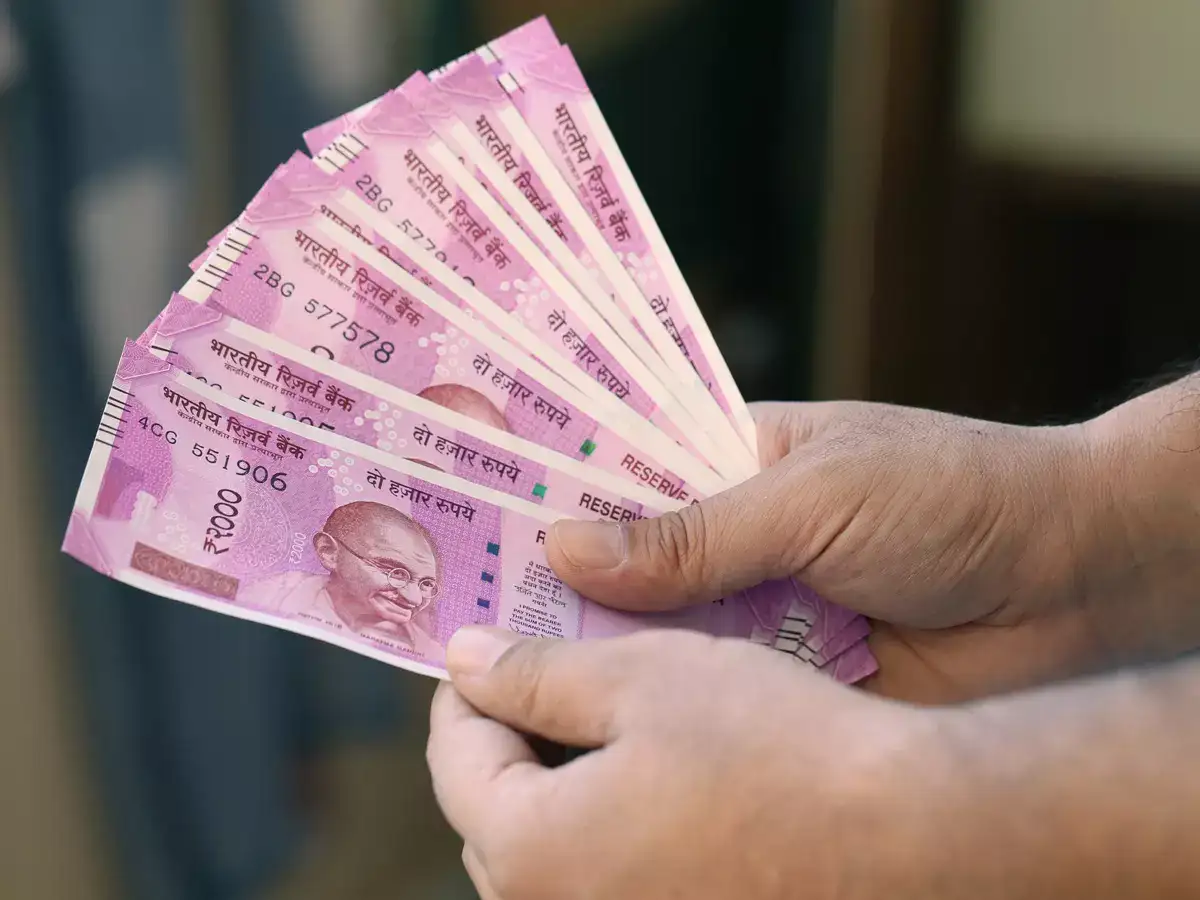

A Reserve Bank of India clampdown on bank guarantees threatens to squeeze the proprietary traders powering India’s derivatives market, putting trading volumes and the rich valuations of NSE, BSE and MCX under pressure.
The fault line is a bank-guarantee funding pool estimated at Rs 1.3 lakh crore to Rs 1.5 lakh crore, according to Dolat Capital. Proprietary trading firms earlier used these guarantees to secure market exposure of as much as twice their capital. Revised RBI norms have effectively reduced that leverage to one time, leaving traders searching for considerably more expensive funding alternatives.
Replacing bank guarantees with commercial paper could push funding costs to about 11% from just 1%, making several trading strategies unviable, Dolat analysts led by Punit Bahlani said in the report. A recent increase in securities transaction tax (STT) has compounded that pressure by raising trading costs and diluting returns.
“The primary bottleneck is likely to be capital availability,” the brokerage said, warning of a potential liquidity squeeze in segments dominated by proprietary traders and high-frequency trading firms.
The impact could reach far beyond trading desks. Proprietary firms account for a significant portion of derivatives activity on India’s exchanges, making their access to cheap leverage critical to transaction volumes and exchange revenue.
Dolat Capital initiated coverage of all three exchanges with sell ratings, arguing that their valuations do not adequately capture the emerging regulatory risks. It set a target price of ₹1,550 for IPO-bound National Stock Exchange (NSE), ₹3,000 for BSE and ₹2,400 for Multi Commodity Exchange, implying downside of 26%, 20% and 17%, respectively, from the prices used in the report.
Also Read | Exclusive | Why BSE wants options traders to think beyond the next expiry
NSE Faces A Double Blow
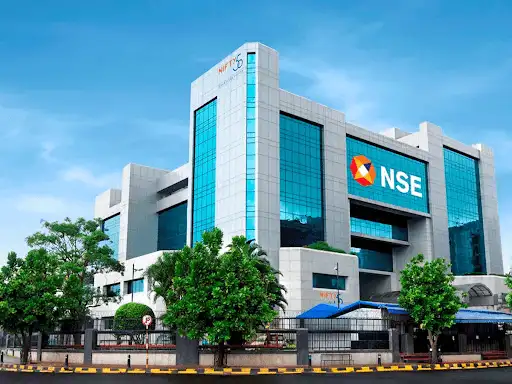
NSE may face the sharpest potential downside as the funding squeeze coincides with growing competition in index options.
Proprietary desks, including HFT firms, contribute more than 45% of NSE’s index-options volumes, a business that generates 53% of its revenue. Such traders also account for about 28% of stock-futures volumes.
Dolat Capital expects the regulatory changes to reduce NSE’s index-options average daily turnover by 8% from its base-case estimate in FY27 and by 18% in FY28. Futures turnover could be 3% and 6% lower, respectively.
The brokerage also expects NSE to steadily surrender index-options market share as BSE expands in the segment. While it projects a roughly 10% compound annual growth rate in NSE’s adjusted profit between FY26 and FY29, the growth rate falls to about 5% after adjusting for the impact of the colocation settlement.
Against that backdrop, NSE’s valuation of 46 times estimated FY28 earnings, based on its price in the unlisted market, appears expensive, according to the report.
“Current valuations…appear expensive for a sub-par PAT growth,” the brokerage said, while acknowledging NSE’s dominant position across most equity-market segments and its strong operating leverage.
BSE’s Cash Cow At Risk
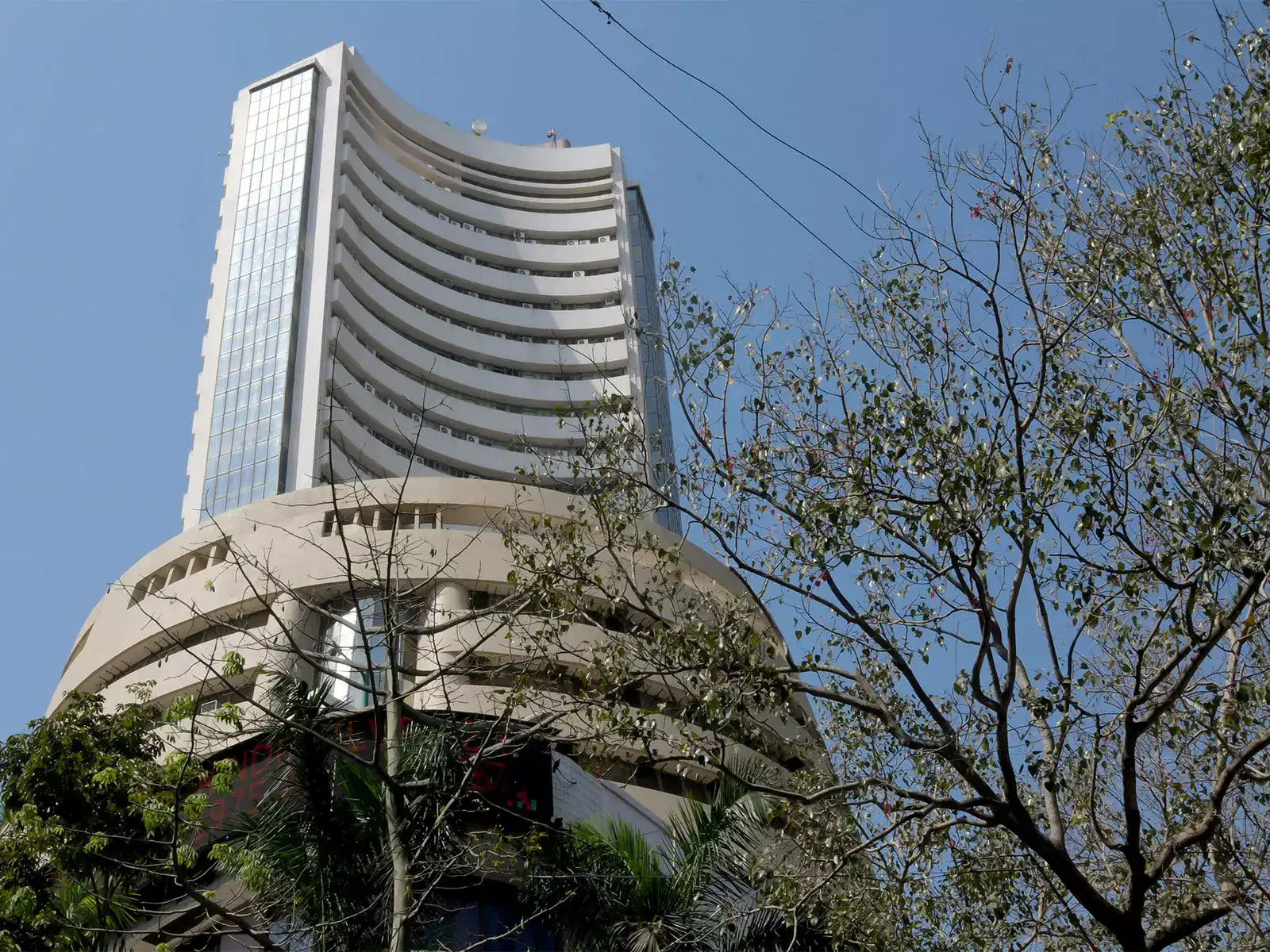
BSE’s vulnerability stems from its increasing dependence on index options, the business that has driven its recent revenue expansion.
Proprietary books, including HFT firms, contribute more than half of its index-options volumes. The segment itself accounts for about 60% of BSE’s revenue, making a retreat by leveraged trading firms particularly consequential.
Dolat Capital estimates BSE’s index-options turnover could be 10% below its earlier base case in FY27 and 20% lower in FY28. Its revenue and profit forecasts are consequently 9% and 14% below consensus estimates for the two years.
The exchange is still expected to benefit from improving cash-market share, further gains in index options and the opportunity to monetise trading in NSE stock futures after the latter’s listing. Dolat forecasts a 20% profit CAGR between FY26 and FY29.
Even so, it sees the stock’s valuation of 44 times estimated FY28 earnings as failing to provide sufficient protection against the risk of weaker proprietary volumes. Its ₹3,000 target values BSE at 35 times FY28 earnings.
MCX Has Lower Exposure, But Not Immunity
The estimated impact is relatively smaller for MCX, though its commodity-derivatives franchise is also exposed to the same funding reset.
Dolat Capital’s interactions with market participants suggest that bank-guarantee-backed activity accounts for about 15% to 20% of MCX’s futures and options volumes. Proprietary traders relying on bank guarantees contribute around 20% of overall derivatives activity, excluding commercial participants hedging their raw-material exposure.
When those commercial users are included alongside proprietary traders and HFT firms, their combined contribution rises to between 45% and 50%. Recent trading data cited in the report places the broader share at 50% to 60%.
The brokerage estimates that MCX’s futures and options turnover could be 6% below its base case in FY27 and 13% lower in FY28. Its revenue and profit forecasts are about 8% and 13% below consensus for the two years.
Dolat expects MCX’s profit to compound at 15% between FY26 and FY29. Potential growth avenues, including a coal exchange, colocation services and greater foreign-investor participation in commodities, may take time to generate meaningful revenue, it said.
The brokerage assigned MCX a target of ₹2,400, equivalent to 36 times estimated FY28 earnings.
Also Read | Dual engines to fuel bull market? Mutual fund cash hits multi-year low of 4% as FIIs turn buyers after 4 months
Structural Growth Versus Regulatory Risk
The warning comes despite a powerful structural expansion in India’s capital markets. NSE’s registered investor base has crossed 130 million, while the median investor age has declined to 33 years. Mutual funds and equities accounted for about 15% of household savings in FY25, up from 8% a year earlier.
That expanding investor base, combined with the operating leverage inherent in the exchange business, remains the long-term bull case for the sector.
The immediate risk, however, is that the ₹1.3 lakh crore-₹1.5 lakh crore bank-guarantee channel cannot be replaced cheaply or quickly. The commercial-paper market of banks is about ₹5 lakh crore, while funding requirements from proprietary desks are set to rise materially, according to Dolat Capital.
A sharp increase in market volatility or stronger retail and foreign-investor participation could soften the blow by encouraging proprietary firms to remain active despite higher costs and lower leverage. Without such a volume boost, the RBI’s funding reset could expose just how much of India’s exchange boom was underwritten by inexpensive bank guarantees.