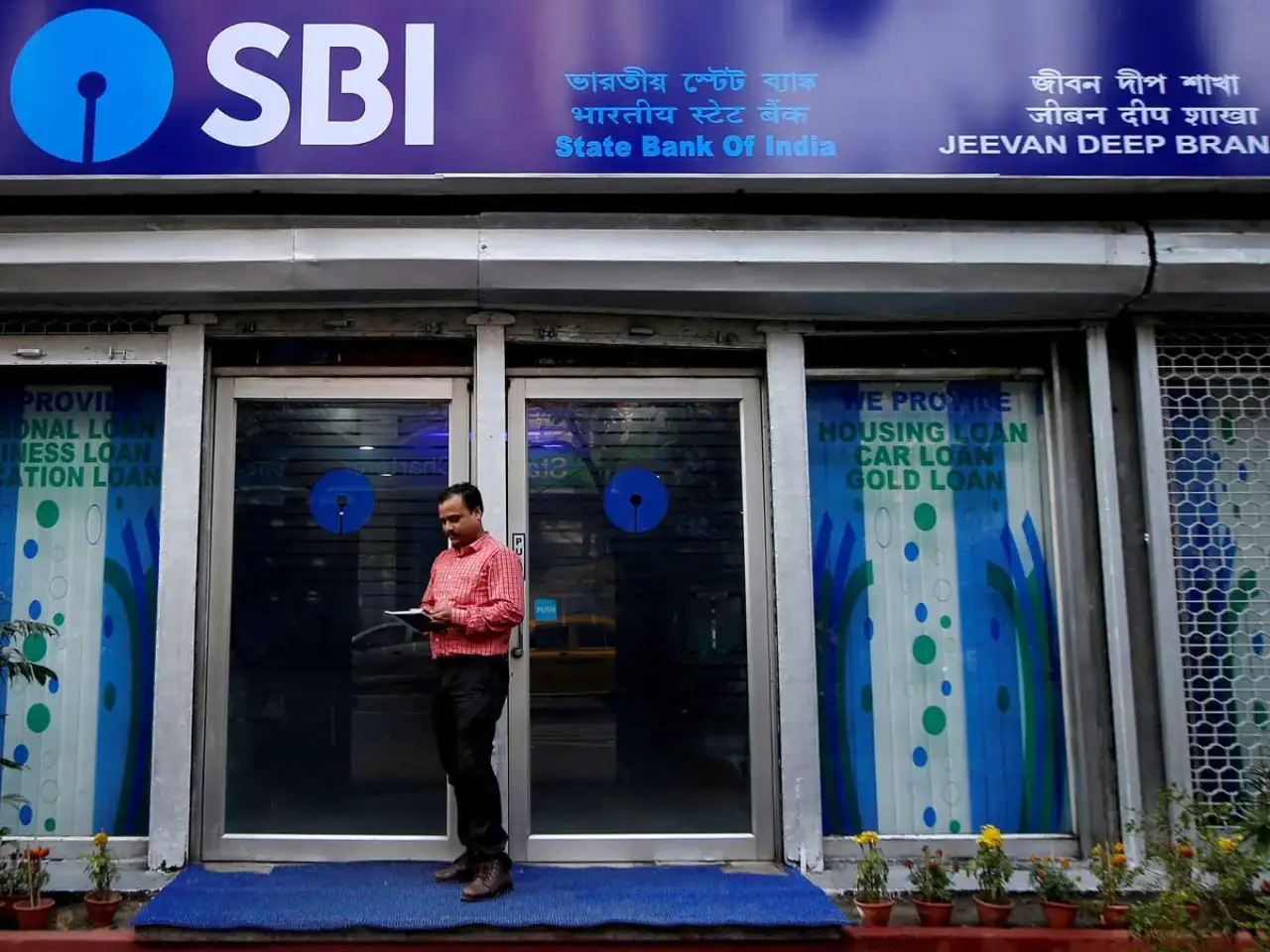


Mumbai: The State Bank of India (SBI) is sitting on a large ₹13,655 crore payout from the sale of partial stakes in SBI Funds Management starting on Tuesday, and then the National Stock Exchange (NSE) later this year. The bumper proceeds will shore up the bank's capital, cushioning its provisioning requirement and provide support for loan growth as the bank aims to maintain a return on assets (RoA) of above 1%, analysts said.
India's largest bank by assets is diluting a 6.3% stake in its asset management company through an initial public offer (IPO) of ₹9,813 crore that opens on Tuesday. SBI has already made ₹1,655 crore in a pre-IPO placement earlier this month. Even at the lower end of the ₹545 to ₹574 per share price band, the bank stands to make another ₹7000 crore, documents in the public domain showed.
Cash Cushion Payouts from SBI Funds Management and NSE stake sales expected to give the lender room to accelerate credit loss provisioning and support loan growth
The NSE IPO, likely to be India's largest at ₹30,000 crore, is likely in the current fiscal year where SBI is the single largest selling shareholder offering to sell 24.75 million shares. Though the price band of the issue is yet to be fixed, analysts expect SBI to receive at least ₹5,000 crore from its offer for sale in this issue.
Both these share sales together could result in an accretion of about ₹13,655 crore in SBI's profit and loss account this year. Stake sales in companies are routed through a bank's other income to its profit and loss account enhancing the bank's net worth, and consequently, capital.
SBI's capital adequacy ratio at the end of March 2026 was at 15.40%, higher than the 12.30% required for the bank even after accounting for the additional buffers required because it's a systematically important bank.
Analysts said with adequate capital already there, the bank may choose to front load its provisions for initial years of the expected credit loss (ECL) due to the excess capital on its books.
SBI did not reply to an email seeking comment.
ECL, or expected credit loss, provisions calculate the amount of money banks have to provide based on the probability of a loan default. The central bank has allowed banks to spread the provisions under the new framework in four years from the fiscal year ending March 2028. SBI may choose to quicken the provision in the initial years due to the windfall, analysts said.
Yuvraj Choudhary, analyst at Anand Rathi Securities, estimates SBI's capital adequacy will be enhanced by 27-30 basis points due to the inflows. One basis point is 0.01 percentage point.
"Our view is that the ECL impact will be manageable for most of the banks because both non-performing assets and slippages are in control. In this scenario SBI could probably also use part of these funds for lending and ensure they continue to grow faster than the system," Choudhary said.
SBI's provision coverage ratio, including for technically written off accounts, was at 92% at the end of March 2026. Gross NPA at 1.39% is also at a two-decade low. "In the current scenario it does not look like the new ECL norms will have much of an impact, but the bank could also decide to front load its provisions due to the new norms," said a senior bank official.