
Indian equities may have weathered a turbulent global environment with surprising resilience in the March quarter, but investors should brace for possible earnings disappointments in the first quarter of FY27 as geopolitical tensions and energy disruptions threaten to weigh on supply chains and corporate profitability.
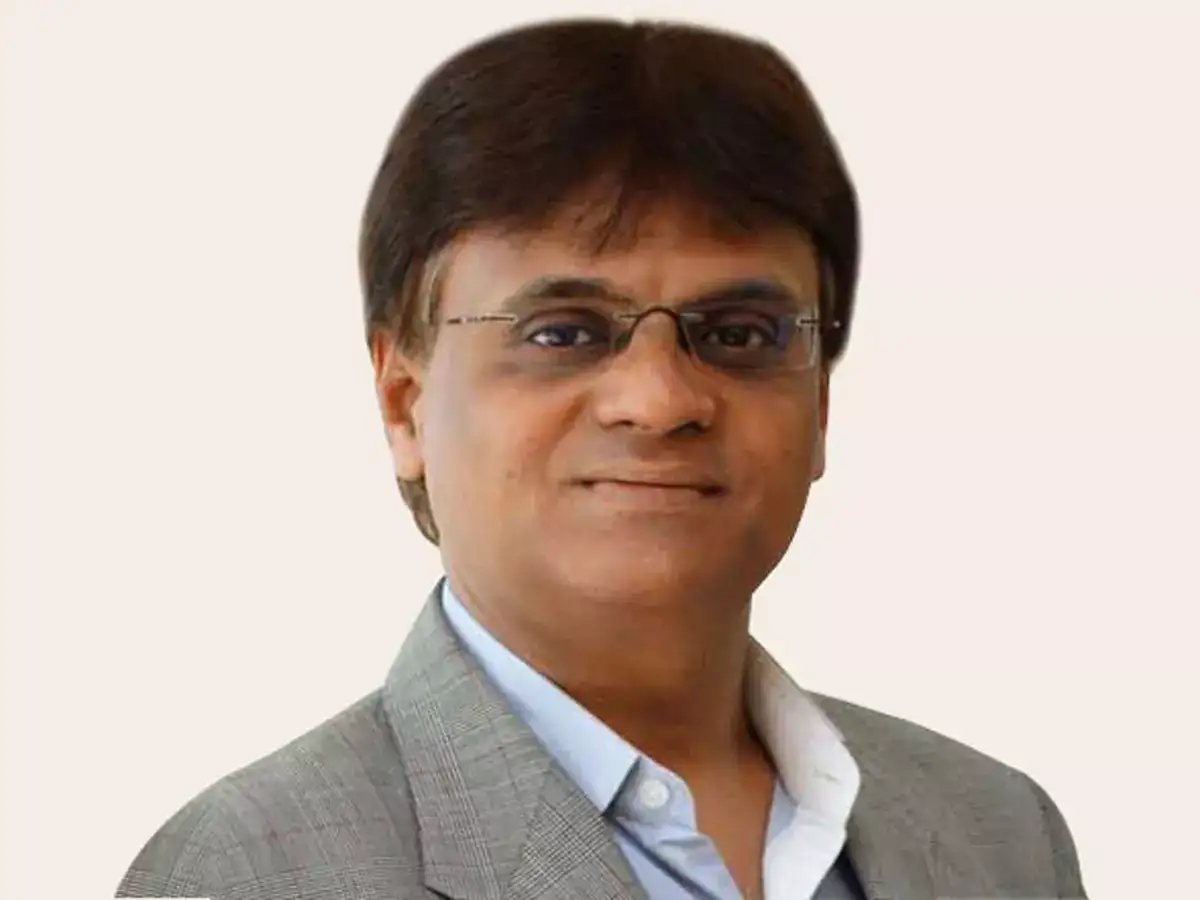
Speaking to ET Now, Harsha Upadhyaya, CIO, Kotak Mahindra AMC said that the recently concluded quarter delivered stronger-than-expected earnings despite multiple macro challenges. However, he cautioned that the coming quarters could face pressure if energy-related disruptions persist.
“It has been a very decent quarter from an earnings growth perspective, maybe with a slight positive bias with regard to the numbers. On the basis of what we saw in Q1, Q2, as well as Q3, Q4 has been surprisingly strong,” said Upadhyaya.
He attributed the resilience largely to companies that managed inventories and operational pipelines efficiently through periods of uncertainty. Still, he warned that the June quarter may not be as smooth.
“Clearly, as you mentioned, Q4 has been quite resilient as far as the numbers are concerned which have come out up until now. Most of those results have come from companies which managed their inventory levels or their pipelines quite nicely even through the crisis. However, there could be a little more disruption when you look at Q1 of financial year 27. So, we do expect some disappointments in Q1 FY27,” he said.
Markets Watching Energy Disruptions Closely
According to Upadhyaya, the trajectory of energy supply disruptions will determine whether markets treat weak quarterly earnings as temporary noise or a deeper structural concern.
“If the energy disruption ends before the earnings season starts, then I do not think that markets would really worry about Q1. They will look at it more as an aberration and move on from there and look at how the rest of financial year 27 and financial year 28 would pan out,” he said.
However, he added that an extended disruption could raise concerns beyond just one quarter.
“If the energy disruption continues, then of course there will be worries not only about Q1 numbers, but people may also worry about Q2 becoming a weaker quarter again,” Upadhyaya noted.
Despite ongoing tensions between the United States and Iran, he believes Indian markets have remained remarkably stable.
“We do not see more volatility coming into the market because of the current standoff between the US and Iran. However, if this escalates once again, of course nobody knows, and to that extent there could be more volatility,” he said.
He added that markets are likely to remain range-bound until there is greater clarity on geopolitical developments.
“If not, markets would move broadly sideways and wait for the resolution to happen, and then probably you will see a clear direction from the market,” he said.
Banking, Hospitals, and Power Remain Key Bets
On portfolio positioning, Upadhyaya said his investment strategy continues to favour sectors less exposed to immediate geopolitical and energy-related disruptions.
“Banking and financials, hospitals, and the power sector are some of the areas where we do not see an immediate impact of the war or any disruptions in the energy market. So, that is where most of our overweight stance has been across our portfolios,” he said.
He also reiterated his positive outlook on the broader power ecosystem, including ancillary businesses linked to generation and transmission infrastructure.
“We have been positive on the entire power sector and the value chain, including some of the ancillaries which cater to the power sector in one way or the other,” he said.
While acknowledging that valuations in several power-related counters have risen sharply, he maintained that the long-term growth story remains intact.
“India remains a power-deficient country and, to that extent, the entire value chain should do well from a growth perspective,” he said.
At the same time, he cautioned investors against ignoring short-term overheating in select pockets of the sector.
“There have been certain stocks which have run up quite fast and maybe in some cases ahead of fundamentals as well,” he added.
Renewed Preference for Private Banks
Upadhyaya also highlighted a noticeable shift in portfolio allocation towards private sector banks over the last few quarters after previously favouring NBFCs and public sector lenders.
“Over the last six to eight months, we have once again built private sector banking exposure,” he said.
According to him, many of the concerns that had weighed on private banks earlier — including margin pressure from interest rate cuts — are now fading.
“We do not expect interest rates to go down at this point in time. There are no asset quality issues at this point in time,” he said.
He also pointed to improved valuations and stronger credit growth expectations as factors supporting the sector’s outlook.
“Some of the expensive public sector banks may be trading at valuations similar to the most inexpensive private sector banks,” he noted.
With inflation expectations inching up and nominal GDP growth looking stronger than earlier estimates, Upadhyaya believes credit demand should remain healthy.
“Rest of financial year 27 and 28 should be much better for private sector banks and hence we have built our positions in that segment as well over the last couple of quarters,” he said.
Power Theme Broadens Beyond Utilities
Within the power ecosystem, Upadhyaya said his portfolios are diversified across multiple sub-segments rather than focused on a single theme.
“We do have power producers. We have transmission and distribution companies. We also have capital goods companies which are part of the value chain. We do have cables and wires which cater to increased power demand,” he said.
He added that the sector’s strong recent performance has also been driven by investors seeking relatively stable growth opportunities amid geopolitical uncertainty.
“Given the lack of options for the market in times of conflict, especially in the last couple of months, this sector has done quite well,” he said.
Still, he warned that short-term volatility cannot be ruled out after the recent rally.
“It is not that their medium- to long-term growth trajectory is impacted, but in the very short term, of course, some of these stocks have done exceedingly well,” Upadhyaya said.