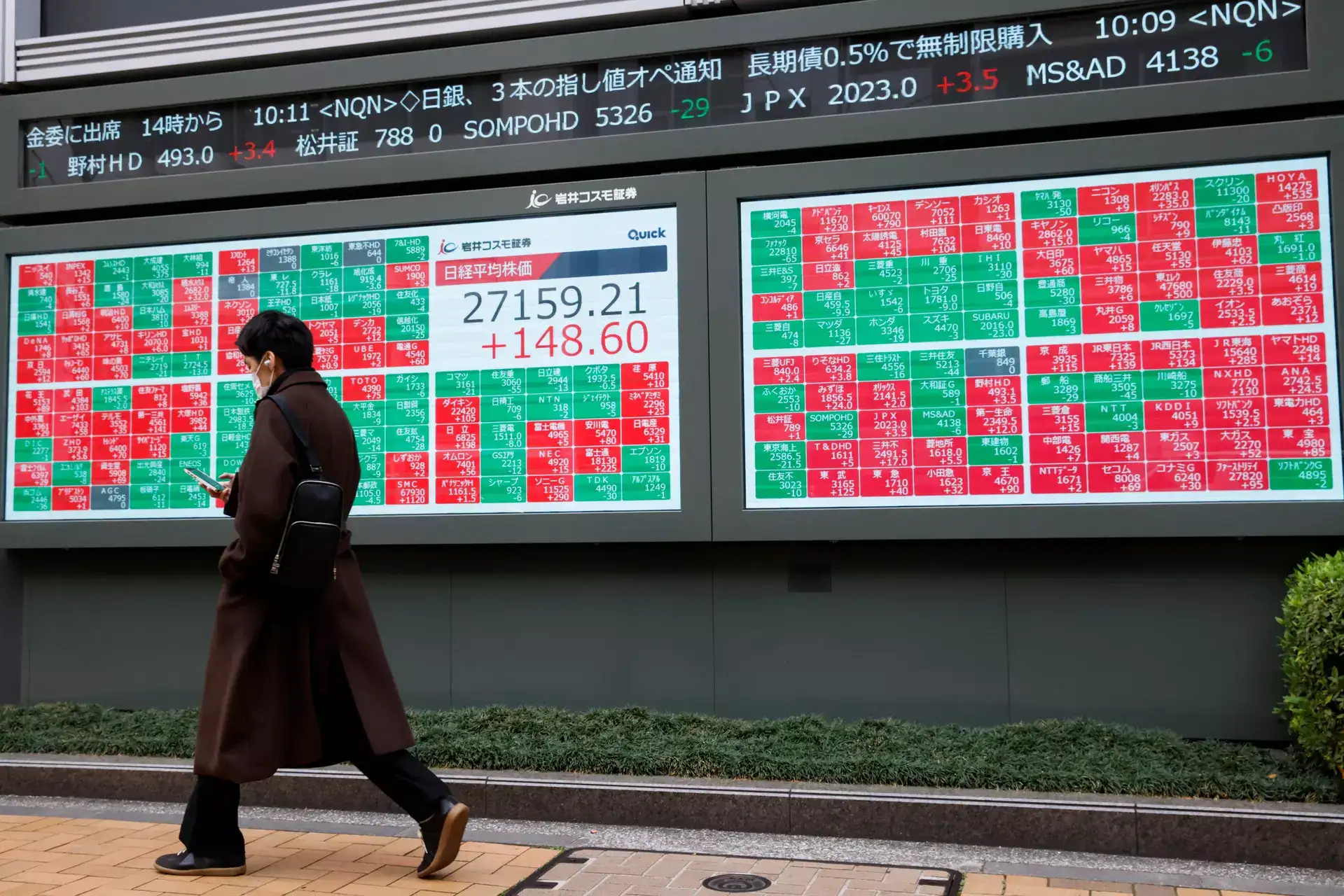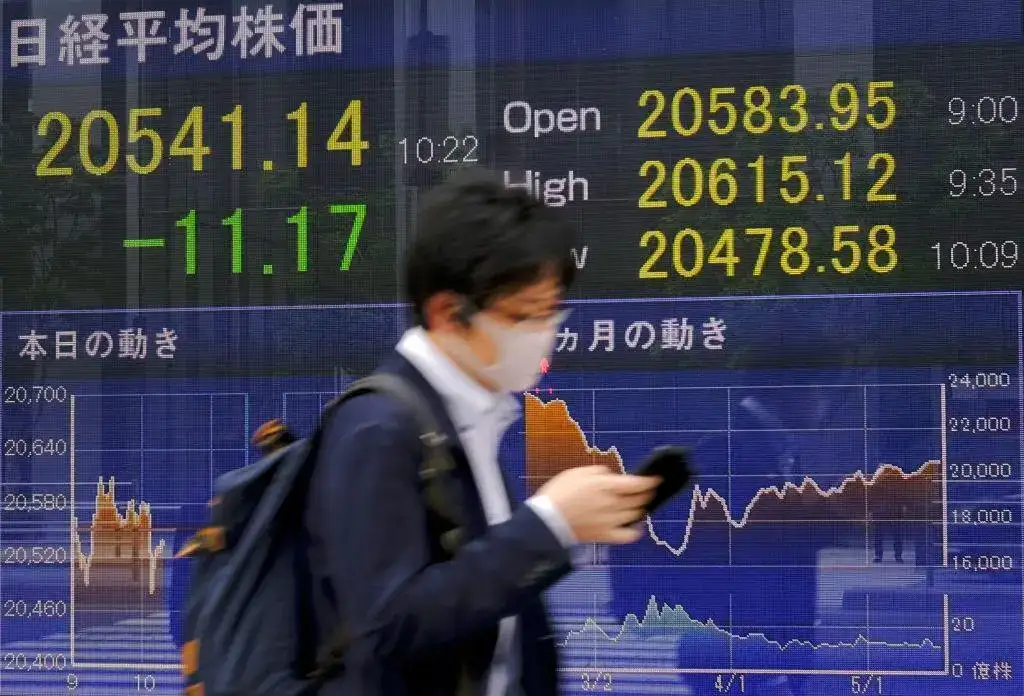

Indian stock market sharply crashed on Friday afternoon, with the Sensex and Nifty sinking up to 1.5% each as persistent FII selling and other factors weighed on Dalal Street.
Sensex dropped over 1,092 points to close at 74,775.74 while Nifty 50 crashed nearly more than 359 points to end the session at 23,547.75. This came as India VIX, which measures volatility in markets, jumped around 9% to 16.35. The sharp losses wiped off nearly Rs 5 lakh crore from the total market capitalisation of all companies listed on BSE, pulling it down to Rs 466 lakh crore.
Power Grid shares crashed more than 4% to emerge as the top loser on Sensex. IndiGo shares followed, dropping over 3% ahead of its Q4 results. Bajaj Finance, UltraTech Cement, Tata Steel, Sun Pharma and NTPC shares declined over 2% each. Bucking the trend, Tech Mahindra and HCLTech shares were up nearly 2%.
The bearish sentiment spilt over to the broader markets, with Nifty Smallcap 100 and Nifty Midcap 100 indices falling around 1% each. Sectorally, Nifty Oil & Gas dropped around 2.5% while Nifty Metal tumbled over 2% to lead losses. Nifty IT, however, closed marginally higher.
Here are the key factors that may be weighing on markets today
1) IMD predicts 11-year low rainfall in 2026
The India Meteorological Department (IMD) on Friday predicted that India will receive lower than normal rainfall this year, lowest in 11 years, with precipitation less than 90% of the Long Period Average (LPA). “Monsoon rainfall from June to September will be ‘below normal’ and is likely to be 90% of the long-period average,” M Ravichandran, secretary at the Ministry of Earth Sciences, said at a press briefing, citing IMD’s forecast.
This comes as El Niño conditions lead to rising temperatures across various parts of India. Lower monsoon can, in turn, lead to higher inflation, which in turn can impact several sectors, according to analysts.
The market witnessed broad-based selling pressure following the IMD's monsoon forecasts to 90% of the long-period average (LPA), raising concerns among investors, said Vinod Nair, Head of Research at Geojit Investments. “The prospect of deficient rainfall, coupled with the increasing likelihood of an El Niño weather pattern, has heightened fears of elevated food inflation in the coming months,” he added.
2) Iran-US peace deal uncertainties
US and Iran have reached an agreement to extend the existing ceasefire for 60 days, although this still awaits President Donald Trump’s approval, reports said. The agreement will state how to address Iran's stockpile of highly enriched uranium, which will be among the first issues discussed during the 60-day window, according to a report by Axios.
US Vice President JD Vance told reporters on Thursday evening that the US and Iran are “very close” to a peace deal and are going to keep working on it. He added that the negotiators were "going back and forth on a couple of language points", which include the "question of enrichment". However, the peace deal continues to remain elusive, raising investor worries globally.
3) Persistent FII selling
Foreign investors remained net sellers of Indian equities on Wednesday, net selling shares worth Rs 1,043 crore on Dalal Street, according to provisional data on the NSE. Foreign investors have overall remained bearish on Indian markets so far in May, remaining net sellers of Indian equities for 13 out of 18 sessions.
4) MSCI rejig
MSCI rejig took effect in the fag end of the trading session. Four Indian stocks, including MCX and Indian Bank were added to the MSCI Standard index, while stocks like RVNL and Kalyan Jewellers were removed. A dozen stocks were removed from the MSCI Small cap universe.
Silver lining to the dark cloud?
Despite the bearish market sentiment, some optimism is warranted. Already, the intensity of FPI selling has come down, according to VK Vijayakumar from Geojit Investments. “A positive trend from the market perspective is that Q4 results have been better-than-expected. The double-digit earnings growth in financials, automobiles and metals is impressive. Trends indicate that FY 27 will be good for defence, capital goods, renewable energy, financials and pharmaceuticals. Growth sectors like digital platform companies are getting accumulated on declines,” he added.
Oil prices, meanwhile, dropped. Brent crude futures declined nearly 2% to trade below $92 per barrel, and WTI Crude futures fell 2% to $87 per barrel. This comes as prolonged closure of the Strait of Hormuz since the onset of the war late in February kept oil prices elevated above $100 per barrel for most of the days, with Brent soaring above $120 per barrel as well, before cooling down.
Rupee rose 53 paise to close at 95.05 against the US dollar, as against the previous closing level of 95.69. The Indian currency recorded its best single-day gain since April 2. This comes after the Reserve Bank of India (RBI) likely intervened in the foreign exchange market to shore up the rupee ahead of the local spot market open on Friday, according to a Reuters report that quoted five traders.
(With inputs from agencies)