
India's currency has tumbled to record lows this year due to elevated oil prices and persistent foreign selling of the country's equities, prompting crisis-era steps by authorities to try to attract capital inflows and cool surging dollar demand.
On Friday, the Reserve Bank of India (RBI) unveiled fresh measures to shore up the rupee, redirecting oil companies' dollar purchases away from the spot market and tightening hedging rules as the currency hovers near record lows.
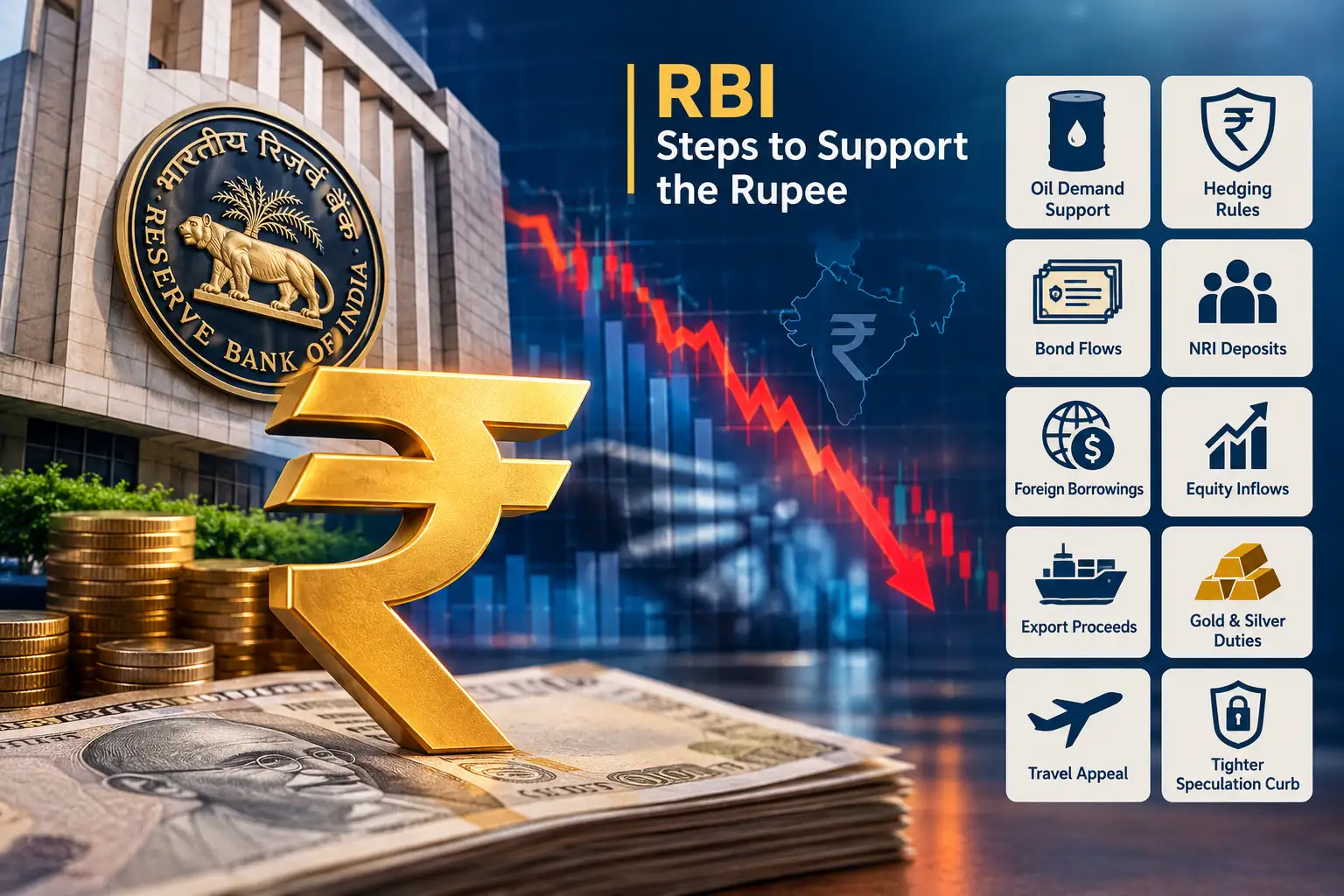
Below are steps India is taking to battle pressure on its currency:
Redirecting Oil-Related Dollar Demand
The RBI will open a special window to meet the daily dollar requirements of three state-run oil-marketing companies, easing pressure on the rupee, down more than 7% against the dollar this year. It touched 96.96 in May, a record low.
Under such an arrangement, used during periods of currency stress, the RBI provides oil companies dollars directly from its foreign exchange reserves. Indian Oil, Hindustan Petroleum and Bharat Petroleum will be allowed to access the facility from October 12, the RBI said.
The central bank has tightened rules on speculative corporate activity and raised the cost of buying protection against further rupee weakness, as part of steps announced on October 10.
It has mandated forex dealers maintain a 20% "foreign exchange risk reserve" on derivative contracts used to hedge requirements of foreign currency under current account transactions, such as purchase of foreign goods or services. The reserve requirement will not be applicable on transactions linked to the capital account, such as hedging of foreign equity or debt investments.
The RBI also lowered the threshold for derivative transactions that can be undertaken without proof of an underlying exposure to $5 million from $100 million, and prohibited users from rebooking cancelled contracts, aiming to curb corporate speculative activity.
In June, the Indian government removed a 12.5% capital gains tax for foreign investors in Indian bonds and scrapped a 20% tax on interest earnings.
The international financial institution, the Bank for International Settlements - an active investor in government securities - has also been exempt from these taxes.
A wider pool of government bonds will have no foreign investment limits, the Reserve Bank of India said.
The RBI also announced incentives in June for banks to raise foreign currency deposits from non-resident Indians. The facility, now closed, drew $136 billion.
Push For Foreign Currency Borrowings
To boost foreign currency borrowings, the RBI will offer a concessional swap rate for government-owned companies. The concessions remain in effect till end of the year.
Encouraging Non-Resident Investments In Equities
In February, the government and RBI announced higher limits for equity investments by non-resident Indians. The steps went into effect in June.
The RBI also reduced the time limit for bringing back export proceeds to 9 months from 15 months in June. The time limit was extended to 15 months last year due to trade tensions with the United States.
Higher Duties On Gold, Silver
India raised import tariffs on gold and silver to 15% from 6% in May.
The government has imposed a 10% basic customs duty and a 5% Agriculture Infrastructure and Development Cess (AIDC) on gold and silver imports, taking the effective import tax to 15% from 6%.
India imposed tougher import rules on gold and silver in May.
It has tightened rules for duty-free gold imports for jewellery exports by capping imports at 100 kilograms per licence until further notice.
India placed imports of silver bars with 99.9% purity and all other semi-manufactured forms of silver under the restricted category with immediate effect.
While India has not imposed restrictions on travel, Prime Minister Narendra Modi appealed in May to citizens to avoid unnecessary foreign travel.
He also urged people to work from home to conserve fuel and help the government reduce costly oil imports.
Steps To Curb Currency Speculation
In February and March, the Reserve Bank of India cut the limit for net open forex positions that banks can hold.
The step sought to rein in speculative positions in the rupee, which were exacerbating depreciation pressures.