Foreign institutional investors (FIIs) have never owned less of India's biggest companies in two decades and that under-ownership is now colliding with valuations that have fallen below long-term averages, setting up what some fund managers call a stock-picker's contrarian moment.
Average FII ownership across India's top 10 listed companies has fallen to just about 34% of free-float market capitalization, the lowest level in two decades and even below the 37% trough hit during the Global Financial Crisis, according to data from DSP Mutual Fund.
The steady reduction in FII holdings is one of the key drivers behind a broader trend that India's largest companies now account for their smallest share of the overall market capitalization on record, with the top 10 stocks' share of total India market cap down to 17% as of the latest data versus a peak of 39% in December 2019.
The stock-level breakdown shows the extent of the pullback. FII ownership in Axis Bank has fallen to 44% of free-float market cap in March 2026 from 68% in June 2014; Kotak Mahindra Bank to 36% from 59%; HDFC Bank to 38% from 44%; and TCS to 34% from 63% over the same stretch. Infosys, ICICI Bank and Reliance Industries have also seen their FII ownership decline versus 2014 levels, though the drop has been more moderate for some names such as ICICI Bank and Reliance.
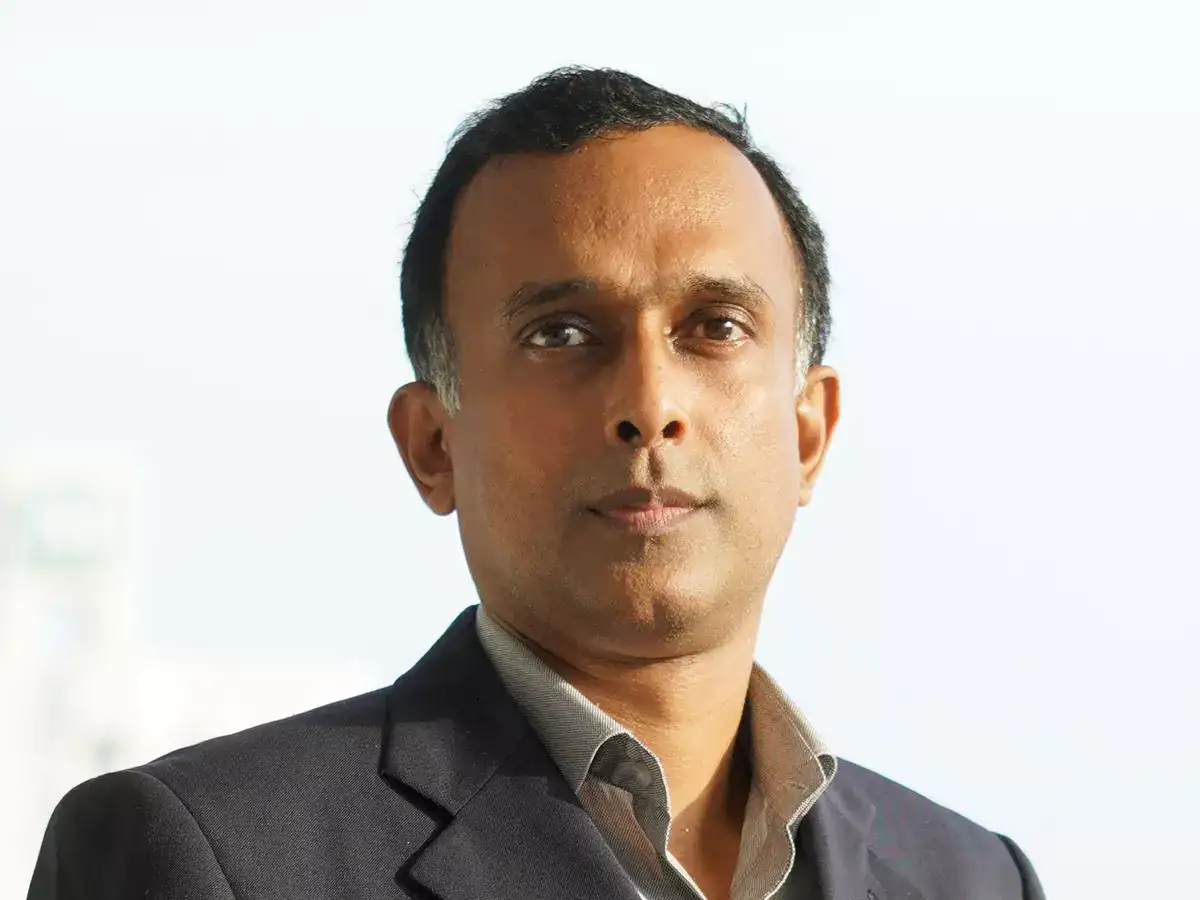
"The under-ownership and undervaluation at present makes this high-quality segment attractive for long term investors. As INR depreciation stabilizes and geopolitical risks subside, there can be mean reversion in FII flows in this segment,” said DSP Mutual Fund’s market strategist Sahil Kapoor.
Also Read |India's next stock market headache isn't oil but a bigger storm brewing in the skies
The under-ownership thesis is backed by hard valuation numbers. Every single constituent of the Nifty Top 10 Equal Weight Index is trading at or below its 10-year average valuation as of June 30, 2026. Infosys at 13.5x trailing PE versus a 10-year average of 23.3x, TCS at 14.0x versus 26.9x, HDFC Bank at 2.1x price-to-book versus 3.7x, and Bharti Airtel at 10.8x EV/EBITDA versus 13.7x. At the same time, 70% of the same basket is generating return on equity at or above its 10-year average — TCS at 52% ROE versus a 10-year average of 42%, Bharti Airtel at 22% versus 11%, and Infosys at 32% versus 30%.
The contrarian setup extends beyond India's own market. Within the MSCI Emerging Markets index, India and China are now the only two of the four constituent markets with weights exceeding 5% that trade at a discount to their 10-year average PE — India at a 2.39% discount and China at 10.98% — while Taiwan and South Korea trade at premiums of 85.09% and 71.52% respectively to their historical average PEs.
"India now appears to be the most contrarian bet in the basket. Notably, it was the biggest consensus 'buy' just two years ago,” Kapoor said.
Also Read | 2 years, zero returns: Is it time for Nifty investors to be fearful or greedy?
What should investors do?
Dalal Street’s top stock picker Prashant Jain argues the case for large-caps directly follows from the foreign-selling dynamic: "As a category smallcaps versus largecaps, largecaps are offering better value to my mind and they have borne the maximum brunt of the selling by foreigners and as macro turns, as this foreign selling abates, it may over time even turn to positive flows, largecaps should outperform smallcaps as a category." He added that smallcaps remain a far more diverse universe where earnings growth outcomes vary widely, making it "a stock picker's market," whereas large-cap earnings growth tends to range more narrowly between 5% and 20%.
George Thomas, Fund Manager-Equity at Quantum AMC, echoed the valuation argument: "Although the near-term earnings trend is tied to global developments, valuations have become conducive in several pockets - large-caps in particular trade below their long-term averages." He cautioned that near-term volatility is likely to persist as the geopolitical situation evolves, but said "the impact of short-term disruptions on the intrinsic value of businesses is limited," and suggested investors "consider a staggered allocation to equities to take advantage of favorable valuations."
Axis Securities offered a counterpoint from the small- and mid-cap side, noting that the risk-reward in that segment had already started turning favourable and that the recovery over the last three months has "broadly validated this thesis."
However, the brokerage cautioned that current valuation multiples in the SMID space "leave limited room for disappointment," meaning future performance will depend on companies' ability to deliver "sustained earnings growth, healthy free cash flow generation and improving return on capital employed." Its recommended approach: "bottom-up stock selection, with emphasis on companies that can navigate cost pressures while sustaining growth."