

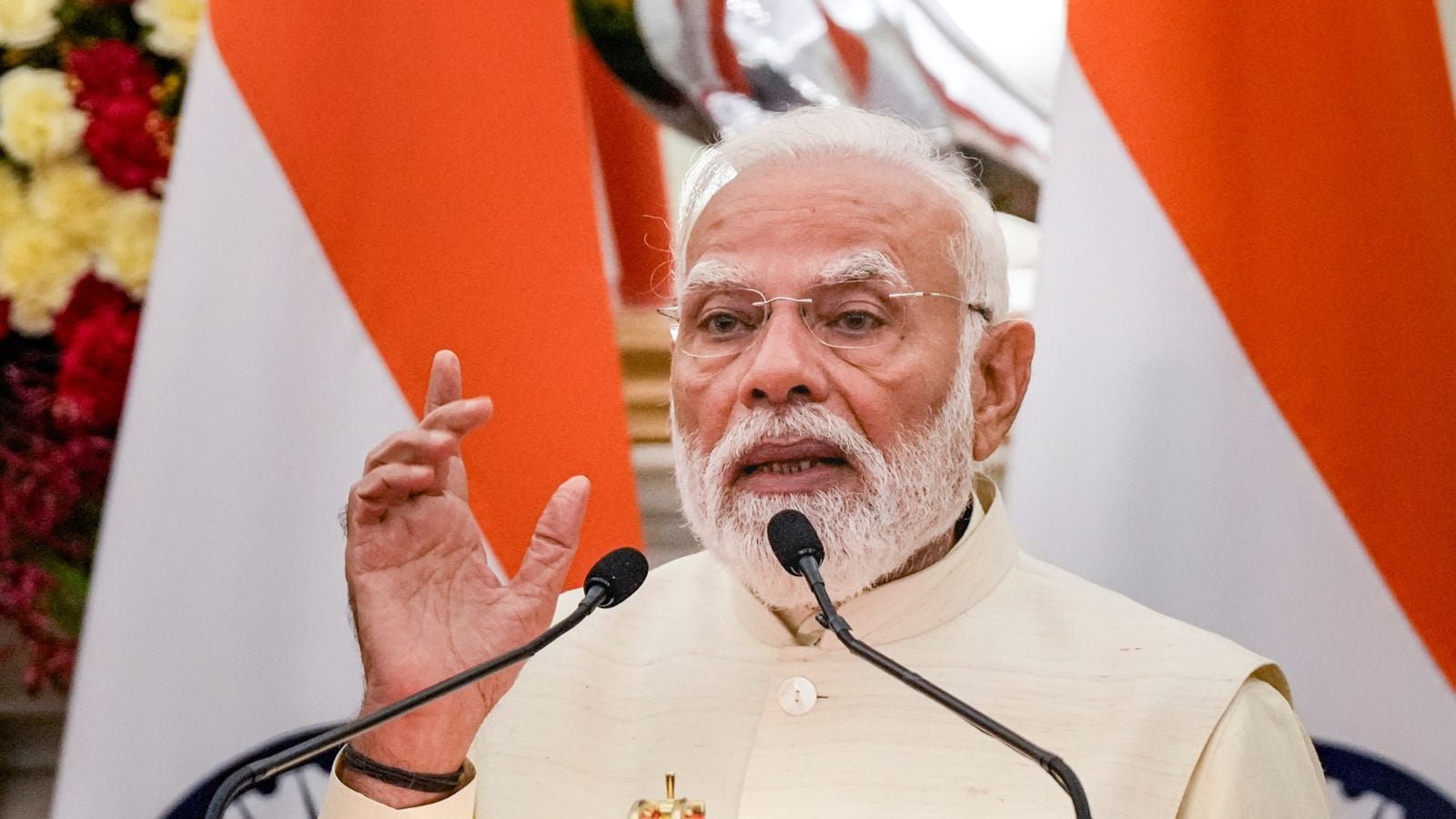
Prime Minister Narendra Modi on Wednesday said that India and the Association of Southeast Asian Nations (ASEAN) countries will update the trade agreement between the two trade partners by the end of the year. The deal was originally signed in 2009 under the UPA government, and both trade partners began renegotiating the deal in 2024 amid a ballooning trade gap.
Speaking at a joint press conference with Vietnamese President To Lam in New Delhi, PM Modi said: “Bilateral trade between India and Vietnam has doubled over the past decade, reaching $16 billion. To take it to $25 billion by 2030, we have taken several important decisions today. We have also reached an agreement to update the India-ASEAN Trade Agreement (AITIGA) by the end of this year. This will give new energy to trade and investment between India and all ASEAN nations.”
The India-ASEAN trade deal review has been one of the most challenging negotiations that the Commerce and Industry Ministry has engaged in, as ASEAN nations have an edge over India under the current deal. India’s trade deficit with the fast-growing ASEAN region has risen to $44 billion in FY23, from $8 billion in FY13. An Indian Economic Service research paper on India’s trade patterns with the 10 ASEAN nations between 1991 and 2020 showed that while imports have grown, exports have declined since 2010, resulting in increasing trade deficits with all ASEAN countries.
Modi said that through new initiatives in critical minerals, rare earth, and energy cooperation, India and Vietnam will ensure the economic security and supply chain resilience of both countries. “Export of India’s agricultural, fisheries, and animal products to Vietnam will also become easier. Very soon, Vietnam will taste India’s grapes and pomegranates, and we will enjoy Vietnam’s durian and pomelo,” Modi said.
The Prime Minister said that a Memorandum of Understanding (MOU) between the drug regulators of both countries would “increase access to Indian medicines in Vietnam”. “To boost financial connectivity as well, today we have decided to enhance cooperation between our central banks. India’s UPI and Vietnam’s Fast Payment System are also set to be linked soon. Additionally, we are now going to strengthen State-to-State and City-to-City cooperation between our two countries,” Modi said.
“In this era of global upheaval and economic challenges, on the strength of our talent, good governance, and economic reforms, India and Vietnam are emerging as the world’s fastest-growing economies. Now, through our enhanced strategic partnership, we will become partners in each other’s rapid growth,” he said.
The renegotiations also assume significance as India is rapidly opening its market to FTA countries in a bid to diversify exports during growing uncertainty in markets such as West Asia, the US and the growing regulatory hurdles in Europe.
Story continues below this ad
Amid India’s aggressive push for global trade integration, the existing FTAs have not translated into higher exports. A NITI Aayog report last month showed that India’s exports to FTA partners contracted for the third straight quarter. Exports to FTA countries slipped by 7% year-on-year during the October-December quarter of the last financial year. Exports had slipped by 9% and 7% in the previous two quarters.
Imports have also surged from the ASEAN region after it joined the China-led Regional Comprehensive Economic Partnership (RCEP) trade deal. India exited the RCEP negotiations in 2019 due to concerns over rising imports from China. Notably, China-ASEAN trade is on the rise. The 10 member states of ASEAN include Indonesia, Thailand, Singapore, the Philippines, Vietnam, Malaysia, Myanmar, Cambodia, Brunei and Laos.
According to a statement released by PMO, India and Vietnam have agreed to enhance the supply chains in sectors of mutual interest. Vietnam affirmed its commitments to diversify its supply sources and to “import more products from India to serve its domestic production and export needs”. “Both sides agreed to explore ways for a more conducive regulatory environment to facilitate ease of doing business for companies of both countries, including in standards compliance certification. They underlined the importance of maintaining constructive dialogue for resolving mutual concerns under bilateral institutional mechanisms,” the statement said.
“The leaders agreed to encourage greater two-way investments to further strengthen India-Vietnam economic ties, especially in the fields of high-technology, transport, manufacturing, logistics, renewable energy, smart agriculture, electric vehicles, information technology, healthcare, agriculture and agro-processing, aquaculture, tourism and hospitality, among others. They also agreed to strengthen the linkages between the two countries’ startup ecosystems and encourage substantive cooperation among innovation centres,” the statement said.
