

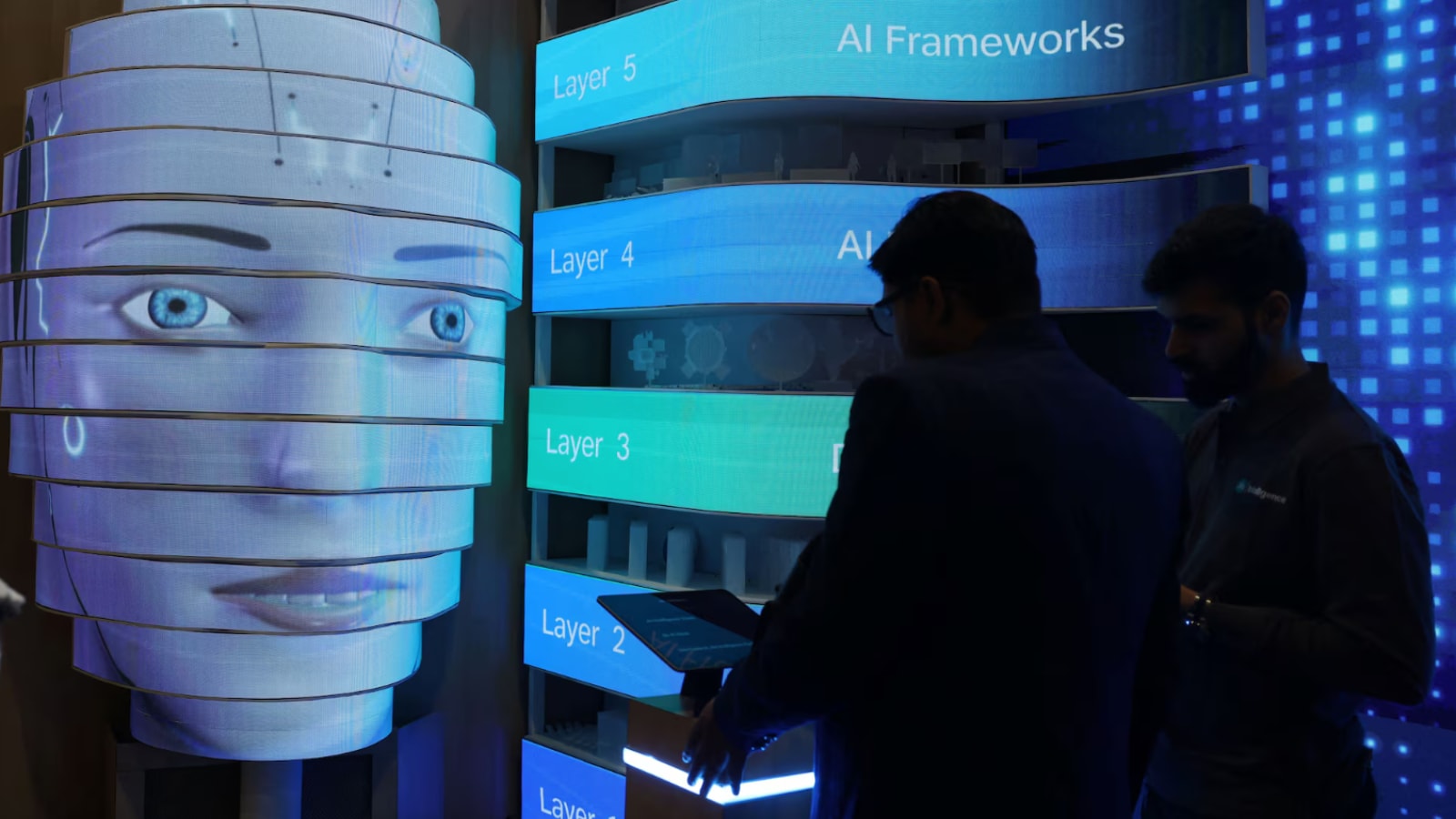
Post Content Gen Z’s growing anxiety over AI and automation is reshaping perceptions of the technology. (Image: Reuters)
The AI revolution is here, and the boos are getting louder.
As artificial intelligence reshapes industries and markets around the world, a sense of dread is deepening among young “digital natives” now entering the workforce, fearful of the impact on jobs and daily life as ChatGPT, Claude and Gemini become household names.
In a speech this week, former Google CEO Eric Schmidt told graduating University of Arizona students that the impact of AI would be “larger, faster, and more consequential” than anything before.
“It will touch every profession, every classroom, every hospital, every laboratory, every person, and every relationship you have,” he said as boos rang out even as he addressed anxieties about job security and an uncertain future.
How real those fears are was on show in an announcement by Standard Chartered on Tuesday that it will cut over 7,000 jobs and replace “lower-value human capital” with AI.
Also Read | OpenAI takes on AI cyber threats with Daybreak: Here’s what it means
Many tech firms are also cutting staff, citing AI. Meta, which is installing tracking software on US-based employees’ computers to train its AI model, is planning to lay off 10% of its workforce globally starting this month.
Amazon.com has axed some 30,000 corporate jobs in recent months as it pushes AI and efficiency, while in February fintech firm Block cut nearly half its staff.
The Iran war is also softening hiring.
Story continues below this ad
Schmidt acknowledged the young generation’s fears and called them “rational”, but just like the current top executives, he painted the change and disruption AI was bringing as something inevitable that everyone needed to adapt to.
However, even as CEOs embrace AI, there have been signs of pushback from Chinese courts, unions at South Korean carmakers, Hollywood scriptwriters and India’s film industry.
And perhaps the clearest sign of discomfort with the vision of the world offered by tech companies is the rising discontent among America’s youth.
Also Read | ‘As vital as energy and defence’: Countries rushing to build AI infrastructure, says Michael Dell
An April report from Gallup showed that a rising number of Generation Z – those born between 1997 and 2012 – were anxious or angry about AI, while those who said they were hopeful or excited by it had fallen sharply compared with a year earlier.
Story continues below this ad
Nearly half of respondents said the risks of AI outweigh the benefits, while 15% said it was a net positive, a much bleaker view than a year ago. Most recognised the need to be AI-savvy but said it hindered deeper learning and creativity.
“Negative emotions have intensified over the past year,” the report’s authors wrote, and noted that usage was starting to plateau. “Young adults in the workforce are significantly more likely to view AI as a risk than a benefit.”
The data did show that positive views of AI increased with the level of usage and decreased amongst those who used it less.
Schmidt’s frosty reception followed other recent shows of anger at AI. At the University of Central Florida on May 8, a real estate executive, Gloria Caulfield, was similarly heckled and booed over a commencement speech on AI.
Story continues below this ad
“The rise of artificial intelligence is the next industrial revolution,” she said as boos rang out, catching her off guard. “What happened? OK, I struck a chord… Only a few years ago AI was not a factor in our lives.”
The room burst out in cheers.
