

Post Content
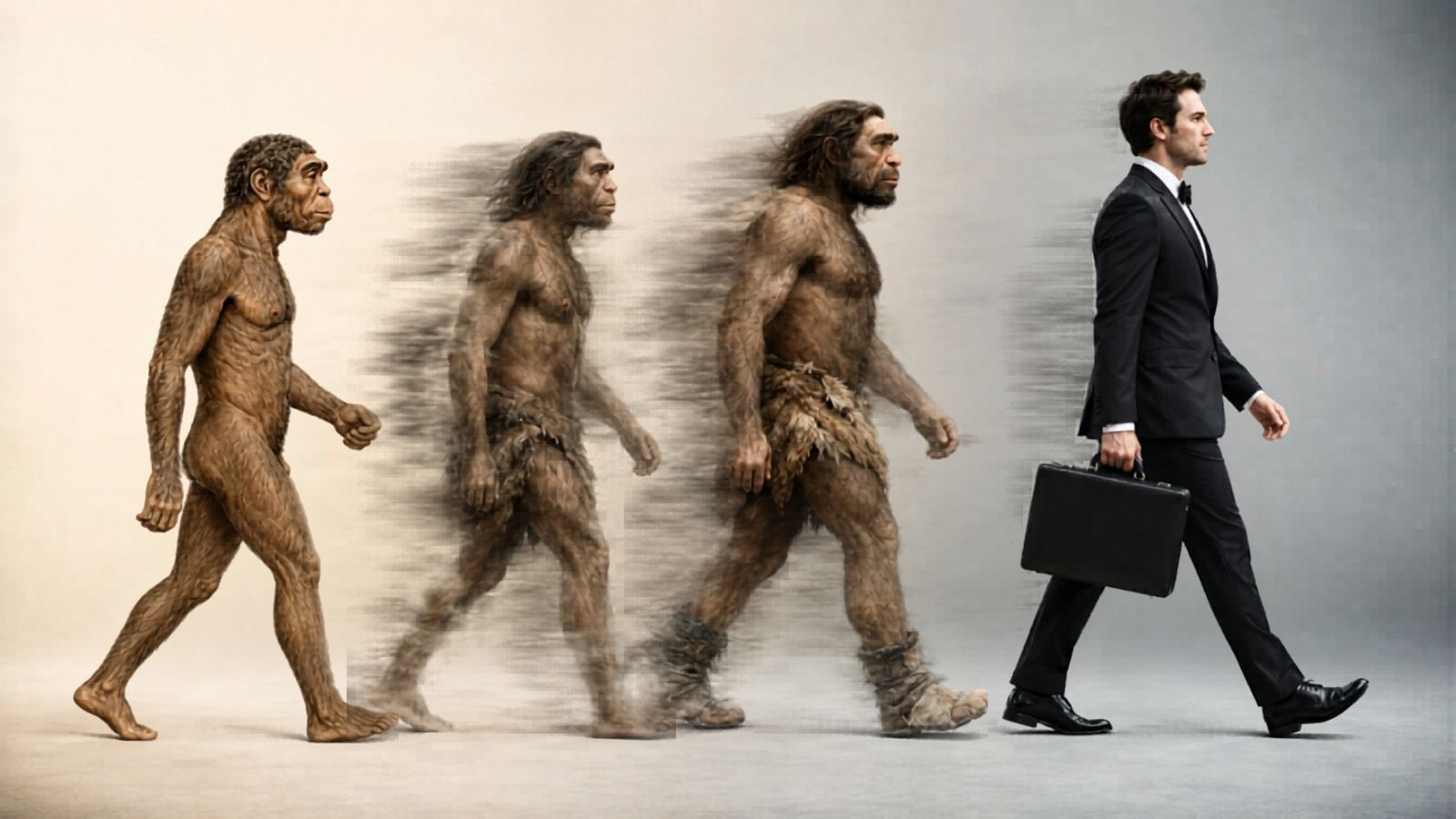
We often see them as dead-end branches of human ancestors, separated from each other by miles of geography and millennia of evolutionary history. But a new study adds to growing evidence that ancient hominins may have bred with each other more frequently, passing on some of their genes to us homo sapiens.
The new study, recently published in Nature, shows that populations related to Homo erectus – one of the most ancient of our forerunners to move out of Africa and go across the world – may have interbred with the Denisovans, another extinct human lineage, in regions of East Asia.
Denisovans, as we already know from earlier research, later mated with the Neanderthals and Homo sapiens. Some populations in the eastern hemisphere carry trace Denisovan DNA, going up to 1-6% in Oceania. And most populations outside Africa contain 1-4 % Neanderthal DNA.
Also Read | Why T. rex had tiny arms? New study points to powerful jaws
Which indirectly means this: Some modern humans could be carrying traces of genetic material from Homo erectus. We don’t, as of now, have any means of knowing for sure – DNA from Homo erectus has not been recovered, and the remains are very ancient.
Study on Homo erectus teeth
The study was done by scientists on six teeth unearthed from three sites in China, which belonged to six Homo erectus individuals from 400,000 years ago. The specimens were too ancient and ill-preserved to extract DNA, so lead researcher Fu Qiaomei and her colleagues worked with tooth enamel proteins, which give comparatively less information on evolutionary history.
Proteins are basically a series of amino acids. All six specimens, five males and one woman, shared two amino acid variants. The first variant, A253G in AMBN, is previously unknown and has not been identified in any other human lineages. The second variant, AMBN(M273V), has previously been identified in Denisovans.
The scientists concluded that the second variant may have been introduced in Denisovans by Homo erectus individuals when the two species lived side by side in that area around the same time. This might indirectly give a molecular link between these ancients and us Homo sapiens, who evolved much later.
Story continues below this ad
But first, who were the Homo erectus?
Homo Erectus (Image generated using AI: OpenAI)
Homo erectus, or ‘Upright Man’, is theorised to be the first human species to travel from Africa to western Asia, China, and Southeast Asia. They were also theorised to be the first species to show human-like features – an upright standing body with a heavy brow, protruding jaw, and large teeth.
Homo erectus lived from about 1.9 million years ago until at least 117,000-108,000 years ago. They are not known to have lived side by side with Homo sapiens, who evolved in Africa 300,000 years ago.
Who were the Denisovans?
Denisovans are another enigmatic species of ancient humans, whom we know from a few fragments of bone and a great deal of genetic data.
Denisovans (Image generated using AI: OpenAI)
Denisovans emerged around 400,000–500,000 years ago and lived across Asia until at least 48,000–32,000 years ago. They interbred with Homo sapiens, who had long since spread into Asia. If you have ancestry from Southeast Asia or the Pacific Islands, you likely carry more Denisovan DNA than others,
Story continues below this ad
Who were the Neanderthals?
The broader ancestral line shared by Neanderthals and Denisovans split from the line leading to Homo sapiens 600,000 years ago. Less than 200,000 years later, these two species split too.
Neanderthals (Image generated using AI: OpenAI)
Homo neanderthalensis lived across Europe and western and central Asia until about 40,000 years ago. Around 300,000 years ago,, Homo sapiens were evolving in Africa. The two groups later lived together outside Africa and interbred. People outside Africa carry a small amount of Neanderthal DNA
What the findings say; what they don’t
The Homo erectus-linked amino acids can explain the “ghost lineage” that contributed genetically to the Denisovans. And then on to modern humans.
“It suggests that East Asian Homo erectus-related populations may have contributed genetically to Denisovans, and through them indirectly to some modern humans,” research scientist Eduard Pop told CNN.
Story continues below this ad
Also Read | NASA’s new Mars orbiter sparks questions over a $700 million competition
Paleoanthropologist Ryan McRae pointed out one problem – there is a gap of more than 100,000 years between these Homo erectus samples and the earliest available DNA samples.
He has a question: What if the Denisovans descended directly from Homo erectus? Understandably, that question can be settled only with the availability of good Homo erectus DNA.
More ghosts from the past?
It was only in 2010 that we got to know that Homo sapiens carries Neanderthal and Denisovan DNA. Now, this study shows there is a possible indirect connection between us and Homo erectus. As more genetic materials surface and studies get better, we will know more about the ancestors who made us who we are.
Till that happens, the family tree of the genus Homo would remain disjointed.
Story continues below this ad
(This article has been curated by Nityanjali Bulsu, who is an intern with The Indian Express)
