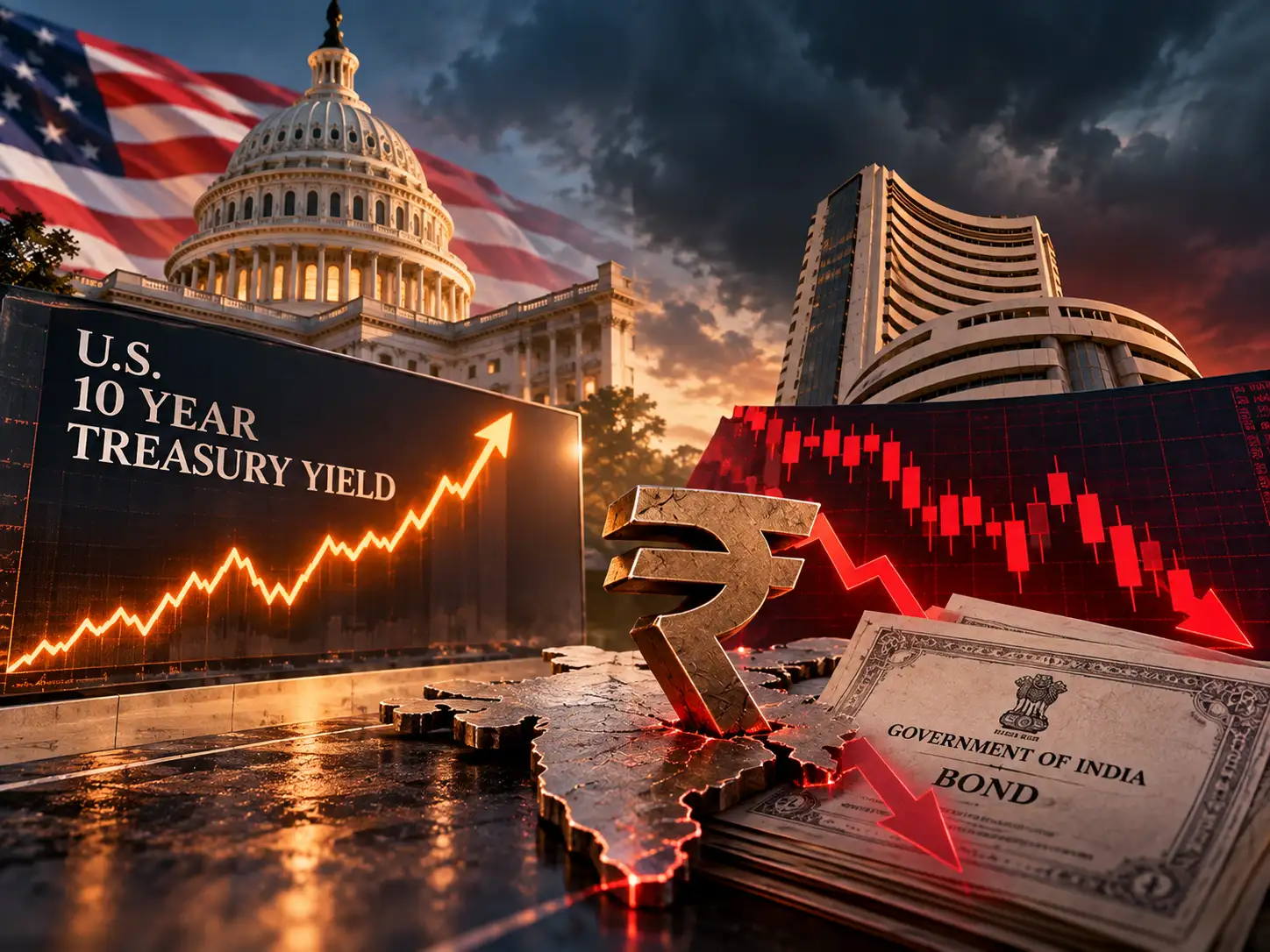
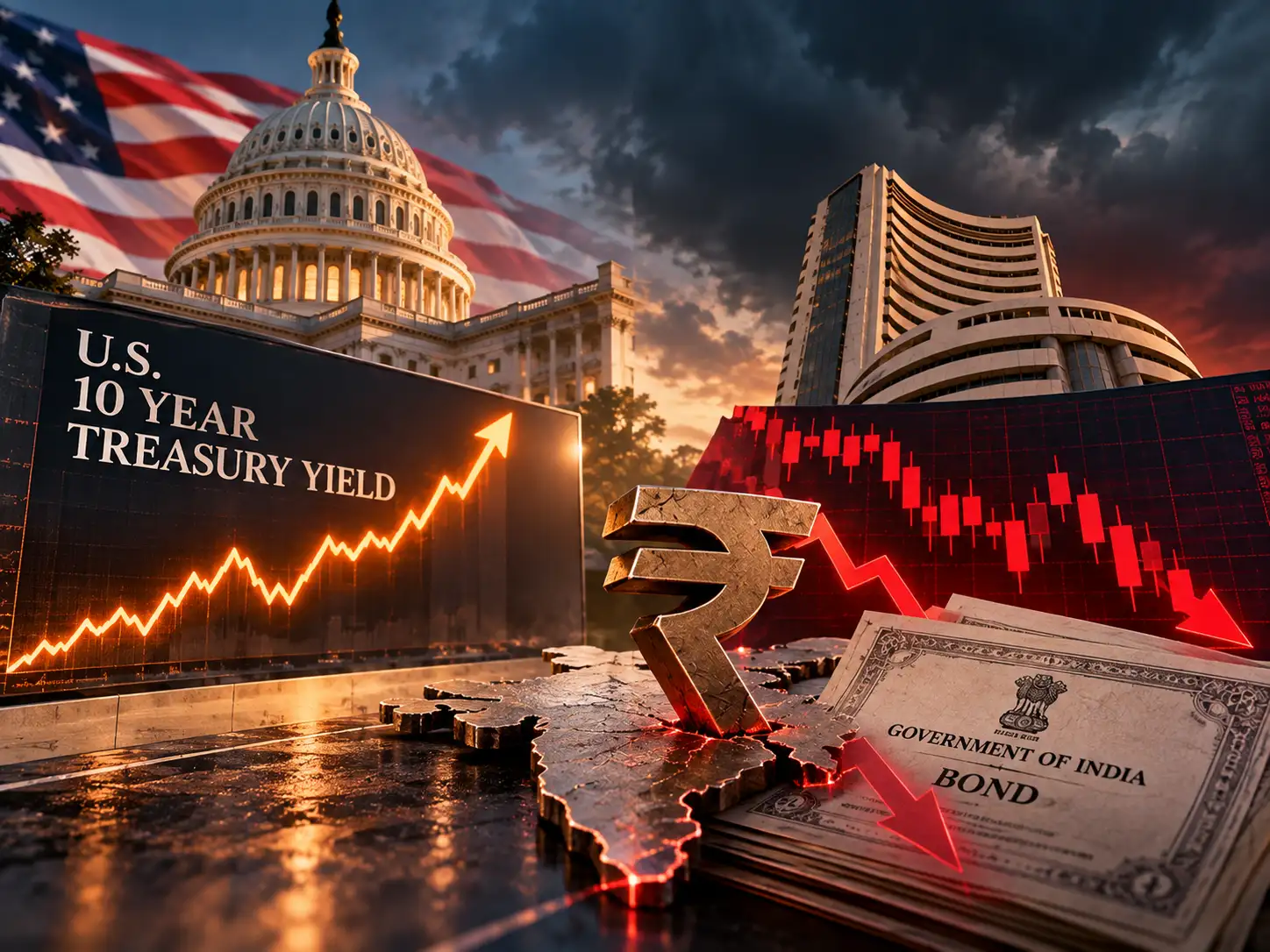
The US 10-year Treasury yield climbed to its highest level since early 2002 on Thursday, deepening a global bond sell-off and putting fresh pressure on emerging markets, including India. The yield rose as high as 5.34%, crossing its 2007 peak, as investors sold government bonds on concerns over inflation, higher crude prices and the possibility that US interest rates may stay elevated for longer.
The 10-year Treasury, seen as the global benchmark for borrowing costs, also posted its biggest quarterly rise of this century in the third quarter, according to Reuters.
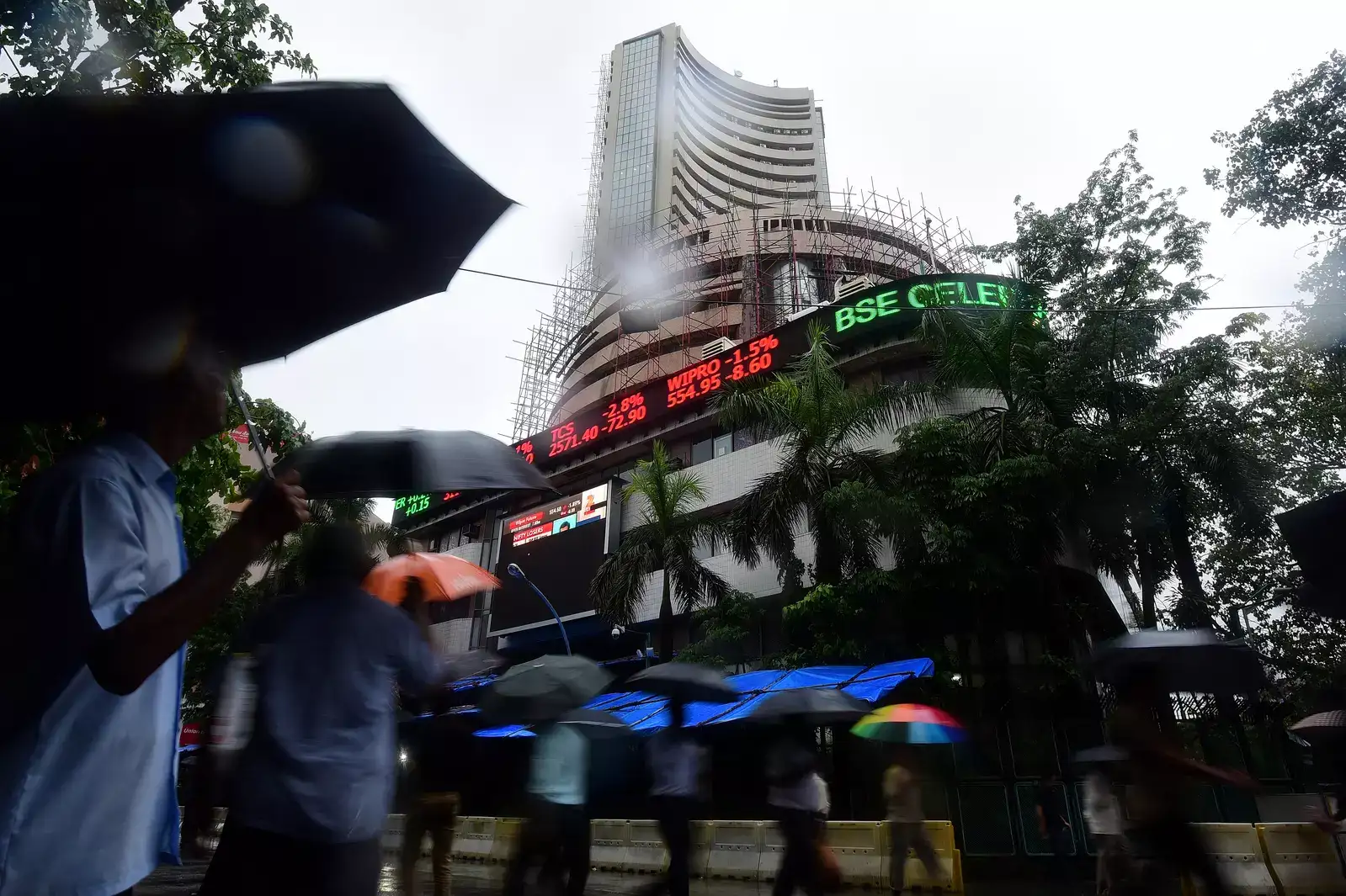
The sharp rise in US yields weighed on equity sentiment across risk assets. In India, the Sensex fell up to 1,200 points during intraday trade on Thursday, while the Nifty slipped below key levels as investors worried that higher US rates could keep foreign institutional investors away from emerging markets.
However, the market recovered some of its losses, with the Sensex settling 571 points lower and the Nifty ending at 22,422. Investor wealth worth nearly Rs 5 lakh crore was wiped out during the session.
Why is this harsh on emerging markets?
For emerging markets, a rise in the US 10-year yield is a direct headwind. When US government bonds offer a better yield, global investors get a higher return from a dollar asset considered safer than emerging market equities or debt. That reduces the relative appeal of markets such as India, Indonesia, Brazil and South Africa.
Also Read: 5 key factors behind today's market meltdown
Higher US yields also strengthen the dollar. A stronger dollar usually puts pressure on emerging market currencies, raises imported inflation and makes foreign debt more expensive for companies and governments. For India, the impact is sharper because elevated crude prices can widen the current account deficit and add pressure on the rupee.
The rupee also weakened on Thursday, tracking losses in Asian currencies, as the dollar index rose to a three-month high on the back of higher US Treasury yields. The Indian currency slipped to 95.98 per dollar, with state-run banks likely selling dollars to limit losses near the 96 level.
Indian bond markets also under pressure
Indian bond markets also came under pressure. Traders expect the benchmark 6.94% 2036 bond yield to trade in the 7.18-7.26% range. The yield had closed at 7.1879% on Wednesday, a two-and-a-half-year high, after rising 24 basis points in September and about 44 basis points during the quarter.
The timing is difficult for India because the Reserve Bank of India’s policy decision is due soon. Higher global yields make it harder for the central bank to sound relaxed on rates, especially when crude prices and the rupee are already under watch. Analysts were expecting pressure on the RBI to raise the repo rate, with markets pricing in further tightening over the next year.
Equity investors are also watching foreign flows closely. Higher US yields have already contributed to heavy FII selling in Indian equities. When foreign investors can earn higher returns in US bonds, they often cut exposure to expensive emerging market equities, especially where currency risk is rising.
The pressure is visible in valuations too. Rising US yields reduce the premium investors are willing to pay for equities because future earnings are discounted at a higher rate. Growth stocks, financials and rate-sensitive sectors usually face the first round of selling.
Disclosure: This article has been written by Podishetti Akash, who is not a SEBI-registered Research Analyst or an Investment Adviser. Podishetti Akash and his ‘relative(s)’ (as defined under Section 2(77) of the Companies Act, 2013) do not hold any financial interest in the companies mentioned in this article as of the date of publication. The views/recommendations mentioned in this article, wherever applicable, are those of the respective SEBI-registered Research Analyst/brokerage and have been reproduced/reported with due attribution. They should not be construed as the views or recommendations of The Economic Times Digital or the journalist. Readers are advised to consider the original research report and make their investment decisions based on their own assessment. Brokerage disclosures here.